What WikiFX Found When It Looked Into FXTF
Abstract:In the complex world of online trading, verified licenses and confirmed operational presence offer important reference points for evaluating a broker. FXTF is one such firm that has undergone regulatory registration and address verification
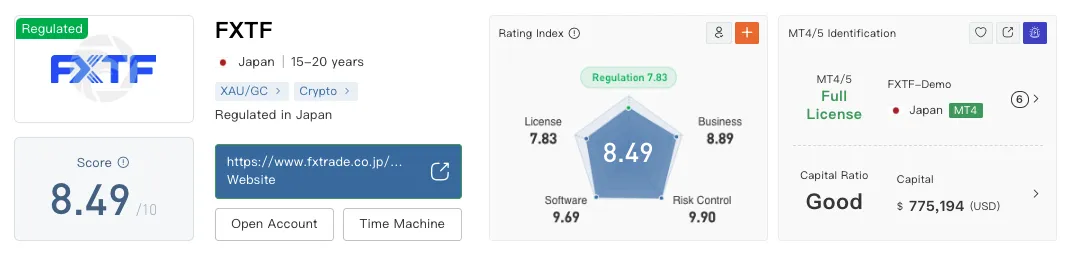
FXTF, a Japan-based forex broker, has received a strong WikiScore of 8.49 out of 10 from WikiFX, a global platform that evaluates brokers across multiple criteria. The rating reflects the brokers standing in areas such as regulatory compliance, licensing, trading environment, risk management, and overall business operations.
A key factor contributing to FXTF‘s score is its regulation by Japan’s Financial Services Agency (FSA). As the countrys main financial regulator, the FSA oversees a wide range of financial institutions, including forex brokers. Its responsibilities include supervising service providers, ensuring market stability, and protecting investors, depositors, and policyholders.
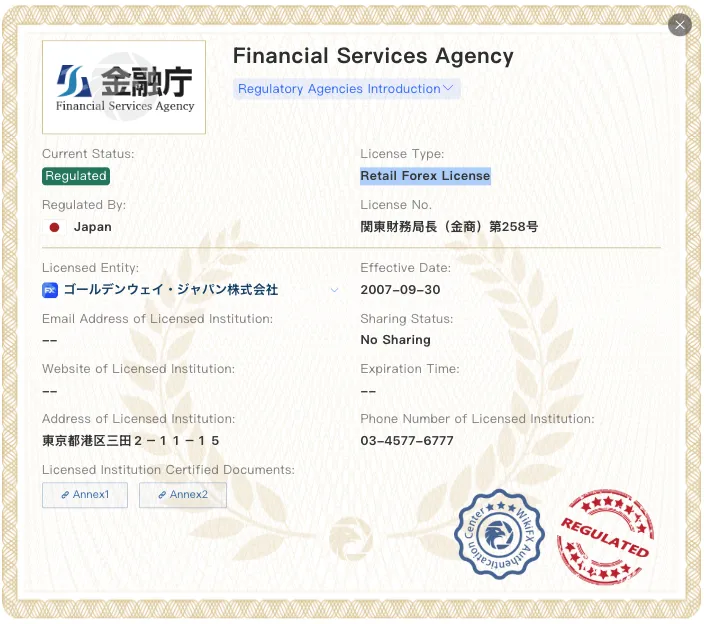
FXTF operates under Licence No. 258, which permits the company to offer retail forex trading services. The licence is fully regulated and reflects the brokers adherence to the strict standards set by the FSA. This level of oversight provides clients with assurance that the firm operates within a well-regulated framework.

To further verify the broker‘s operational status, WikiFX conducted a field investigation at FXTF’s registered address: the 4th floor of the Mita Kawasaki Building in Minato-ku, Tokyo. The inspection confirmed that FXTF maintains an active presence at the location.
Such physical verifications are an important part of assessing broker reliability. In some jurisdictions, companies may hold valid licences but operate without a physical office, often relying on virtual or placeholder addresses. This can create uncertainty for clients, particularly when dealing with online platforms.
WikiFXs field surveys aim to close this gap by checking whether brokers are genuinely operating from the locations they list. These verifications offer an added layer of transparency, especially for traders choosing between firms that may appear similar on paper but differ significantly in practice.
For investors, knowing that a broker is not only licensed but also physically active at its registered address can provide added confidence. FXTFs confirmed location and strong regulatory standing make it a noteworthy choice for traders seeking a trusted and transparent trading partner.


Read more

FBS Regulation Checks Before Choosing the Company Behind an Account
FBS regulation should be checked against the company named in an account agreement, not a brand-level statement alone. The FBS About page archived on 24 September 2026 describes operations under several local licences. That statement does not identify the provider for every applicant in South Asia. Before using an FBS login link to apply or submit documents, establish which company would contract with you and what the relevant authorisation covers.
RBI Vows to Steady 'Undervalued' Rupee After It Hits Five-Month Low
The Reserve Bank of India (RBI) said on Wednesday it would ensure that the "undervalued" rupee finds its correct level, after the currency slid to a five-month low of 96.8450 per dollar. The central bank also raised its policy rate by 25 basis points, its first tightening since February 2023, but the rupee still weakened as foreign capital flowed out of Indian markets.

India's Forex Reserves Fall to $747.56 Billion in Week Ended September 25
India's foreign exchange reserves stood at $747.56 billion in the week ended September 25, according to The Economic Times, which reported the figure alongside a headline decline of $18.34 billion. The same report said the fall was driven mainly by a reduction in foreign currency assets, the largest component of the reserves.
RBI Hikes Repo to 5.50%, Its First Rise in Nearly Four Years — What It Does to USD/INR
The Reserve Bank of India raised its policy repo rate by 25 basis points to 5.50% on Wednesday, October 7, its first increase in nearly four years, and shifted its stance to "calibrated tightening". Governor Sanjay Malhotra said outright that rate cuts are off the table for now. "Rate cuts are off the table in the near term and policy action ahead can only be a rate hike or a pause, depending on the evolving conditions and the outlook," Malhotra said. The six-member Monetary Policy Committee voted unanimously, according to multiple reports. For a retail trader, the number to sit with is not 5.50%. It is 5.25% — the Standing Deposit Facility rate, the floor of the RBI's corridor, and the rate that effectively sets what it costs to fund a short-rupee position overnight. The rupee has been weakening, and reports describe that weakness as one of the reasons the RBI moved.
WikiFX Broker
Latest News
Oil, Yields and French Debt Keep Global Markets Under Pressure
 WikiFX
Inflation fears on the rise as one-year outlook in Fed survey hits highest level since May 2023
WikiFXLuxury Brand Owner Shot Dead After Losing US$100 Million in Trading Last Month
WikiFXFBS Regulation Checks Before Choosing the Company Behind an Account
WikiFXDoctor Loses RM300,000 in an Investment That Promised 10% Monthly Returns
WikiFXKuantan Investment Scam Raids Expose RM215,000 Operation
WikiFXOil Turned on Its Vertex Day: What It Means for Gold
WikiFXRBI Vows to Steady 'Undervalued' Rupee After It Hits Five-Month Low
WikiFXGold Near Nine Week Low as Fed Rate Fears Intensify
WikiFXTag Markets Broker Review: Regulated but Is It Safe for Traders?
WikiFXRate Calc
