Shinkin
Abstract:Shinkin, established in 1990 and headquartered in Japan, operates under the regulatory oversight of Japan's Financial Services Agency (FSA). It offers a comprehensive range of financial services, including investment management, advisory, and second-class financial instruments trading. Shinkin provides various fund types, catering to diverse investor preferences such as asset mixed, domestic and foreign stock, bond, and REIT types. The company imposes direct fees, including purchase fees of up to 3.3% and redemption fees of up to 0.3%, along with indirect fees such as management fees capped at 1.628% annually and other variable expenses. Customers can access support through its main line and physical address in Tokyo. Furthermore, Shinkin enriches investor knowledge through investment reports, aiding in informed decision-making.
| Shinkin | Basic Information |
| Company Name | Shinkin |
| Founded | 1990 |
| Headquarters | Japan |
| Regulations | Regulated by Japan's Financial Services Agency (FSA) |
| Products and Services | Investment management, Investment advisory and agency, Second-class financial instruments trading |
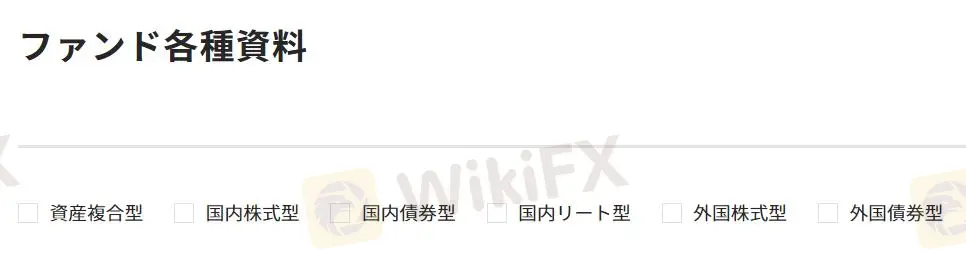
| Fund Types | Asset mixed type, Domestic stock type, Domestic bond type, Domestic REIT type, Foreign stock type, Foreign bond type |
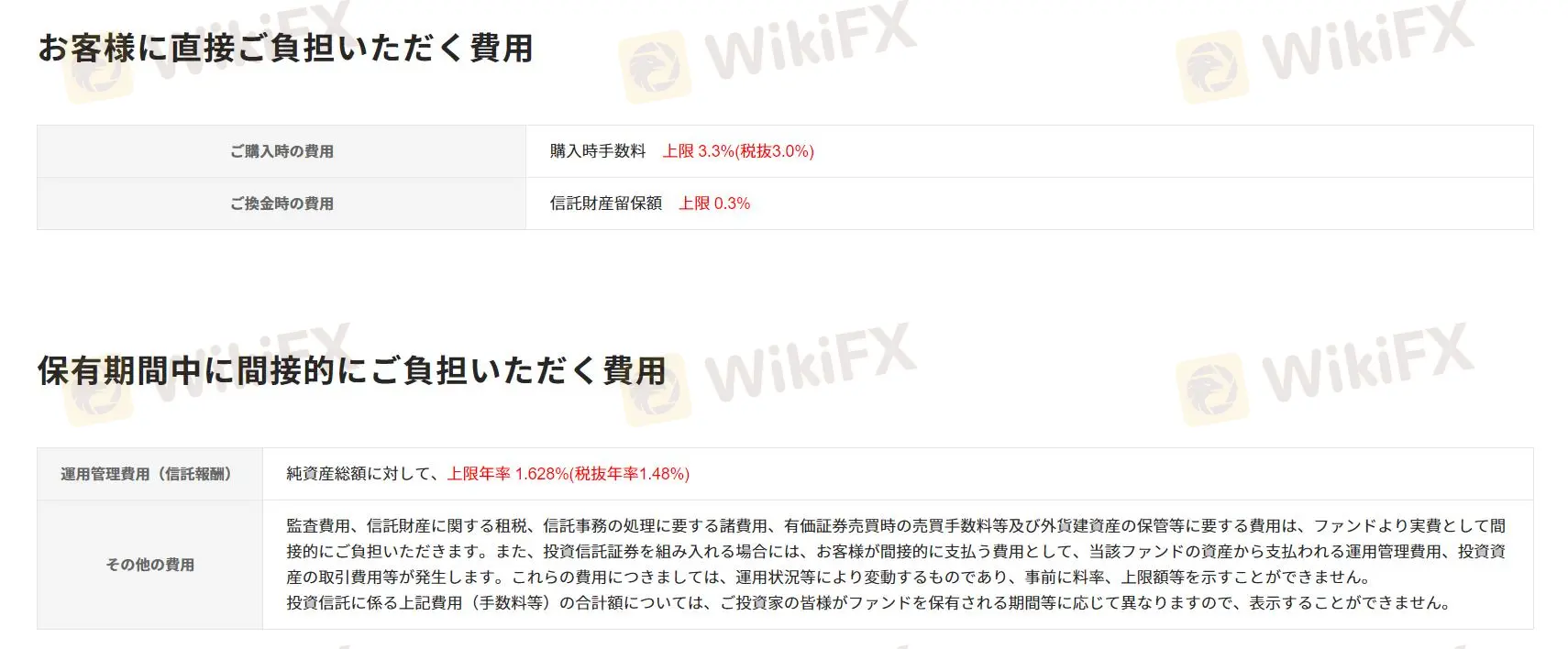
| Fees | Direct fees: Purchase: Up to 3.3%, Redemption: Up to 0.3%Indirect fees: Management: Up to 1.628% annually, Other expenses: Varies |
| Customer Support | Address: 〒104-0031 Tokyo, Chuo-ku, Kyobashi 3-8-1Phone: 03-5524-8161 (Main line) |
| Education Resources | Investment reports |
Overview of Shinkin
Shinkin, founded in 1990 and headquartered in Japan, is a regulated financial institution under the oversight of Japan's Financial Services Agency (FSA). Offering a comprehensive suite of services including investment management, advisory, and second-class financial instruments trading, Shinkin caters to a diverse clientele. Its range of fund types spans across asset mixed, domestic and foreign stock, bond, and REIT categories, providing options tailored to different investor preferences. With transparent fee structures encompassing direct fees such as purchase and redemption fees, as well as indirect fees like management and other variable expenses, Shinkin ensures clarity in its financial dealings. Customers benefit from accessible customer support channels and educational resources such as investment reports, enhancing their financial knowledge and empowering informed decision-making.

Is Shinkin Legit?
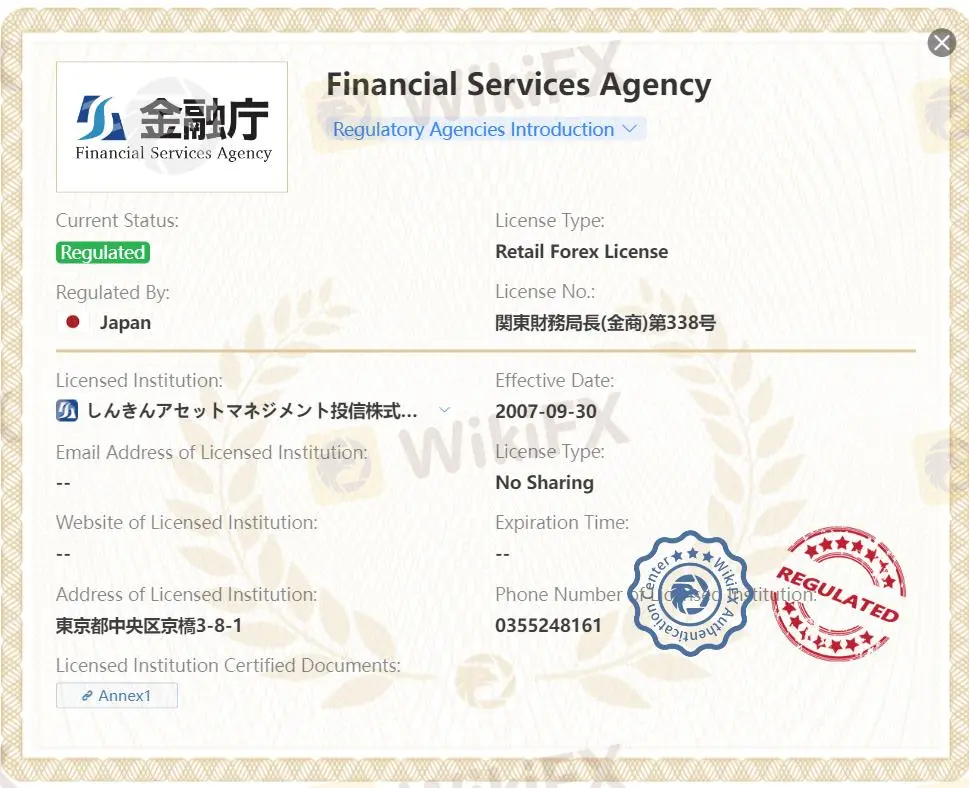
Shinkin is subject to regulation by Japan's Financial Services Agency (FSA), a key regulatory body overseeing financial activities in the country. Holding a Retail Forex License, Shinkin is authorized to engage in foreign exchange trading activities aimed at retail clients. This license type signifies compliance with strict regulatory standards set forth by the FSA to ensure the protection of investors and the stability of the financial market. The specific license number, which reads as “Kanto Finance Bureau Director (Kinsho) No. 338,” serves as a unique identifier indicating Shinkin's official recognition by the regulatory authorities in Japan. This regulatory oversight underscores Shinkin's commitment to operating within the legal and regulatory framework established to safeguard the interests of both investors and the broader financial system.
Pros and Cons
Shinkin's strengths lie in its diverse range of services, transparent fee structure, and regulatory oversight, offering investors a trustworthy platform for financial activities. However, challenges include comparatively high management and direct fees, as well as limited educational resources, which may impact investor satisfaction and engagement.
| Pros | Cons |
|
|
|
|
|
|
Products and Services
Shinkin offers investment management, investment advisory and agency services, and second-class financial instruments trading services.

Fund types
Shinkin offers a range of fund types, including asset mixed, domestic stock, domestic bond, domestic REIT, foreign stock, and foreign bond.
Fees
Shinkin charges direct fees to customers upon purchase and redemption, capped respectively at 3.3% and 0.3% of the transaction amount. Indirect fees incurred during the holding period include management fees, up to 1.628% annually, and various other expenses related to trust management, borne indirectly by customers from the fund's actual expenses.
Customer Support
Shinkin's customer support can be reached at 〒104-0031 Tokyo, Chuo-ku, Kyobashi 3-8-1, with the main line number being 03-5524-8161.
Educational Resources
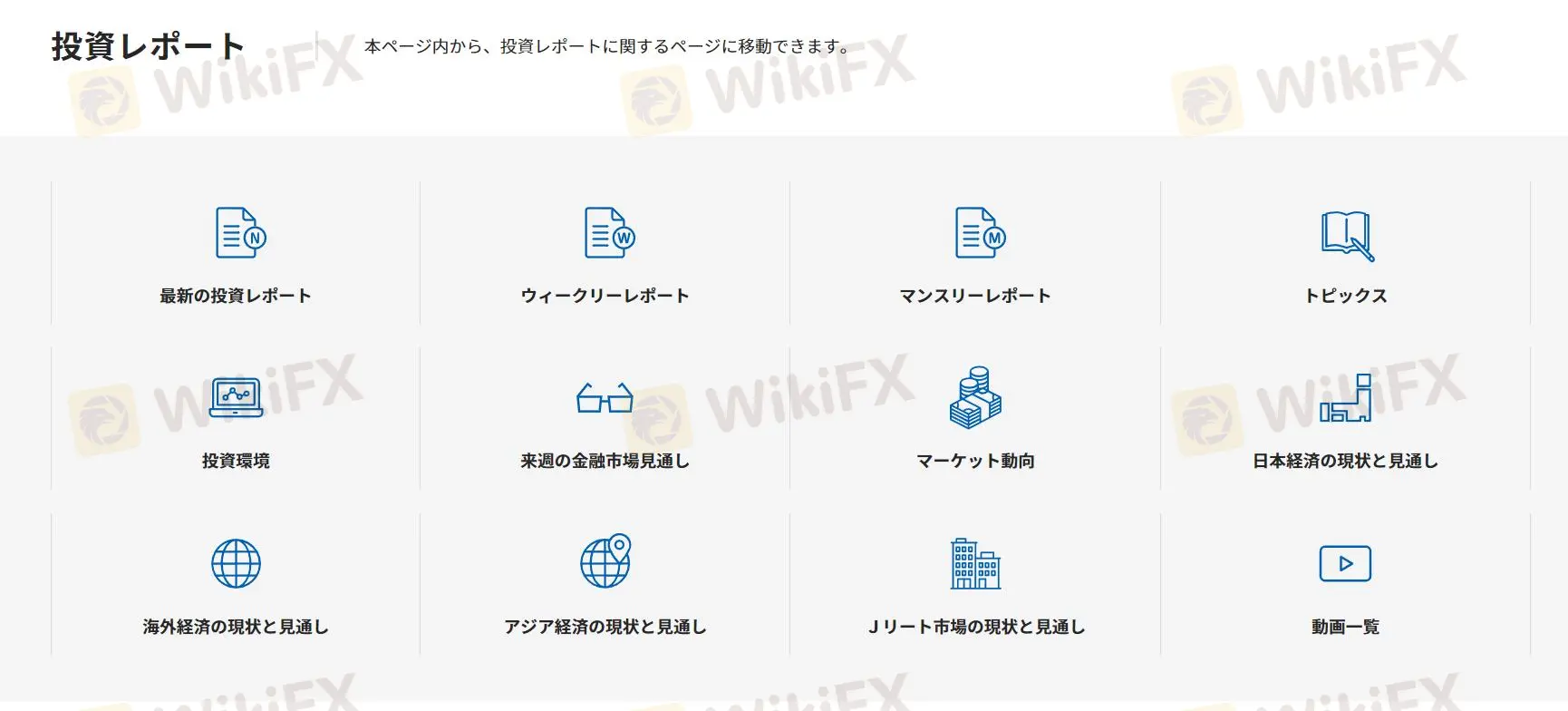
Shinkin offers investment reports as part of its educational resources, providing valuable insights and analysis to help investors make informed decisions. These reports cover various aspects of investing, contributing to the financial literacy and understanding of clients.
Conclusion
In conclusion, Shinkin presents itself as a comprehensive financial institution offering a diverse range of services, transparent fee structures, and regulatory oversight, which instills confidence among investors. However, notable disadvantages include relatively high management and direct fees, which could impact overall returns and potentially deter some investors. Additionally, the limited availability of educational resources beyond investment reports may hinder investor education and empowerment. Despite these drawbacks, Shinkin's strengths lie in its commitment to transparency, regulatory compliance, and provision of essential financial services, positioning it as a trusted platform for individuals seeking to engage in investment activities.
FAQs
Q: What services does Shinkin offer?
A: Shinkin provides a variety of financial services including investment management, advisory, and trading of second-class financial instruments.
Q: Is Shinkin regulated by any regulatory body?
A: Yes, Shinkin is regulated by Japan's Financial Services Agency (FSA), providing clients with assurance of compliance and investor protection.
Q: What types of funds does Shinkin offer?
A: Shinkin offers a diverse range of fund types including asset mixed, domestic and foreign stock, bond, and REIT categories, catering to various investor preferences.
Q: Are there any additional charges besides the management fees?
A: In addition to management fees, Shinkin may charge other expenses which vary depending on factors such as auditing fees, taxes related to trust assets, and brokerage fees for securities transactions.
Q: How can I contact Shinkin's customer support?
A: You can reach Shinkin's customer support team by contacting their main line at 03-5524-8161 or visiting their physical address at 〒104-0031 Tokyo, Chuo-ku, Kyobashi 3-8-1.
Risk Warning
Online trading involves significant risk, and you may lose all of your invested capital. It is not suitable for all traders or investors. Please ensure that you understand the risks involved and note that the information provided in this review may be subject to change due to the constant updating of the company's services and policies. In addition, the date on which this review was generated may also be an important factor to consider, as information may have changed since then.

Read more
Errante Review 2026: Users Claim a Poor Trading Experience. What Does Our Investigation Reveal?
Errante, a Seychelles-based brokerage entity, is facing serious trading allegations from users globally. Users claim to have earned profits legitimately using their strategies. However, on the Errante login dashboard, many users reported an automatic deduction of earned profits. At the same time, withdrawal issues allegedly haunt many traders here. While investigating, we also found complaints concerning trade order manipulations by the broker. In this Errante review, we have examined these allegations and given an overview of its regulatory status.
Forex Liquidity Provider in 2026: How to Choose One Your Brokerage Can Actually Operate
A forex liquidity provider decision now shapes the broker's spreads, fills, slippage, hedging cost, regulatory exposure, and exit options long after the platform is chosen. This 2026 guide explains what a forex LP actually delivers versus what the marketing claim says, how tier-1 banks, prime of prime, and multi-LP aggregators differ in practice, and how execution models (DMA, ECN, STP) change the broker's daily operating reality. It also walks through due diligence on credit, technology, reporting, governance, and exit, and shows how a 2026 broker can combine a primary LP with secondary routing without losing control of the client experience. Use the decision matrix, integration timeline, and operational tests to compare an fx liquidity provider before contract signature, not after a market event.
LMAX Group Review 2026: Users Report Disturbing Withdrawal Issues - Is the Broker Still Reliable?
Did LMAX Group deny you withdrawals citing frozen funds at the wallet service provider’s end? Have you been so exhausted by the endless withdrawal hassles that you have begun to stop investing in the platform? Has this UK-based liquidity provider even questioned your fund ownership status when you requested withdrawals? You are not alone! Many users have complained about these issues while sharing their LMAX Group reviews.
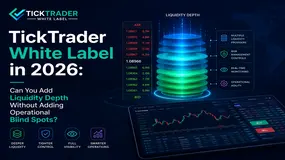
TickTrader White Label in 2026: Can You Add Liquidity Depth Without Adding Operational Blind Spots?
A TickTrader white label can look like the fastest route to a modern branded trading environment, but a fast launch is not the same as a controlled launch. This 2026 broker guide explains what the TickTrader platform is, where a Soft-FX broker solution can sit in a wider operating stack, and how to evaluate the difference between a white label, a server licence, and a connected CRM or Client Office setup. It also unpacks TickTrader cost beyond the monthly headline, including implementation, integration, support, data, governance, migration, and exit assumptions. Use the practical questions, workflow tests, comparison table, and launch checklist to assess a Soft-FX TickTrader provider without mistaking a feature demo for evidence that your brokerage can run the service safely at scale.
WikiFX Broker
Latest News
Trade24Seven Review: What Traders Should Know Before Depositing
 WikiFX
Luno Review: Unregulated Broker Warning After Frozen Accounts and Blocked Withdrawals
WikiFXOJK Revokes BTPN Syariah Ventura Licence, SMBC Speaks Out
WikiFXG4Trade Review: Withdrawal Warning Around a New Forex Broker
WikiFXRand Gains as Iran Talks and Soft US Jobs Data Hit Dollar
WikiFXGaitame Finest Review 2026: Regulation, MT4/MT5 Access, and User Feedback
WikiFXLOYAL PRIMUS Review: Accounts Frozen After Withdrawal Requests – What Traders Need to Know
WikiFXMetaTrader Basics: Place Your First Trade
WikiFXKeynes Investment Review: No Regulatory Licence Found, Should You Trust It?
WikiFXMoneta Markets Receives UAE Category 5 Licence
WikiFXRate Calc

