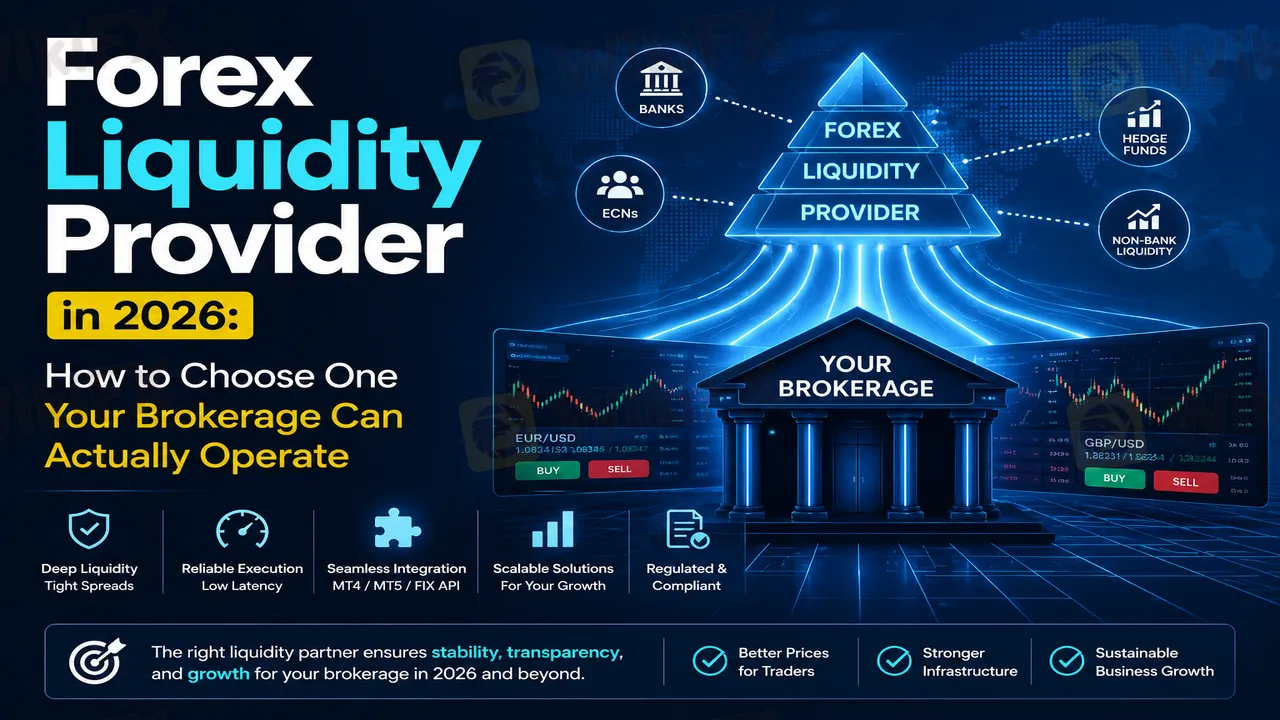
Forex Liquidity Provider in 2026: How to Choose One Your Brokerage Can Actually Operate

Abstract:A forex liquidity provider decision now shapes the broker's spreads, fills, slippage, hedging cost, regulatory exposure, and exit options long after the platform is chosen. This 2026 guide explains what a forex LP actually delivers versus what the marketing claim says, how tier-1 banks, prime of prime, and multi-LP aggregators differ in practice, and how execution models (DMA, ECN, STP) change the broker's daily operating reality. It also walks through due diligence on credit, technology, reporting, governance, and exit, and shows how a 2026 broker can combine a primary LP with secondary routing without losing control of the client experience. Use the decision matrix, integration timeline, and operational tests to compare an fx liquidity provider before contract signature, not after a market event.
Editorial and risk notice:** This B2B buyer guide is for brokerage founders, heads of trading, operations leads, technology teams, treasury and compliance stakeholders. It is not investment advice, an endorsement of any liquidity provider or prime of prime, or a guarantee about execution quality, fill rates, spreads, slippage, regulatory status, or commercial terms. Confirm scope, jurisdiction, contract terms, integration limits, and operational controls with the relevant provider and qualified advisers before signing.
At 19:12 on a Thursday, the broker's branded terminal is up, the platform is humming, and the operations team is closing tickets. Then a central-bank headline crosses the wire. EURUSD jumps 30 pips in two seconds. The single liquidity provider the broker has been relying on widens its minimum size, several client orders get partially filled or rejected, and a cluster of stop-losses executes at prices that don't match the chart the client sees on screen. By 19:40, support had 80 tickets open. By 20:00, the head of trading is on the phone asking whether the broker should add a second LP, route through an aggregator, or move to a prime of prime. None of those answers were decided before the headline.
That is the central decision behind a forex liquidity provider in 2026. The question is not whether a broker can connect to a liquidity source. Most platforms (MT4, MT5, cTrader, Match-Trader, TickTrader, DXtrade, Fortex and others) can be wired to a feed in days. The question is whether the broker can keep the liquidity layer intelligible, controllable, and replaceable as the business grows, the client mix shifts, the regulatory perimeter widens, and the next market event arrives. A credible fx liquidity provider decision treats liquidity as an operating dependency, not a procurement line item.
Executive Takeaways
· Treat the forex liquidity provider choice as an operating-model decision, not a price comparison.
· Distinguish tier-1 bank liquidity, prime of prime (PoP), and multi-LP aggregation by what the broker must do on each, not by the brochure.
· A liquidity provider forex contract shapes the broker's spreads, fills, slippage, hedging, reconciliation, and exit for years; the headline spread is only one of many inputs.
· For a 2026 broker, the meaningful question is often which liquidity aggregator or combination of LPs gives the broker depth on the instruments and sessions that matter, while keeping reporting, risk, and exit legible.
· Any architecture that hides the LP, the PoP, or the execution venue from the broker should be treated as adding an undeclared counterparty, not as a free upgrade.
· Use scenario tests, contract terms, and an exit plan before treating a single LP setup as a permanent operating model.
1. Why a “Single LP” Setup Can Become a single Point of Failure

Editorial image: brokerage leadership team reviewing liquidity architecture and execution controls.
Most new brokers start with one forex liquidity provider. That is normal. The risk is not the starting point; the risk is treating the starting point as the destination. A single-LP architecture concentrates execution risk, credit risk, technology risk, contract risk, and exit risk in one counterparty. The broker may not feel that on a quiet Tuesday. It feels it the first time the LP widens, rejects, or reroutes flow during a market event, a quarter-end, a credit review, or a technology incident.
For the client, pricing and execution are one experience. Internally, those prices and fills reflect the LP relationship, the technology layer (bridge, aggregator, gateway, FIX), the hedging arrangement, the reconciliation rules, the reporting cadence, and the contract terms. Changing the visible spread is easy. Changing the underlying operating model usually takes weeks of integration, testing, and contract work, and that work is precisely what determines whether the broker can recover from the next market event.
Composite scenario: The Thursday Night That Exposed the LP
This scenario is illustrative, not a customer case study. A broker has been live for eleven weeks on a single tier-2 LP relationship. Spreads are competitive on EURUSD and a few majors. The broker's reconciliation team runs daily. On the night of the central-bank headline, the LP rejects 4% of incoming client orders, partial-fills 7%, and reports 28 fills at prices that differ from the broker's chart feed by more than the disclosed tolerance. Support tickets double. The broker's compliance officer asks the LP for a written explanation; the LP provides a brief incident note and refers the broker to standard market-practice language in the contract. The broker does not have a documented right of escalation, a defined tolerance band, or a backup execution path. By Monday, the operations team is recommending a second LP, a PoP, or an aggregator, but the integration timeline is six to ten weeks.
The lesson is not to avoid a single LP. The lesson is to design the starting point so the next step is integration work, not a recovery exercise.
**Common operating mistake:** treating a one-LP architecture as if it were the same as a one-platform architecture. A platform is a workspace; a **liquidity provider forex** A relationship is a counterparty, a contract, a reconciliation cycle, and a credit line. Each of those has its own risk and its own replacement cost.
Key Takeaways: Design for the Next LP, Not Just the First One
· A single-LP setup is fine for a defined scope. It is not fine as a long-term plan with no documented upgrade path.
· The most expensive week in a broker's first year is usually the week the team tries to change liquidity architecture under pressure.
· Capture the assumptions behind the headline spread in writing before signing: instrument coverage, sessions, minimum size, rejection policy, slippage tolerance, and incident communication.
2. What a Forex LP Actually Delivers — and What it Does Not
A forex liquidity provider is a counterparty that quotes prices and accepts the broker's flow, either directly or through a prime of prime. In practice, the broker's experience of an LP is shaped by six elements: instrument coverage, depth and size, session coverage, execution model, technology interface, and the commercial and credit terms wrapped around them. The marketing pitch usually emphasises the first two. The operational reality is usually determined by the last four.
Tier-1 bank liquidity typically refers to streams from major interbank dealers. A prime of prime sits between the broker and those streams, aggregating or re-providing access. A liquidity aggregator combines multiple LPs (often including a PoP and one or more bank or non-bank streams) behind a single interface, sometimes with smart-order routing. Each option has implications for spreads, fills, slippage, credit, reporting, governance, and exit.
What an LP Quote Stream Includes (and What it Does Not)
| Element | Usually in scope | Often Outside the Headline Scope |
| Instrument coverage | Major and minor FX pairs, sometimes metals, indices, energies | Exotic crosses, crypto, single stocks, regional instruments |
| Depth | Top-of-book quotes on a defined minimum size | Deep book on stress days, news events, or low-liquidity sessions |
| Sessions | London / New York overlap; sometimes Asia | Thin Asia overnight, end-of-month fix, specific regional sessions |
| Execution model | Streaming, request-for-stream, or hybrid | Behaviour during halts, illiquid periods, news events, or system faults |
| Technology interface | FIX 4.2 / 4.4, bridge compatibility, latency band | End-to-end recovery, redundant paths, dual-region failover, manual hedging fallback |
| Commercial terms | Spread, commission, monthly minimum, credit line | Termination, data export, post-termination tails, and the right to take business elsewhere |
Composite Scenario: A “Full Coverage” Pitch That Quietly Excluded a Session
An illustrative broker accepts an LP pitch that promises “full major and minor FX coverage” with “deep book across sessions”. The contract refers to a “standard institutional feed”. Six months in, the operations team notices that Asia-overnight EURGBP fills are inconsistent and that a regional client's recurring strategy performs materially worse than back-tests suggested. The LP confirms in writing that its Asia-overnight minor-cross depth is “subject to availability”. The broker's contract gives it no recourse, and the client-visible spread is the same regardless of fill quality.
**Common operating mistake:** treating instrument coverage as a list rather than a behaviour. Two LPs can each list “EURUSD” and deliver very different fills in stress, overnight, or low-latency conditions.
Key Takeaways: Due Diligence Depth, Not Just Instrument List
· A forex liquidity provider pitch is a starting brief, not a substitute for a written instrument-by-instrument scope.
· Confirm session-by-session, instrument-by-instrument, and event-by-event behaviour in the contract, not in the demo.
· Make fill quality, slippage tolerance, and incident communication a contract term, not a relationship expectation.
3. Tier-1 Bank, Prime of Prime, or Aggregator: Pick the Accountability Model
The most important comparison among LP options is not “which one has the tightest spread?” It is “which party controls each material decision?” A prime of prime forex relationship can be right for a broker that wants tier-1-style depth without running a direct bank credit line. A direct tier-1 relationship can suit a broker with the balance sheet, the legal entity, and the operational maturity to support it. A liquidity aggregator can be appropriate for a broker that wants depth across instruments and sessions and is willing to accept a more complex reconciliation and routing model. Each path requires a different evidence pack, a different reporting cadence, and a different exit story.
| Decision area | Direct Tier-1 LP | Prime of Prime (PoP) | Multi-LP Aggregator |
| Credit line | Broker's own balance sheet or corporate parent | PoP's balance sheet, broker's line with PoP | Aggregator's line, individual LP lines behind the scenes |
| Counterparty exposure | Each tier-1 bank directly | PoP, and each underlying LP disclosed or anonymised | Aggregator and underlying LPs, depending on routing model |
| Instrument and session depth | Strong on the LP's specialties, gaps elsewhere | Broad coverage, subject to PoP's terms | Broad coverage by combining LPs, but routing is a broker responsibility |
| Reporting and reconciliation | Bank-formatted confirmations, end-of-day and T+1 | Aggregated reporting from PoP | Per-fill or aggregated, depending on the aggregator's transparency |
| Technology and integration | FIX, often bank-specific | FIX plus a PoP technology layer | Aggregator's GUI, FIX, or both; smart-routing logic to understand |
| Exit and portability | Contractual and entity-specific | Defined by the PoP agreement; portability varies | Defined by the aggregator agreement; underlying LP replacement may be hidden |
| Best fit | Mature brokers with balance sheet, legal, and ops depth | Mid-stage brokers wanting tier-1-style depth with simpler onboarding | Brokers prioritising instrument and session breadth and willing to operate the routing layer |
Composite Scenario: Choosing an Aggregator without Understanding Routing
An illustrative broker selects a multi-LP aggregator because the pitch emphasises “best execution across venues”. The contract does not require the aggregator to disclose which underlying LP took a fill. The broker's operations team cannot replicate a fill from the client side. Six months later, the broker suspects it has a hidden concentration with one underlying venue but cannot evidence it. The compliance officer asks for venue-level reporting; the aggregator offers quarterly aggregated data only.
The lesson is to choose the routing model that the broker can evidence, not the one that produces the best marketing screenshots.
**Common operating mistake:** accepting a stack that hides the underlying LPs from the broker. If the broker cannot evidence where each fill originated, the broker cannot evidence best execution to its regulator or its own audit.
Key Takeaways: Accountability First
· Match the LP architecture to the broker's actual evidence capacity, not to the most ambitious brochure.
· Ask the LP, the PoP, or the aggregator the same five questions: who took the fill, when, at what price, under what tolerance, and how is it reported.
· A more sophisticated liquidity stack is only better if the broker can still explain it on a Monday morning.
4. Turn an LP Demo into a Fill-Quality and Governance Test
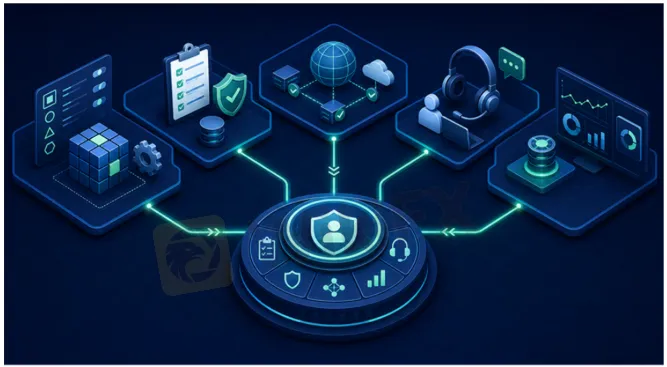
Conceptual workflow: a controlled forex LP evaluation, fill-quality test, and integration plan.
An LP pitch is usually presented as a price stream, a dashboard, and a few screenshots. None of those answer the questions that matter after a market event. Replace a generic demo with a scenario-based session attended by trading, operations, technology, support, treasury, and compliance stakeholders. The group should see normal cases, exception cases, and a controlled change. The aim is to verify behaviour under the broker's specific scope, not the LP's generic narrative.
Scenario A: A Typical London-New York Overlap
Walk through the broker's expected client mix on EURUSD, GBPUSD, USDJPY, XAUUSD, and one minor cross. Observe the top-of-book spread, the depth at one and five lots, the rejection rate over a defined window, and the latency between price update and execution. Compare what the client sees on the broker's branded terminal with what the broker records internally.
Scenario B: A Controlled News Event
Replay or simulate a recent high-impact headline. Examine behaviour: how quickly did spreads widen; how did minimum size change; were stops executed at the requested price, slipped, or rejected; what was the rejection rate; how was the broker notified. Ask the LP, the PoP, or the aggregator for a written tolerance band and a written incident communication standard.
Scenario C: A Reconciliation Cycle
Run a full reconciliation cycle on the broker's actual instrument list: confirmations, allocations, mark-to-market, fees, credit, and the broker's books. The cycle should fit into the broker's daily operating window, not require a dedicated team. If the cycle is too complex, the broker's reporting will degrade over time, and the first sign of trouble will be a reconciliation break.
Scenario D: An Exit Dry Run
Ask the LP, the PoP, or the aggregator to walk through what an exit would look like: notice period, data export, post-termination tail, transitioning to another LP, and the broker's obligations to clients. The walkthrough is rarely pleasant. That is the point.
**Common operating mistake:** treating an LP demo as a sales conversation instead of a due-diligence exercise. The same stakeholders who would notice a fill problem in production should be in the demo, asking the same questions they would ask the broker's own team.
Key Takeaways: Test the LP, Do Not Just Meet Them
· Verify behaviour on the broker's instrument list, the broker's sessions, and the broker's reconciliation window.
· The best proof is a written tolerance band, a written incident standard, and a written exit path, not a polished dashboard.
· A liquidity provider forex that cannot articulate a tolerance band is signalling that the broker's expectations will not be the LP's.
5. Forex Liquidity Provider Cost: Model the Lifecycle, Not the Headline
Searches for forex liquidity provider pricing often expect one public number. In practice, the cost of a liquidity provider forex relationship is a structure: spread, commission, monthly minimums, technology fees, credit, data, and the cost of any required bridge, aggregator, or PoP. The headline is the smallest decision; the structure is the largest.
For decision-making, build a commercial model with at least these lines:
| Cost line | What to Capture | What to Challenge in Writing |
| Spread or markup | Per instrument, per session, per size band | Behaviour on news, overnight, end-of-month, and illiquid periods |
| Commission | Per lot, per side, per asset class | Rebate structure, volume tiers, clawback conditions |
| Minimums | Monthly volume or fee minimums | How the minimum is measured; what counts toward it |
| Technology | Bridge licence, FIX seat, aggregator licence, hosting | Renewal terms, support hours, upgrade responsibility |
| Credit and margin | Initial margin, variation margin, top-up cadence | Concentration limits, exposure thresholds, breach consequences |
| Data | Market data, reference data, post-trade reporting | Source, latency, redistribution rights |
| Integration and change | Onboarding, testing, change requests, releases | What is included, what is billable, what is best-effort |
| Exit and tail | Notice, data export, post-termination obligations | Tail length, cost, and the broker's continuing obligations to clients |
**Common operating mistake:** negotiating the spread while ignoring the structure around it. A tighter headline spread with weak fill behaviour, high rejection rates, or expensive change requests can cost a broker more than a slightly wider spread with a strong fill and clean reporting.
Composite Scenario: the “Free” Bridge That Quietly Anchored the Broker
An illustrative broker accepts a bridge licence at no upfront cost in exchange for a multi-year commitment to a specific LP. Eighteen months later, the broker wants to add a second LP. The bridge provider charges a substantial re-integration fee, and the contract term limits the broker's ability to negotiate. The “free” bridge was the most expensive part of the stack.
Key Takeaways: Structure Beats Spread
· Build the cost model line by line, in writing, before signing.
· Treat the technology, credit, and exit terms as cost lines, not as afterthoughts.
· A 2026 broker should be able to articulate why each cost line exists and what behaviour change would justify changing it.
6. A 2026 Integration Timeline That Does Not Assume Everything Will Go Right
The integration of a new fx liquidity provider, a new PoP, or a new aggregator is the most underestimated part of an LP decision. Marketing language usually implies weeks. Realistic timelines, including testing, reconciliation, hedging, and client communication, are often three to six months for a new LP and two to four months for a second LP added to an existing stack. The timeline below is a working baseline, not a commitment.
| Phase | Indicative Duration | What Must be True to Move on |
| Pre-contract diligence | 2–4 weeks | Written scope, written tolerance bands, written exit terms, references reviewed |
| Legal, credit, KYC | 3–6 weeks | Entity documentation, credit approval, regulatory cross-border review completed |
| Technology and integration | 4–8 weeks | FIX or bridge spec confirmed, test environment live, latency measured |
| Internal testing | 2–4 weeks | Test plan covers instruments, sessions, and at least one stress scenario |
| Reconciliation and reporting | 2–4 weeks | Confirmations, allocations, fees, and credit integrate with the broker's books |
| Hedging and treasury | 2–4 weeks | Hedge ratios, counterparties, and reporting are defined and tested |
| Pilot and rollout | 4–6 weeks | Limited client cohort, monitored fills, support readiness, rollback conditions |
| Steady-state review | Continuous | Quarterly fill-quality review, annual contract review, exit readiness check |
**Common operating mistake:** skipping the reconciliation phase because the LP “supports standard formats”. Reconciliation is not a format; it is an operating cycle. The broker's daily window will absorb it, or it will not.
Key Takeaways: Timeline Discipline
· Build the timeline backwards from the first day the broker's client trades through the new LP, not forwards from the contract signature.
· Each phase has a documented exit; if a phase slips, the next phase should not be compressed.
· A 2026 broker should be able to name, for each phase, the owner on the broker side and the owner on the LP side.
7. Frequently Asked Questions (FAQs)
What is a Forex Liquidity Provider?
A forex liquidity provider is a counterparty that quotes prices and accepts the broker's flow, either directly or through a prime of prime. The broker experiences the LP through instrument coverage, session depth, execution model, technology interface, and the commercial and credit terms attached to the relationship. The most useful way to think about an LP is as a combination of counterparty, contract, technology, and operating cycle, not as a price feed.
What is a Prime of Prime in Forex?
A prime of prime forex relationship is an intermediate credit and technology layer between a broker and one or more tier-1 bank LPs. The PoP aggregates access, often simplifies onboarding, and provides the broker with a single credit relationship instead of multiple bank lines. The trade-off is that the broker takes on the PoP as a counterparty, and the underlying LP mix may be less visible than in a direct tier-1 setup.
What is a Liquidity Aggregator in Forex?
A forex liquidity aggregator is a technology and credit layer that combines multiple LP streams (often including a PoP and one or more bank or non-bank venues) behind a single interface. Some aggregators offer smart-order routing; others simply present a combined book. For a broker, the aggregator is both a convenience and an additional counterparty, with its own reporting, reconciliation, and exit implications.
How do I Compare a Forex LP Before Signing?
Compare on five axes: instrument and session behaviour, fill quality and tolerance bands, technology and integration, commercial and credit structure, and exit and portability. Use a written instrument-by-instrument scope, a written tolerance band, a written incident standard, and a written exit path. A demo is a starting point, not a substitute.
How does an LP Fit with the Broker's Platform Choice?
The platform (MT4, MT5, cTrader, Match-Trader, TickTrader, DXtrade, Fortex, or another) and the LP are different layers of the stack. Most platforms can connect to most LPs through a bridge, an aggregator, or a native FIX interface. The LP decision should be made independently of the platform decision, and the integration should be planned as its own project, not as a side effect of the platform onboarding.
When Should a Broker Add a Second LP or Move to an Aggregator?
A second LP or an aggregator is usually worth the operating cost when the broker's client mix, instrument list, or session coverage has grown past the point where a single LP can deliver consistent fills, when the broker's regulatory or audit obligations require venue transparency, or when the broker's recovery risk from a single-LP incident has become material. The decision is rarely a price decision; it is a risk and capacity decision.
What is the Typical Contract Length for a Forex LP?
Contract length varies; multi-year terms are common, especially where a bridge, aggregator, or PoP is involved. The broker should treat the term, the renewal mechanics, the data export, the post-termination tail, and the cost of changing LPs as core commercial terms, not as boilerplate.
How does a Broker Evidence Best Execute with an LP or Aggregator?
Evidence starts with a written best-execution policy, a written tolerance band with the LP, fill-level data with timestamps, reconciliation against the broker's client records, and a periodic review that includes the LP's own reporting. If the broker cannot replicate a fill from the data the LP provides, the broker cannot evidence best execution to its regulator or its own audit.
What Should a 2026 Broker Prioritise When Choosing Between Two Comparable LPs?
Prioritise, in this order: the broker's ability to evidence fill quality and venue; the operating cost of reconciliation and reporting; the written tolerance band and incident standard; the exit and portability terms; and only then the headline spread. The first four determine whether the fifth is meaningful.
8. Conclusion and Checklist
Choosing a forex liquidity provider in 2026 is an operating-model decision, not a procurement one. The right architecture is the one the broker can evidence, govern, and exit. That usually means a clearly defined LP relationship (tier-1, PoP, or aggregator), a written instrument and session scope, a written tolerance band, a written incident standard, a working reconciliation cycle, and a written exit path. Anything less converts a price feed into an undeclared counterparty.
Use this checklist before signing or extending an LP relationship:
· [ ] Instrument and session behaviour is defined in writing, per instrument and per session.
· [ ] The architecture (tier-1, PoP, aggregator, or combination) is matched to the broker's evidence and operating capacity.
· [ ] Fill quality, slippage tolerance, rejection rate, and incident communication are written into the contract.
· [ ] Reconciliation, hedging, and reporting have been tested against the broker's actual daily cycle.
· [ ] Credit, margin, and exposure thresholds are documented and reviewed at a defined cadence.
· [ ] Exit terms, data export, post-termination tail, and the cost of changing LPs are captured before signing.
· [ ] A second LP, a PoP, or an aggregator is on a defined roadmap, with a budget, an owner, and a timeline.
· [ ] Best-execution evidence can be produced from the broker's own data, not only from the LP's reporting.
**Closing note:** A **liquidity provider forex** A relationship is one of the longest commitments a broker makes. Spend the same diligence effort on the contract, the reconciliation, the tolerance band, and the exit path as on the headline spread. That is the difference between a price feed and an operating dependency.
Here's our number - +852 6317 7384 with this name - Wikifx-link.
Download the WikiFX app for the latest forex updates.
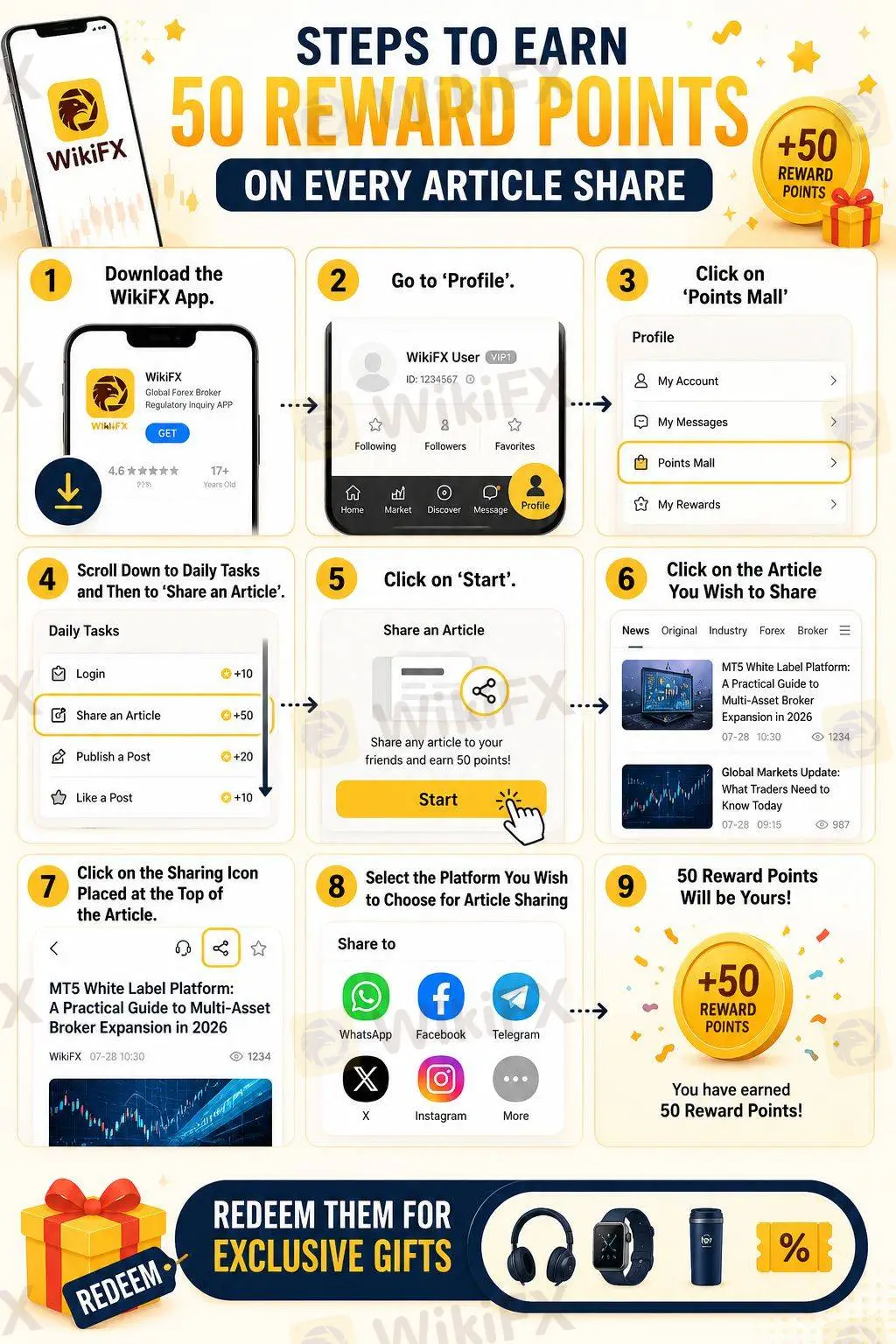
Knowledge pays at WikiFX.Every time you share a WikiFX article, you'll receive 50 Reward Points. Grow your rewards with every share and unlock exclusive gifts in the WikiFX Points Mall. Start earning today!
Follow these steps to get started.
Interesting Articles for You
Read more
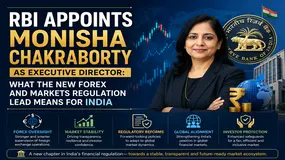
Monisha Chakraborty Appointed as RB Executive Director: What Does This Mean for India's FX Market?
The Reserve Bank of India has appointed Monisha Chakraborty as Executive Director with effect from 3 August 2026; she will oversee the Foreign Exchange Department and the Financial Markets Regulation Department. Chakraborty is a career central banker with over three decades of experience in Supervision, Foreign Exchange, and Government and Bank Accounts, and previously served as Banking Ombudsman. This report explains the significance of the new RBI Executive Director appointment for forex regulation India, the scope of the Foreign Exchange Department and the Financial Markets Regulation Department, and what authorised persons, banks, and forex market participants should monitor as the new ED takes charge.
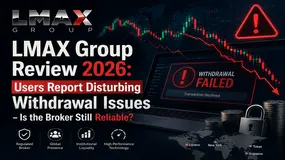
LMAX Group Review 2026: Users Report Disturbing Withdrawal Issues - Is the Broker Still Reliable?
Did LMAX Group deny you withdrawals citing frozen funds at the wallet service provider’s end? Have you been so exhausted by the endless withdrawal hassles that you have begun to stop investing in the platform? Has this UK-based liquidity provider even questioned your fund ownership status when you requested withdrawals? You are not alone! Many users have complained about these issues while sharing their LMAX Group reviews.
57 Booked in Pune Forex Scam Probe: The Fake Trading App Checklist Every Indian Investor Needs
A fresh Pune police probe has reportedly booked 57 people in connection with an alleged forex investment scam involving a trading platform. This India-focused report separates the allegation from confirmed regulatory rules, explains how fake trading app scams use social media, fabricated profits, third-party bank accounts and blocked withdrawals, and shows how investors can verify an online forex trading platform through RBI and SEBI resources. It also places the case within Pune's wider pattern of online investment fraud and provides an immediate response checklist, including the National Cyber Crime Reporting Portal and helpline 1930.
TickTrader White Label in 2026: Can You Add Liquidity Depth Without Adding Operational Blind Spots?
A TickTrader white label can look like the fastest route to a modern branded trading environment, but a fast launch is not the same as a controlled launch. This 2026 broker guide explains what the TickTrader platform is, where a Soft-FX broker solution can sit in a wider operating stack, and how to evaluate the difference between a white label, a server licence, and a connected CRM or Client Office setup. It also unpacks TickTrader cost beyond the monthly headline, including implementation, integration, support, data, governance, migration, and exit assumptions. Use the practical questions, workflow tests, comparison table, and launch checklist to assess a Soft-FX TickTrader provider without mistaking a feature demo for evidence that your brokerage can run the service safely at scale.
WikiFX Broker
Latest News
57 Booked in Pune Forex Scam Probe: The Fake Trading App Checklist Every Indian Investor Needs
WikiFXAccused of a RM123 Million Crypto Scam, He Fled to Malaysia and Claimed He Was Robbed
WikiFXAfrica's 10 Strongest Currencies in July 2026: Naira Absent
WikiFXU.S. and Japan Stand Ready for Further Coordinated Yen Intervention, Treasury Warns
WikiFXYen Retreats After Coordinated Intervention
WikiFXRinggit Flat Near RM4.09 After US Factory Data Surprise
WikiFXHF Market Review – A 1.76 Score, an Unverified CYSEC Licence, and a Frozen Account
WikiFXSri Lanka Rupee Slides 7.9% in H1 2026 as Bank Steps In
WikiFXMarket, Limit, and Stop Orders in Forex Explained Simply
WikiFXApple Faces Lawsuit Over Fake Crypto App Exposing $1.8 Million Theft
WikiFXRate Calc

