An Investor Complained About Difficulty Withdrawing the Balance in AXECAP and Equinox Markets
Abstract:Recently, Many platforms received a complaint from a user that he was experiencing difficulties withdrawing funds from AXECAP and Equinox Markets.
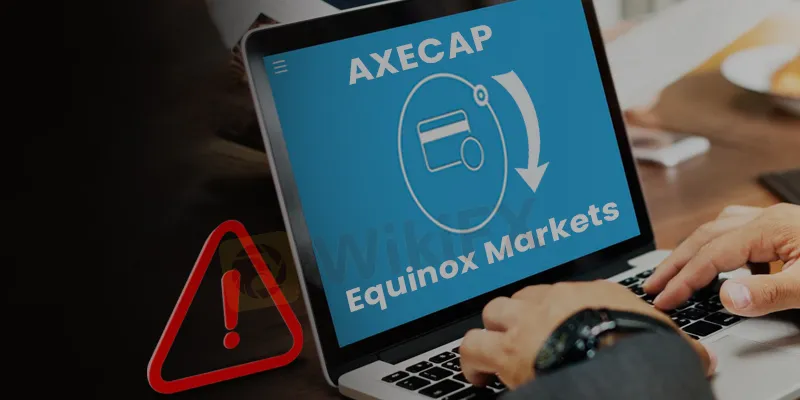
He was unable to withdraw the balance from his account and did not receive any response from customer service about the situation. After hearing the customer's description, we are basically sure that the investor has encountered an investment scam.

Currently, AXECAP's website is no longer available, although Equinox Markets' websites (https://www.equinoxmarkets.com/ and https://equinox-markets.com/) can still be accessed. According to the victim, AXECAP and Equinox Markets are actually operated by the same company, and his account was transferred from AXECAP to Equinox Markets.
In fact, WikiFX exposed the scams and warned investors against trading with it back in May of this year, and answered in the negative when some investors asked us if the company was safe.
Trade, then you can withdraw? Nonsense!
The victim was initially a client of AXECAP and traded on this platform several times. After a while, AXECAP transferred his account to Equinox Markets. And he did not make any transactions on Equinox Markets at that time.
After some time, the victim requested a withdrawal from Equinox Markets but was denied. The reason given by the broker was that the victim's withdrawal without having traded on the new platform would be considered by the regulator as suspicious of money laundering, so the user had to make at least 15 trades at Equinox Markets before he could withdraw his money. At the same time, the company also repeatedly emphasized that it was “regulated”, and it was because of the supervision of the regulator that it required the customer to trade before withdrawing.

The user chose to trust that the withdrawal problem would be solved, so he invested $1000 in the platform and started trading while waiting for the withdrawal. However, in the process of trading, the victim felt that the trading conditions offered by the counterparty were silly and that he had to follow the trading signals given by the company. All this made him feel that the broker did not want to process his withdrawal request.

Not surprisingly, the victim was not able to withdraw his money, but was instead blocked by the company and is now unable to even log into his account.
About the “Regulation”
AXECAP (AXECAP GLOBAL LIMITED) falsely claimed to be a company registered in St. Vincent and the Grenadines and regulated by the NFA and Belize FSC (aka IFSC). Equinox Markets (Equinox Markets International Limited) also claimed to be registered in St. Vincent and the Grenadines and regulated by the NFA, as well as being registered with FINTRAC in Canada.
Upon checking, AXECAP was not an SVG-registered firm and according to the search results at the NFA and Belize FSC, it was not regulated either. In May of this year, WikiFX searched the NFA and found a company called AXECAP GLOBAL LIMITED, but the NFA clearly stated that this company is “Not An NFA Member”, which means that AXECAP is not regulated by the NFA, let alone providing investment services in the United States. The NFA is currently unable to search for the company.

Although Equinox Markets was registered with SVG FSA and FINTRAC, it was not regulated because it was also “Not An NFA Member”.

Again, even if a company has a business registration, that does not mean it has the right to provide investment services to you, because SVG FSA and FINTRAC are not Forex regulators. Registration is not the same as being regulated.
WikiFX Reminds You
There are not a few scammers like AXECAP and Equinox Markets in the market, and if you are not careful, you may be lured into putting your money into the scammers' pockets.
Scammers change their names and transfer the clients' accounts to another platforms simply because enough people are scammed and more people know their scammer identities, planning to continue the scams with new identities. They will tell you their new identities and websites if you are still “valuable”; if not, the scammers will just sneak away.


Read more
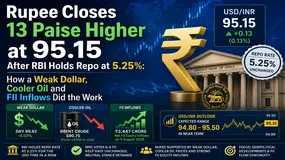
Rupee Ends 13 Paise Up at 95.15 After RBI Holds Repo at 5.25%: The Effect of a Weak USD, Cooler Oil
The Indian rupee settled at 95.15 against the US dollar on 5 August 2026, gaining 13 paise after the Reserve Bank of India's Monetary Policy Committee voted 6-0 to keep the repo rate unchanged at 5.25 percent for the third time in a row in FY27. The rupee had opened 46 paise higher, rallied to an intraday strongest of 94.89 ahead of the policy decision, and then drifted back as RBI Governor Sanjay Malhotra noted that the currency 'has not appreciated as intended despite the high flows from foreign shores.' A weak dollar index, a sharp pullback in Brent crude from above USD 100 in July, and net FII equity inflows of Rs 2,447 crore on Tuesday combined to support the rupee. USD-INR is expected to trade in a 94.80-95.50 band in the near term.
Errante Review 2026: Users Claim a Poor Trading Experience. What Does Our Investigation Reveal?
Errante, a Seychelles-based brokerage entity, is facing serious trading allegations from users globally. Users claim to have earned profits legitimately using their strategies. However, on the Errante login dashboard, many users reported an automatic deduction of earned profits. At the same time, withdrawal issues allegedly haunt many traders here. While investigating, we also found complaints concerning trade order manipulations by the broker. In this Errante review, we have examined these allegations and given an overview of its regulatory status.
Monisha Chakraborty Appointed as RB Executive Director: What Does This Mean for India's FX Market?
The Reserve Bank of India has appointed Monisha Chakraborty as Executive Director with effect from 3 August 2026; she will oversee the Foreign Exchange Department and the Financial Markets Regulation Department. Chakraborty is a career central banker with over three decades of experience in Supervision, Foreign Exchange, and Government and Bank Accounts, and previously served as Banking Ombudsman. This report explains the significance of the new RBI Executive Director appointment for forex regulation India, the scope of the Foreign Exchange Department and the Financial Markets Regulation Department, and what authorised persons, banks, and forex market participants should monitor as the new ED takes charge.
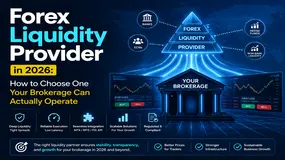
Forex Liquidity Provider in 2026: How to Choose One Your Brokerage Can Actually Operate
A forex liquidity provider decision now shapes the broker's spreads, fills, slippage, hedging cost, regulatory exposure, and exit options long after the platform is chosen. This 2026 guide explains what a forex LP actually delivers versus what the marketing claim says, how tier-1 banks, prime of prime, and multi-LP aggregators differ in practice, and how execution models (DMA, ECN, STP) change the broker's daily operating reality. It also walks through due diligence on credit, technology, reporting, governance, and exit, and shows how a 2026 broker can combine a primary LP with secondary routing without losing control of the client experience. Use the decision matrix, integration timeline, and operational tests to compare an fx liquidity provider before contract signature, not after a market event.
WikiFX Broker
Latest News
Trade24Seven Review: What Traders Should Know Before Depositing
 WikiFX
Luno Review: Unregulated Broker Warning After Frozen Accounts and Blocked Withdrawals
WikiFXOJK Revokes BTPN Syariah Ventura Licence, SMBC Speaks Out
WikiFXG4Trade Review: Withdrawal Warning Around a New Forex Broker
WikiFXRand Gains as Iran Talks and Soft US Jobs Data Hit Dollar
WikiFXGaitame Finest Review 2026: Regulation, MT4/MT5 Access, and User Feedback
WikiFXLOYAL PRIMUS Review: Accounts Frozen After Withdrawal Requests – What Traders Need to Know
WikiFXMetaTrader Basics: Place Your First Trade
WikiFXKeynes Investment Review: No Regulatory Licence Found, Should You Trust It?
WikiFXMoneta Markets Receives UAE Category 5 Licence
WikiFXRate Calc

