Banxso Review: Why Traders Should Avoid Banxso
Abstract:Banxso review highlights revoked regulation, suspicious clone licenses, and unsafe trading. Learn why Banxso is not legit.
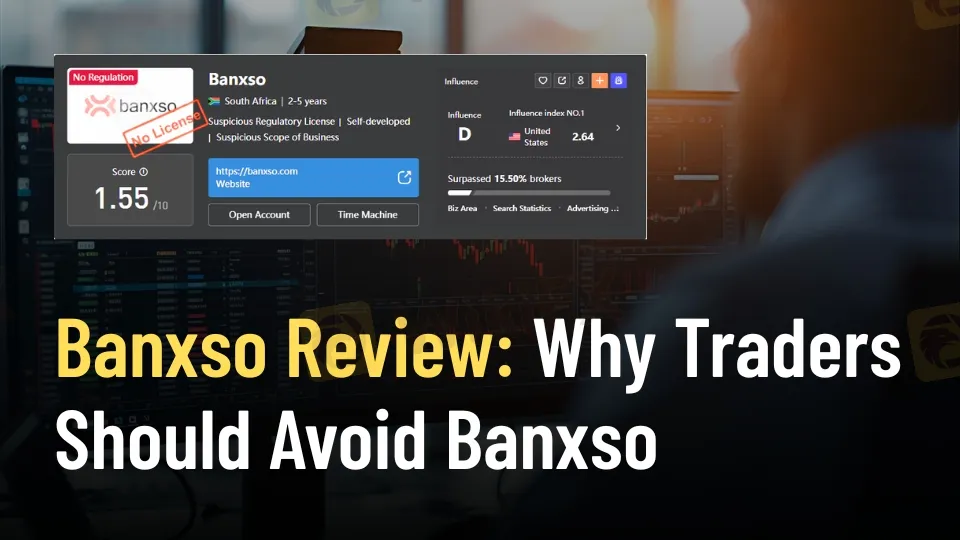
Introduction: A Broker Under Scrutiny
Banxso presents itself as a modern multi-asset trading platform based in South Africa, offering access to Forex, indices, commodities, cryptocurrencies, and stocks. On the surface, it markets advanced tools, demo accounts, and compatibility with MT5 alongside its proprietary Banxso X app. Yet beneath the polished branding lies a troubling reality: Banxso Regulation is revoked, its licenses are suspicious clones, and its legitimacy is highly questionable.
This investigative review examines Banxsos regulatory failures, operational inconsistencies, and trading risks. The findings reveal why traders should exercise extreme caution before committing funds to this broker.
Banxso Regulation: Revoked and Suspicious
The most critical red flag is Banxsos regulatory standing.
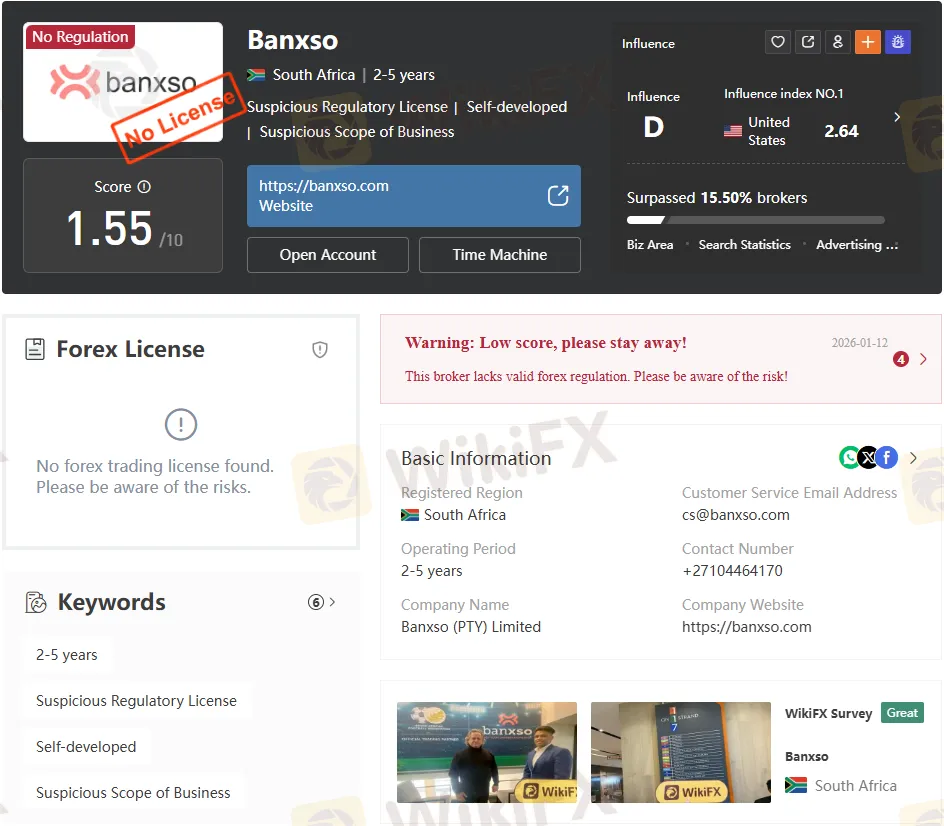
- South Africa (FSCA): Banxso (PTY) Limited once held license number 37699 under the Financial Sector Conduct Authority. That license has been revoked, stripping the firm of any legal authority to operate financial services in the country.
- Cyprus (CySEC): Banxso claims ties to Nova Securities Ltd under license 413/22. However, this is flagged as a suspicious clone, meaning Banxso is misrepresenting another entitys credentials.
- Australia (ASIC): A supposed license under ALTUS INVESTIUM LTD (000458097) is also marked as revoked and suspicious, further undermining credibility.
Without valid oversight, Banxso cannot be considered a legitimate broker. Regulation is the cornerstone of trader protection, and Banxsos revoked and cloned licenses expose clients to significant risk.
Company Background and Domain Transparency
Banxso was founded in 2022 and operates under Banxso (PTY) Limited in South Africa. The companys website is https://banxso.com, with domain records pointing to servers in the United States.
The broker advertises itself as “not your grandfathers bank,” but the lack of regulatory legitimacy makes this slogan hollow. Traders should note that flashy branding does not substitute for compliance. Competitor brokers with valid FSCA or CySEC licenses provide far greater transparency and security.
Office Location: Cape Town Presence
A field survey conducted in 2023 confirmed Banxsos office at 123 Strand Street, Cape Town, Western Cape, South Africa. While the physical presence may reassure some, it does not compensate for revoked licenses. Many unregulated brokers maintain offices to project legitimacy, but without regulatory backing, such addresses offer little protection to clients.
Trading Instruments: Wide Range, Questionable Safety
Banxso claims to provide access to:
- Forex
- Commodities
- Indices
- Stocks
- Cryptocurrencies
- Bonds, options, funds, ETFs
While the product range appears comprehensive, the absence of valid regulation makes these offerings unsafe. Competitor brokers with proper oversight deliver similar instruments but within a secure framework. Banxsos instruments, by contrast, expose traders to unmonitored risks.
Account Types: High Deposits, Risky Conditions
Banxso offers multiple account tiers, each requiring substantial deposits:
- Classic Tier: Minimum deposit $300, spreads from 1.6 pips.
- Platinum Tier: Deposits from $10,000 to $100,000, spreads from 1.2 pips.
- VIP Account: Minimum deposit $250,000, spreads from 0.8 pips, leverage up to 1:200.
These deposit requirements are significantly higher than many regulated competitors, which often allow entry with $50–$100. The high thresholds combined with revoked regulations amplify the risk of unrecoverable losses.
Trading Platforms: MT5 and Banxso X
Banxso provides access to two platforms:
- Banxso X App: Proprietary software with hedging, customizable watchlists, alerts, and AI analysis.
- MetaTrader 5 (MT5): A globally recognized platform offering algorithmic trading, advanced charting, and multi-asset support.
While MT5 is a legitimate platform, Banxsos integration does not guarantee safety. Regulation ensures platform integrity, and without it, even MT5 access cannot protect traders from broker misconduct.
Fees and Leverage: Hidden Dangers
- Leverage: Up to 1:200 across all accounts. While leverage can magnify profits, it equally magnifies losses. Unregulated brokers often exploit high leverage to encourage risky trading.
- Spreads: Starting from 0.8 pips but varying by account type. The lack of transparency raises concerns about hidden fees or manipulated spreads.
Competitor brokers under FSCA or CySEC typically provide clearer fee structures and capped leverage to protect retail traders. Banxsos model prioritizes risk over safety.
Deposit and Withdrawal Methods
Banxso accepts payments via:
- Debit/Credit Card (Visa, Mastercard)
- Bitcoin
- Bank Wire Transfer
The inclusion of cryptocurrency deposits is another red flag. Unregulated brokers often use Bitcoin to bypass financial oversight, making fund recovery nearly impossible in disputes.
Pros and Cons
Pros
- Access to MT5 and proprietary Banxso X app
- Demo accounts available
- Wide range of trading instruments
Cons
- No valid regulation
- Revoked FSCA license and suspicious clone claims under CySEC and ASIC
- High minimum deposits compared to competitors
- Risky leverage up to 1:200
- Cryptocurrency deposits with limited recovery options
Competitor Comparison
To contextualize Banxsos shortcomings, consider regulated competitors:
- AvaTrade (FSCA, ASIC regulated): Minimum deposit $100, transparent spreads, strong oversight.
- XM (CySEC regulated): Minimum deposit $5, capped leverage, investor compensation schemes.
- IG Group (FCA regulated): Global reputation, strict compliance, and robust client protections.
Compared to these brokers, Banxsos revoked regulation and high deposit requirements make it a poor choice for traders seeking safety and transparency.
Reported Cases and Suspicious Activity
The brokers regulatory record includes revoked licenses and suspicious clone warnings. These are not minor infractions but serious breaches of trust. Traders should interpret such findings as clear evidence of risk.
Bottom Line: Banxso Is Not Legit
Banxsos revoked FSCA license, suspicious clone claims under CySEC and ASIC, and reliance on high deposits and risky leverage paint a clear picture: Banxso is not a legitimate broker.
While it offers access to MT5 and a proprietary app, these features cannot offset the dangers of trading with an unregulated entity. Competitor brokers provide similar tools within a secure, regulated environment.
For traders prioritizing safety, transparency, and regulatory protection, Banxso should be avoided. The risks far outweigh the benefits, and the lack of valid oversight makes this broker unsuitable for serious investors.

Read more
Spreadex Review: Wider Spread & Unexplained Account Closure Allegations for This 2-Decade-Old Broker
Did you incur trading losses on the Spreadex platform due to wider spreads? Have you experienced delays in trade processing by the United Kingdom-based forex broker? Has your Spreadex trading account been closed without any explanation? You are not alone! Many traders have expressed concerns on online broker review platforms. In this Spreadex review 2026, we have covered user allegations and provided a regulatory framework the broker operates under.
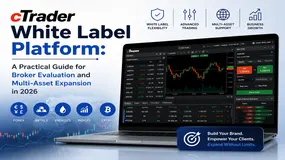
cTrader White Label Platform: A Practical Guide for Broker Evaluation and Multi-Asset Expansion in 2
A broker can launch a white-label platform quickly and still fail the first serious operating test. The failure often begins quietly: an assets expansion has been approved, the client app is branded, and a new account journey looks complete. Then a client asks why a trade-related status, funding hand-off, or account restriction looks different across channels. Support cannot see the same reference trail as operations. The product owns the screen, but no one owns the explanation. The issue is not a missing feature. It is an untested operating model. That is why a cTrader white label platform should be evaluated as a route to a multi-asset service - not as a shortcut to a more attractive terminal. The central question is whether the broker can add instruments, client channels, integrations, and service capacity without making its controls harder to operate or explain.
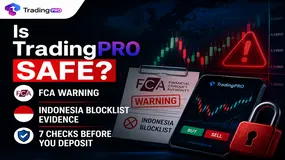
Is TradingPRO Safe? FCA Warning, Indonesia Blocklist Evidence, and 7 Checks Before You Deposit
This Trading Pro broker review checks the FCA warning, Indonesia blocklist evidence, licence claims, and what South Asian users should verify before depositing.
MT4 White Label Cost in 2026: What Brokers Must Budget Beyond the Platform Fee
The visible fee in an MT4 white label proposal is rarely the real cost of operating it. For an existing broker, the decision is not simply whether an MT4 white label platform is “cheap” or “expensive.” The real question is whether the commercial model remains viable after integration, support, data, client migration, compliance, and exit costs are included. That is why an MT4 white label cost review should be built as a 24- to 36-month operating case. It should compare three credible choices: 1. Keep the present MT4 setup and improve its weakest controls. 2. Replace the MT4 white label provider but retain the client proposition. 3. Migrate selected clients or products to another platform while running MT4 in parallel. This guide explains how to build that case without relying on headline prices or generic vendor claims.
WikiFX Broker
Latest News
BROKSTOCK Review: What Traders Should Know Before Depositing
 WikiFX
Darwinex Review: Regulated but Office Not Found with Trader Complaints?
WikiFXRBI Ends Deposit Rate Discrimination Between Branches
WikiFXWhy Do Forex Brokers Show Different USD/MYR Quotes?
WikiFXOROKU EDGE Review: Blacklisted by SCM Malaysia and Users Report Frozen Funds
WikiFXStill Trusting Telegram Signals? This Is Why You Are Still Not a Profitable Trader
WikiFXAs Warsh‘s Fed faces pressure to act on inflation, these indicators show it’s at its lowest in years
WikiFXRomance Scam Targets Hong Kong Actress for RM156,000
WikiFXFONDEX Review 2026: Things FONDEX Broker Might Not Want You To See
WikiFXVAULT MARKETS Review: Is Your Deposit Safe?
WikiFXRate Calc

