WikiFX Broker Assessment Series | Exnova: Is It Trustworthy?
Abstract:In this article, we will conduct a comprehensive examination of Exnova, delving into its key features, fees, safety measures, deposit and withdrawal options, trading platform, and customer service. WikiFX endeavours to provide you with the essential information required to make an informed decision about utilizing this platform.
In this article, we will conduct a comprehensive examination of Exnova, delving into its key features, fees, safety measures, deposit and withdrawal options, trading platform, and customer service. WikiFX endeavours to provide you with the essential information required to make an informed decision about utilizing this platform.
Background:
Founded in 2021, Exnova is an unregulated online broker operated by Digital Smart LLC, with registrations in Nevis, Cyprus, and a claimed presence in Saint Vincent and the Grenadines. The platform offers a user-friendly interface and access to over 250 trading assets, including indices, currencies, commodities, and cryptocurrencies. However, the lack of oversight by any major financial regulatory authority raises concerns about investor protection, as Saint Vincent and the Grenadines does not enforce strict regulations over brokerage operations.

In addition, Exnova offers an affiliate programme through Affstore. Affstore is a comprehensive affiliate marketing platform specialising in financial products, including Forex, CFDs, binary and digital options, and proprietary trading services. It provides a range of commission structures and promotional tools.

Types of Accounts:
Exnova‘s website does not mention any type of account other than a single live account, which requires a minimum deposit of $10, and a free demo account. Therefore, it can be inferred that Exnova only offers one type of live account. However, no further details about this live account are stated explicitly on the broker’s website.
Deposits and Withdrawals:
Exnova claims to offer several deposit and withdrawal options, but the corresponding details are not disclosed on its official website.

Trading Platforms:
On the Exnova trading site, the only platform available is its proprietary, in-house-developed Exnova trading platform. The company states that the platform is built to meet industry standards and is intended to support a range of trading activities. It includes tools for order management, such as stop loss, take profit, and trailing stop loss, as well as features like charting tools, price alerts, and a newsfeed.

Research and Education:
Exnova offers free video tutorials, step-by-step instructions, a weekly newsletter, and community chats that may be beneficial for traders.
Customer Service:
Exnova provides customer service support in several foreign languages, including English, Korean, Japanese, Vietnamese, Portuguese, and others. Its support email address is support@exnova.com.
Conclusion:
WikiFX, a global forex broker regulatory platform, has assigned Exnova a WikiScore of 1.39 out of 10.

This low score is attributed to the fact that Exnova is operating without a valid licence, and much of the crucial information that should be publicly disclosed is missing from its website.

To make matters worse, WikiFX has also received several complaints about the broker, further casting doubt on its trustworthiness.


Therefore, WikiFX advises users to choose a broker with a higher WikiScore for greater credibility and security.


Read more
Errante Review 2026: Users Claim a Poor Trading Experience. What Does Our Investigation Reveal?
Errante, a Seychelles-based brokerage entity, is facing serious trading allegations from users globally. Users claim to have earned profits legitimately using their strategies. However, on the Errante login dashboard, many users reported an automatic deduction of earned profits. At the same time, withdrawal issues allegedly haunt many traders here. While investigating, we also found complaints concerning trade order manipulations by the broker. In this Errante review, we have examined these allegations and given an overview of its regulatory status.
Forex Liquidity Provider in 2026: How to Choose One Your Brokerage Can Actually Operate
A forex liquidity provider decision now shapes the broker's spreads, fills, slippage, hedging cost, regulatory exposure, and exit options long after the platform is chosen. This 2026 guide explains what a forex LP actually delivers versus what the marketing claim says, how tier-1 banks, prime of prime, and multi-LP aggregators differ in practice, and how execution models (DMA, ECN, STP) change the broker's daily operating reality. It also walks through due diligence on credit, technology, reporting, governance, and exit, and shows how a 2026 broker can combine a primary LP with secondary routing without losing control of the client experience. Use the decision matrix, integration timeline, and operational tests to compare an fx liquidity provider before contract signature, not after a market event.
LMAX Group Review 2026: Users Report Disturbing Withdrawal Issues - Is the Broker Still Reliable?
Did LMAX Group deny you withdrawals citing frozen funds at the wallet service provider’s end? Have you been so exhausted by the endless withdrawal hassles that you have begun to stop investing in the platform? Has this UK-based liquidity provider even questioned your fund ownership status when you requested withdrawals? You are not alone! Many users have complained about these issues while sharing their LMAX Group reviews.
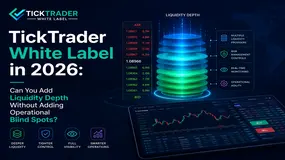
TickTrader White Label in 2026: Can You Add Liquidity Depth Without Adding Operational Blind Spots?
A TickTrader white label can look like the fastest route to a modern branded trading environment, but a fast launch is not the same as a controlled launch. This 2026 broker guide explains what the TickTrader platform is, where a Soft-FX broker solution can sit in a wider operating stack, and how to evaluate the difference between a white label, a server licence, and a connected CRM or Client Office setup. It also unpacks TickTrader cost beyond the monthly headline, including implementation, integration, support, data, governance, migration, and exit assumptions. Use the practical questions, workflow tests, comparison table, and launch checklist to assess a Soft-FX TickTrader provider without mistaking a feature demo for evidence that your brokerage can run the service safely at scale.
WikiFX Broker
Latest News
LQH MARKETS Review: Multiple Traders Report Withdrawals Blocked and Accounts Terminated
 WikiFX
Spread Cheating: The Invisible Trading Cost That Could Be Working Against You
WikiFX"They Want to See Your Face": Inside ATFX Cambodia's Rise
WikiFX57 Booked in Pune Forex Scam Probe: The Fake Trading App Checklist Every Indian Investor Needs
WikiFXAccused of a RM123 Million Crypto Scam, He Fled to Malaysia and Claimed He Was Robbed
WikiFXAfrica's 10 Strongest Currencies in July 2026: Naira Absent
WikiFXU.S. and Japan Stand Ready for Further Coordinated Yen Intervention, Treasury Warns
WikiFXMarket, Limit, and Stop Orders in Forex Explained Simply
WikiFXSri Lanka Rupee Slides 7.9% in H1 2026 as Bank Steps In
WikiFXHF Market Review – A 1.76 Score, an Unverified CYSEC Licence, and a Frozen Account
WikiFXRate Calc

