WikiFX Overview on Ubuntu Markets
Abstract:Ubuntu Markets, registered under the name Ubuntu We Sizwe 247 (Pty) Ltd, is a South African broker that has garnered attention for all the wrong reasons.
Ubuntu Markets, registered under the name Ubuntu We Sizwe 247 (Pty) Ltd, is a South African broker that has garnered attention for all the wrong reasons. Despite its presence in the bustling financial hub of Johannesburg, with offices at TBE Morningside Block 4, 150 Rivonia Road, Morningside, and 108 Elizabeth Ave, Parkmore, Sandton, this broker has failed to secure a regulatory license. This lack of oversight is a significant red flag for potential investors.
WikiFX Rating: A Stark Warning
WikiFX, a respected platform for assessing the credibility of forex brokers, has given Ubuntu Markets an alarmingly low score of 1.05/10. This rating suggests that the broker poses considerable risks to traders, particularly those who may be lured in by its promises of competitive trading conditions.
Account Offerings: Four Choices, But at What Cost?
Ubuntu Markets offers four distinct types of accounts:
Ubuntu Black Account
Ubuntu Premium Account
Ubuntu Prime Account
Ubuntu Lite Account
While these account options might seem attractive to a range of traders, from beginners to more experienced investors, the lack of regulatory oversight means that the security of your funds could be compromised.
Social Media Presence: A Double-Edged Sword
In an age where social media is a powerful tool for businesses to connect with their audience, Ubuntu Markets has established its presence across major platforms, including X, Facebook, Instagram, and YouTube. While this might indicate a modern and accessible broker, it's essential to recognize that an active social media presence does not equate to credibility or reliability.
Potential Risks: Proceed with Caution
Given the low score from WikiFX and the absence of a regulatory license, engaging with Ubuntu Markets comes with significant risks. Traders should exercise extreme caution and consider other options that offer more transparency and security.
In conclusion, while Ubuntu Markets may appear to be a viable choice for forex trading on the surface, the underlying risks highlighted by WikiFX's low rating and the lack of regulation make it a broker that should be approached with considerable caution. Always prioritize safety and due diligence when choosing a broker to trust with your investments.


Read more
LMAX Group Review 2026: Users Report Disturbing Withdrawal Issues - Is the Broker Still Reliable?
Did LMAX Group deny you withdrawals citing frozen funds at the wallet service provider’s end? Have you been so exhausted by the endless withdrawal hassles that you have begun to stop investing in the platform? Has this UK-based liquidity provider even questioned your fund ownership status when you requested withdrawals? You are not alone! Many users have complained about these issues while sharing their LMAX Group reviews.
TickTrader White Label in 2026: Can You Add Liquidity Depth Without Adding Operational Blind Spots?
A TickTrader white label can look like the fastest route to a modern branded trading environment, but a fast launch is not the same as a controlled launch. This 2026 broker guide explains what the TickTrader platform is, where a Soft-FX broker solution can sit in a wider operating stack, and how to evaluate the difference between a white label, a server licence, and a connected CRM or Client Office setup. It also unpacks TickTrader cost beyond the monthly headline, including implementation, integration, support, data, governance, migration, and exit assumptions. Use the practical questions, workflow tests, comparison table, and launch checklist to assess a Soft-FX TickTrader provider without mistaking a feature demo for evidence that your brokerage can run the service safely at scale.
eToro Review 2026: Why Some Users Report Withdrawal Problems - and What the Evidence Shows
eToro, a United Kingdom-based brokerage entity, is facing serious user allegations concerning the basic facility a trader expects - Fund Withdrawal. Users worldwide are complaining about the lack of a withdrawal option, account restriction, and lack of customer support in real time. Many of their complaints appeared on credible broker review platforms such as WikiFX. In this eToro review, we have examined these complaints.
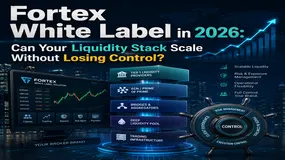
Fortex White Label in 2026: Can Your Liquidity Stack Scale Without Losing Control?
A Fortex white label can look like the fastest route to a modern branded trading environment, but a fast launch is not the same as a controlled launch. This 2026 broker guide explains what the Fortex platform is, where a Fortex broker solution can sit in a wider operating stack, and how to evaluate the difference between a white label, a server licence, and a connected CRM or Client Office setup. It also unpacks Fortex cost beyond the monthly headline, including implementation, integration, support, data, governance, migration, and exit assumptions. Use the practical questions, workflow tests, comparison table, and launch checklist to assess a Fortex provider without mistaking a feature demo for evidence that your brokerage can run the service safely at scale.
WikiFX Broker
Latest News
57 Booked in Pune Forex Scam Probe: The Fake Trading App Checklist Every Indian Investor Needs
 WikiFX
Accused of a RM123 Million Crypto Scam, He Fled to Malaysia and Claimed He Was Robbed
WikiFXAfrica's 10 Strongest Currencies in July 2026: Naira Absent
WikiFXU.S. and Japan Stand Ready for Further Coordinated Yen Intervention, Treasury Warns
WikiFXYen Retreats After Coordinated Intervention
WikiFXRinggit Flat Near RM4.09 After US Factory Data Surprise
WikiFXHF Market Review – A 1.76 Score, an Unverified CYSEC Licence, and a Frozen Account
WikiFXSri Lanka Rupee Slides 7.9% in H1 2026 as Bank Steps In
WikiFXMarket, Limit, and Stop Orders in Forex Explained Simply
WikiFXApple Faces Lawsuit Over Fake Crypto App Exposing $1.8 Million Theft
WikiFXRate Calc

