eToro Review 2026: Why Some Users Report Withdrawal Problems - and What the Evidence Shows
Abstract:eToro, a United Kingdom-based brokerage entity, is facing serious user allegations concerning the basic facility a trader expects - Fund Withdrawal. Users worldwide are complaining about the lack of a withdrawal option, account restriction, and lack of customer support in real time. Many of their complaints appeared on credible broker review platforms such as WikiFX. In this eToro review, we have examined these complaints.
eToro, a United Kingdom-based brokerage entity, is facing serious user allegations concerning the basic facility a trader expects - Fund Withdrawal. Users worldwide are complaining about the lack of a withdrawal option, account restriction, and lack of customer support in real time. Many of their complaints appeared on credible broker review platforms such as WikiFX. In this eToro review, we have examined these complaints and provided a regulatory overview of the broker.
eToro Broker Overview: Where Can You Invest Through This Platform?
eToro, with over 15 years of experience in the brokerage space, claims to offer a myriad of assets for investment. These are forex, stocks, commodities, indices, cryptocurrencies and exchange-traded funds (ETFs).
Some popular forex pairs available on the platform include EUR/USD, GBP/USD, NZD/USD, USD/CAD, USD/JPY, AUD/USD, EUR/GBP and AUD/JPY.
Stock traders can bet on Pyx Resources Limited, elumeo SE, Cambium Networks Corporation, IES Holdings Inc, Canaan Inc, Scynexis Inc, etc.
Cryptocurrencies listed on the platform include Bitcoin, Ethereum, USDC and XRP.
If you are an index trader, you have good options, including US Dollar Index, SPX500 Index, NASDAQ 500 Index, DJ30 Index, UK100 Index, FRA40 Index, etc.
Tradable commodities on the platform include oil, gold, silver, copper, natural gas, platinum, palladium, sugar, cotton, cocoa, wheat, rice, soybean oil, etc.
Despite having a wide range of tradable assets, eToro continues to face allegations from users on several trading aspects, including withdrawals. Have a look.
Top User Allegations Against eToro
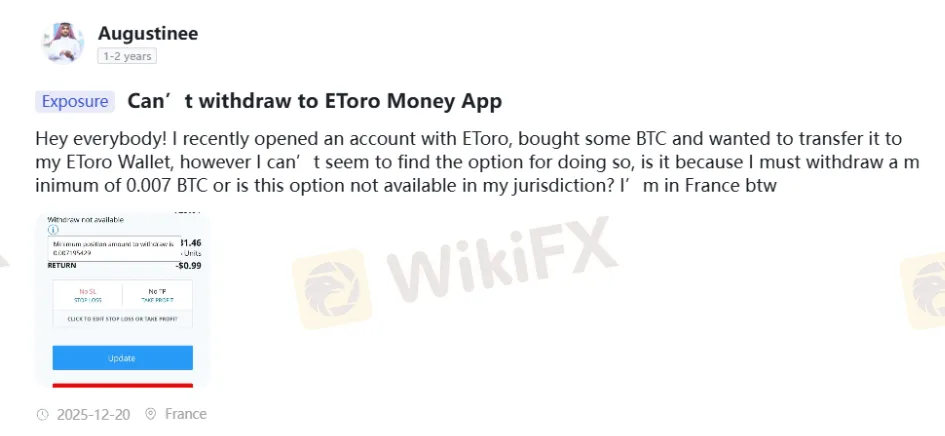
No Withdrawal Option on the Trading Platform
A user from France reported buying some bitcoins on the eToro platform and wanting to transfer them to his wallet. However, the option to do this was allegedly not available on the platform, prompting the trader to share this negative eToro review.
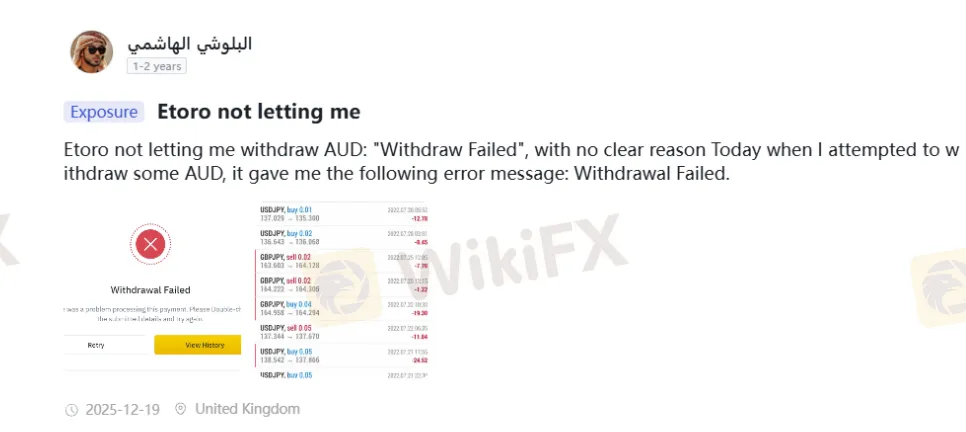
Failed AUD Withdrawal Experience Reported
A United Kingdom-based client claimed a failed AUD withdrawal experience on the eToro platform. Expressing concern over this experience, the trader reported the incident on WikiFX, a leading forex broker regulation inquiry app.
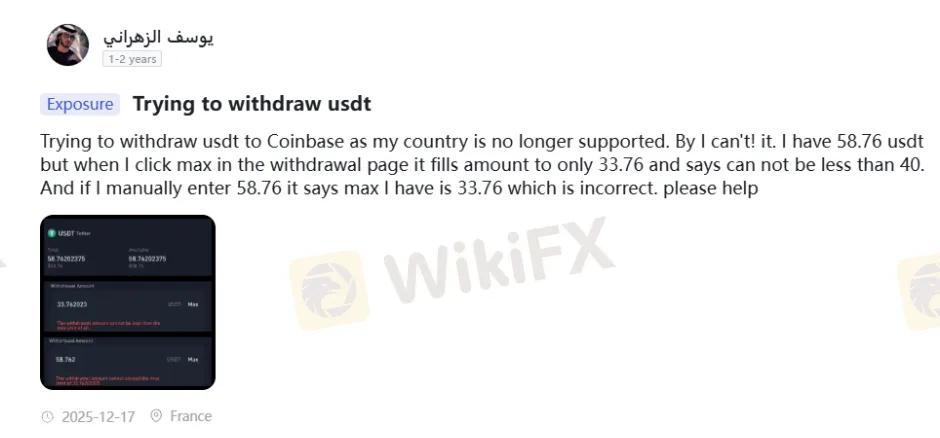
Withdrawal Errors on eToro Login
A user from France reported technical glitches concerning withdrawals. Explaining the complaint, the trader expressed difficulties withdrawing USDT to coinbase because it was not supported in the country of his residence. The user had 58.76 USDT. However, upon clicking on the withdrawal page, it showed just 33.76 USDT. As the trader entered 58.76 manually, the maximum he could withdraw was 33.76. Here is that eToro review.
Withdrawal Approved, Then Reversed as Account Was Suddenly Restricted
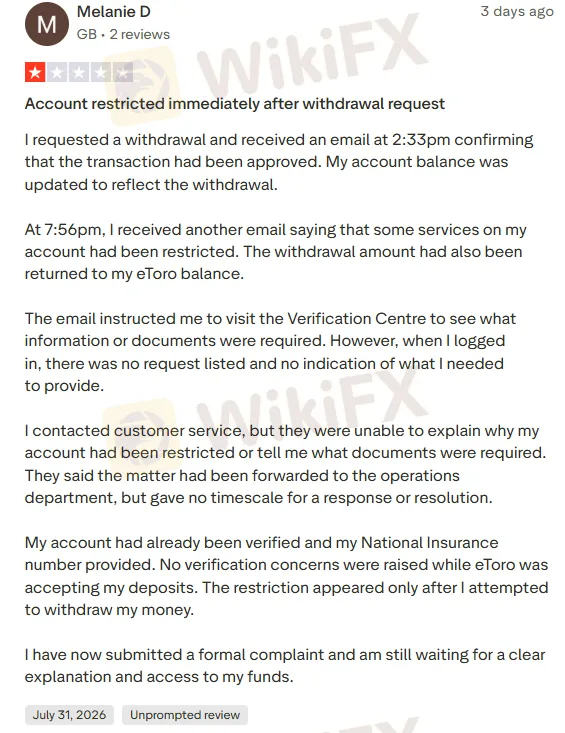
The user stated having submitted a withdrawal request and initially received an email confirming that the transaction had been approved. According to the user, the account balance was adjusted to reflect the withdrawal, suggesting the request had successfully passed the initial processing stage.
However, later the same day, the situation changed unexpectedly. The trader received another email informing him that certain services on their account had been restricted. At the same time, the previously approved withdrawal was reversed, and the withdrawn amount was credited back to their eToro account instead of being transferred.
The email instructed the user to visit the Verification Centre to submit any required information or documents. According to the complaint, no verification requests or document requirements were displayed after logging in, leaving them without any guidance on how to resolve the issue.
The user contacted customer support but alleged that representatives could not explain the reason for the account restriction or identify what additional documentation was needed. The user was informed that the case had been escalated to the operations department, but no estimated timeline for investigation or resolution was provided.
The complainant further pointed out that his account had already completed the verification process, including submission of his National Insurance number, and that no compliance concerns had been raised while eToro was accepting deposits. The trader questioned why restrictions only appeared after they attempted to withdraw their funds.
Frustrated by the lack of transparency and continued inability to access funds, the user reportedly filed a formal complaint and was awaiting a clear explanation, removal of the account restrictions, and completion of his withdrawal request.
Here is the complaint screenshot.
An Unsatisfactory Share Withdrawal Experience
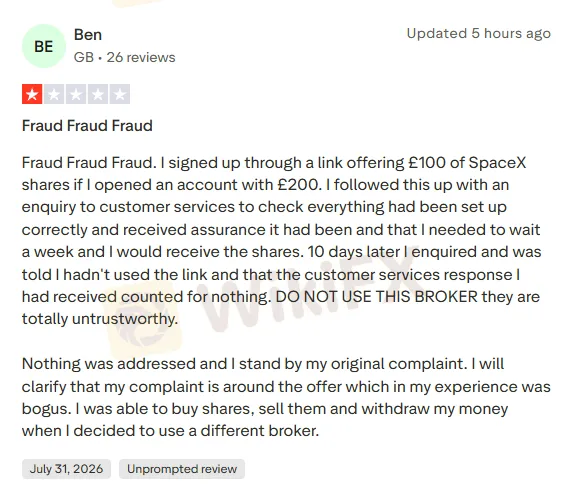
A client from a UK-based trader reported being signed up through a link offering £100 of a particular companys share by opening an account worth £200. Subsequently, the trader reported confirming with customer services to find whether everything was set up correctly. To which, the eToro customer support team answered in the affirmative. The trader was told to wait for a week to receive shares. Ten days later, as the trader reportedly contacted customer support, he was allegedly told to have not used the link. Frustrated by this experience, the trader narrated this seemingly fraudulent experience through this eToro review.
Trader Alleges Heavy Losses Due to Slippage, Platform Issues, and Unexpected Regulatory Transfer
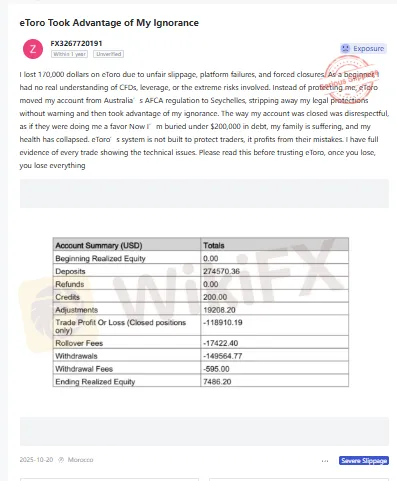
The complainant alleged losing approximately $170,000 while trading on eToro, attributing the losses to unfair slippage, platform failures, and forced position closures. According to the user, these issues significantly affected his trading outcomes and contributed to substantial financial losses.
The trader admitted that, as a beginner at the time, he could not fully understand the risks associated with Contracts for Difference (CFDs), leverage, or the potential for rapid losses in highly leveraged trading. According to the user, the platform did not provide sufficient protection or guidance for inexperienced traders.
A key allegation in the complaint is that their account was reportedly moved from Australia's regulatory framework under the Australian Financial Complaints Authority (AFCA) to a Seychelles-regulated entity without adequate warning. The complainant claimed this change reduced the legal protections available to him and left him with fewer avenues for dispute resolution.
The user also expressed dissatisfaction with the manner of account closure, describing the process as disrespectful.
According to the complaint, the financial impact has been severe. The trader stated that the losses have left them with approximately $200,000 in debt, causing significant stress on their family and negatively affecting their physical and mental well-being.
For more details, check this eToro review
eToro Regulation Status & User Trust Score
On the eToro regulation status, the reading is pretty impressive, with licenses from credible authorities such as the Financial Conduct Authority (FCA), the Australian Securities & Investments Commission (ASIC) and the Cyprus Securities and Exchange Commission (CYSEC). The broker has as many as seven regulations. However, the reportedly growing user resentment sparks outrage and questions that the brokerage firm must quickly address. The trust score for the broker still stands at an impressive 7.77 out of 10.
Conclusion
eToro remains one of the most recognized multi-asset trading platforms, offering access to forex, stocks, commodities, cryptocurrencies, ETFs, and indices under multiple regulatory licenses. Its regulatory profile, including oversight from authorities such as the FCA, ASIC, and CySEC, together with a 7.77/10 trust score, reflects a broker that operates under established regulatory frameworks.
However, the user complaints examined in this review reveal recurring concerns that prospective traders should not ignore. Allegations relating to delayed or unsuccessful withdrawals, account restrictions following withdrawal requests, technical inconsistencies during withdrawals, promotional disputes, customer support responsiveness, and claims of slippage and platform-related trading issues have all been reported by individual users on broker review platforms. While these complaints represent users' personal experiences and do not, by themselves, establish wrongdoing by the broker, they highlight areas that warrant careful consideration.
Before opening an account or depositing funds, traders should thoroughly review the broker's withdrawal policies, account verification requirements, applicable terms and conditions, regulatory entity, leverage risks, and dispute resolution mechanisms. Beginners, in particular, should ensure they fully understand the risks associated with CFDs and leveraged trading before committing capital.
Ultimately, eToro continues to enjoy a strong regulatory standing, but the volume and nature of recent user allegations suggest that traders should conduct their own due diligence, verify which regulated entity they will be trading under, and monitor their account activity carefully throughout their trading journey.
For more such broker investigation reports, follow us on the WikiFX app.

Knowledge pays at WikiFX.
Every time you share a WikiFX article, you'll receive 50 Reward Points. Grow your rewards with every share and unlock exclusive gifts in the WikiFX Points Mall. Start earning today!
Check the step-by-step process for claiming rewards.

Interesting Articles for You
White Label in 2026: Can Your Liquidity Stack Scale Without Losing Control?



Read more
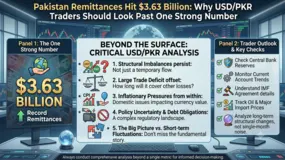
Pakistan Remittances Hit $3.63 Billion: Why USD/PKR Traders Should Look Past One Strong Number
Pakistan remittances reached $3.631 billion in July 2026, up 13% year on year and 4.5% from June, according to the latest State Bank of Pakistan data release. The SBP remittances update is a useful external-sector input, but it is not a currency forecast. This guide explains what the inflow can mean for the Pakistan forex market and USD PKR, and what it cannot prove about the next Pakistan rupee move.
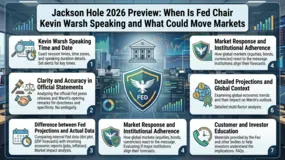
Jackson Hole 2026 Preview: When Is Fed Chair Kevin Warsh Speaking and What Could Move Markets
Fed Chair Kevin Warsh is listed to deliver Jackson Hole keynote remarks on 28 August 2026. See the schedule, market scenarios and USD-gold watchlist.
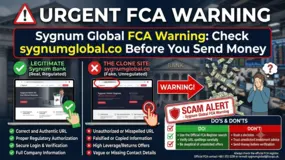
Sygnum Global FCA Warning: Check sygnumglobal.co Before You Send Money
The FCA warned that Sygnum Global and sygnumglobal.co are unauthorised. Check the phone numbers, consumer protections and payment steps before dealing.
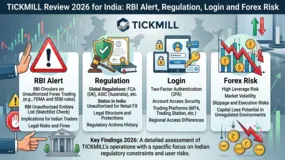
TICKMILL Review 2026 for India: RBI Alert, Regulation, Login and Forex Risk
The RBI Alert List, updated on 19 November 2025, names TICKMILL at row 38. RBI says listed entities are not authorised to deal in forex under FEMA or operate an authorised forex ETP in India. The FCA also lists the genuine firm TICKMILL UK LTD, FRN 717270, in a warning about a separate clone. The overseas record does not create RBI authorisation.
WikiFX Broker
Latest News
Rupee Holds Near 95.70 as RBI Support Meets Oil Risk
 WikiFX
Sygnum Global FCA Warning: Check sygnumglobal.co Before You Send Money
WikiFXCapital Street FX Review: Is Your Deposit Safe?
WikiFXFXGT Review 2026: Withdrawal Rejection, Profit Deduction & Slippage Complaints Surface Online
WikiFXFIX API Forex in 2026: The Broker Integration Questions That Matter After the Connection is Live
WikiFXSaracenMarkets Review 2026: Regulation, High Leverage, and Mixed User Signals
WikiFXWikiFX Wishes You a Blessed Maulidur Rasul
WikiFXRev One Trading Shuts Down as Founder Shifts Focus to Prediction Markets
WikiFXWhat Your Trading Journal Really Reveals About Your Behaviour
WikiFXHF Market Review: A CySEC Clone Warning and an Unreachable Website
WikiFXRate Calc
