FSCA Withdrew The License of Basfour
Abstract:The Financial Sector Conduct Authority (FSCA) has revoked Basfour 3773 (Pty) Ltd's FSP license for operating under the name Oinvest (FSP 42020), prohibited Jane Engelbrecht, the company's sole director, for a period of ten years, and assessed Basfour an administrative fine of R 58,608,810 against it.
Prior to this, Basfour was permitted to perform intermediary services in relation to FX investments and derivatives by the Financial Sector Conduct Authority as a Category I financial services provider. From April 11, 2012, Basfour essentially functioned with a minimal presence in South Africa.
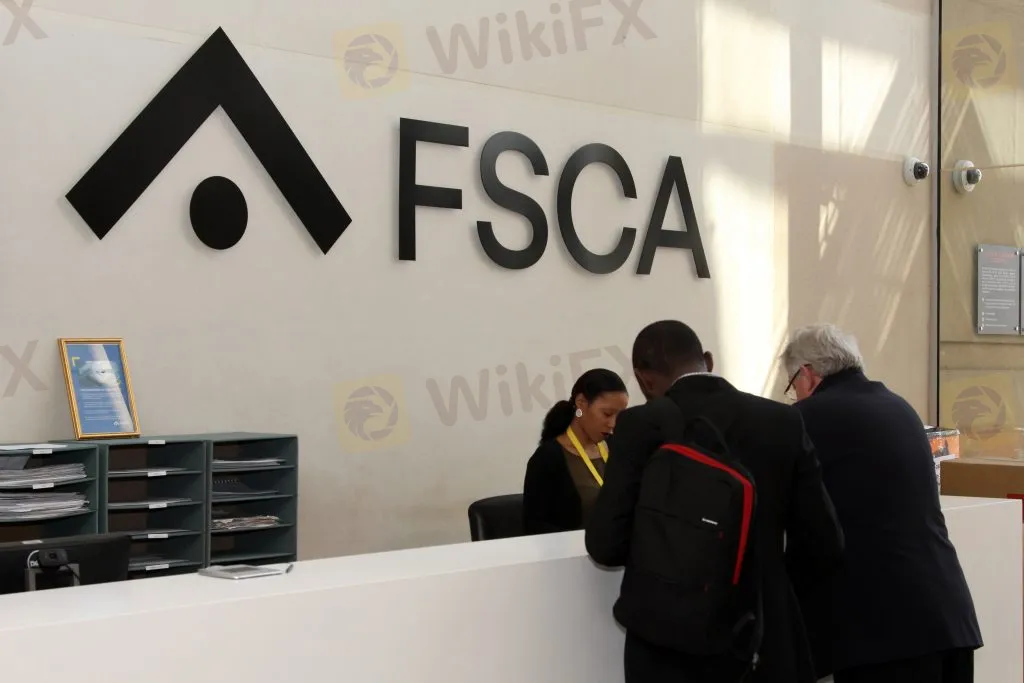
After receiving multiple complaints from the general public, the FSCA launched an inquiry, which showed that Basfour:
despite not having the proper authorization, gave clients financial advice;
without revealing that Basfour was the counterparty to the client transactions, traded as principal with its customers while recommending them to embark into such trades;
excessively coerced its customers into making deposits and trading on the site;
failure to timely process withdrawals;
omitted to disclose important details, such as the costs and hazards involved with the trade.
Basfour therefore flagrantly violated the FAIS Act's sections 7(1)(a) and 13(3), its license condition 3, sections 2 and 11 of the General Code, and sections 3(1)(b) through (e), I and (h) of the Forex Code. From 1 January 2018 to 30 August 2019, Basfour's clients experienced losses of at least R 58,608,810.
In accordance with section 167(1)(a) of the Financial Sector Regulation Act No. 9 of 2017 (the FSR Act), the FSCA has decided to: • Impose an administrative penalty of R 58,608,810 on Basfour; • Withdraw the license of Basfour (license number 42020); and • Debar Ms. Jane Engelbrecht, who is the sole director, Key Individual (KI), and a representative of Basfour, for a period of 10 years.
In accordance with section 167(1)(a) of the Financial Sector Regulation Act No. 9 of 2017 (the FSR Act), impose an administrative fine of R 58,608,810 on Basfour; • revoke Basfour's license (license number 42020); and
Debar Ms. Jane Engelbrecht for a term of ten years as the only director, Key Individual (KI), and Basfour representative.

Read more

Is TradingPRO Safe? FCA Warning, Indonesia Blocklist Evidence, and 7 Checks Before You Deposit
This Trading Pro broker review checks the FCA warning, Indonesia blocklist evidence, licence claims, and what South Asian users should verify before depositing.
MT4 White Label Cost in 2026: What Brokers Must Budget Beyond the Platform Fee
The visible fee in an MT4 white label proposal is rarely the real cost of operating it. For an existing broker, the decision is not simply whether an MT4 white label platform is “cheap” or “expensive.” The real question is whether the commercial model remains viable after integration, support, data, client migration, compliance, and exit costs are included. That is why an MT4 white label cost review should be built as a 24- to 36-month operating case. It should compare three credible choices: 1. Keep the present MT4 setup and improve its weakest controls. 2. Replace the MT4 white label provider but retain the client proposition. 3. Migrate selected clients or products to another platform while running MT4 in parallel. This guide explains how to build that case without relying on headline prices or generic vendor claims.
ABET Review 2026: Users Allege Missing Funds and Trade Manipulation - Our Investigation
ABET, a Bulgaria-based brokerage firm, faces severe allegations from users for the reportedly inefficient way it handles their funds. While some alleged illegitimate account blocks by the broker, others reported fund scams and trade manipulations. These ABET reviews have raised question marks over the broker’s legitimacy.

22K Trader Review 2026: Ongoing User Allegations Raise Fresh Questions About Trust
22K Trader, a United Kingdom-based brokerage entity, is facing severe fund scam allegations from Indian users, in particular. One user reported losing as high as $26,500 on the platform. Similarly, other users have claimed different loss amounts while also criticizing the forced trade execution by the broker. In this 22K Trader review, we have examined several user allegations and provided the regulatory framework the broker operates under.
WikiFX Broker
Latest News
Alpari Review 2026: Official Warnings and High Complaint Patterns
 WikiFX
M4Markets Broker Review: Regulation, Licenses and WikiScore Analysis
WikiFXOver RM102 Million Crypto Seized in Romance Scam Crackdown
WikiFX"High Inspirations" Mastermind Disappears as $25 Billion Investment Scheme Collapses
WikiFXRupee Hits Two-Month Low as Oil Surges Past $95
WikiFXWhy RBI Sold $6.1 Billion in Forex Markets in May
WikiFXCNMV Red-Flags 9 Unauthorised Investment Platforms
WikiFXOrder Execution: What Discretionary Latitude Means for Your Trades
WikiFXScammed Twice: Recovery Fraud Takes Advantages of Victims Again
WikiFXWhy Prices Rush Back to Fill Gaps: Liquidity Voids Explained
WikiFXRate Calc

