SEBI Commodity Position Limits 9 September 2026: 2% Caps and New Penalties Explained

Abstract:SEBI changed India’s commodity derivatives position-limit framework on 9 September 2026, and the circular took effect immediately. The new SEBI commodity position limits double the client-level caps for agricultural commodities to 2% of deliverable supply for Broad commodities, 1% for Narrow commodities and 0.5% for sensitive commodities. SEBI also capped the daily monetary penalty for a client-level breach: ₹200,000 where the violation exceeds 2% of the prescribed limit, and ₹10,000 where it is up to 2%. Traders should not read the change as permission to ignore exchange risk controls; excess positions can still be squared off.

SEBI changed Indias commodity derivatives position-limit framework on 9 September 2026, and the circular took effect immediately. The new SEBI commodity position limits double the client-level caps for agricultural commodities to 2% of deliverable supply for Broad commodities, 1% for Narrow commodities and 0.5% for Sensitive commodities. SEBI also capped the daily monetary penalty for a client-level breach: ₹200,000 where the violation exceeds 2% of the prescribed limit, and ₹10,000 where it is up to 2%. Traders should not read the change as permission to ignore exchange risk controls; excess positions can still be squared off.
What SEBI Changed on 9 September
Circular HO/47/16/13(5)2026-MRD-POD1/I/20735/2026 revised parts of SEBIs 4 August 2023 Master Circular for the commodity derivatives segment. SEBI said the existing agricultural position limits had been introduced in 2017 and were reviewed after stakeholder representations, working-group and Commodity Derivatives Advisory Committee recommendations, and public comments.
For overall client-level open positions, the new numerical limits are 2% of deliverable supply for Broad commodities, 1% for Narrow commodities and 0.5% for Sensitive commodities. These are twice the earlier 1%, 0.5% and 0.25% levels described in SEBIs May consultation paper. Calculated numbers must be rounded down to an appropriate number of zeroes.
SEBI also changed the definition of a Broad agricultural commodity. It must not be a Sensitive commodity and its five-year average deliverable supply must be at least 10 lakh metric tonnes or at least ₹5,000 crore in value. The key change is the use of “or” between the volume and value tests. A commodity moving from Narrow to Broad after this definition change will initially retain a 1% limit for one year. The exchange may later raise it to 2% after review and satisfaction.
How the New Penalty Formula Works
Where a violation is more than 2% of the prescribed limit, the member is charged the lower of: limit exceeded × closing price × number of days × 2%, or ₹200,000. Where the violation is up to 2%, the same formula applies but the cap is ₹10,000. For options, the computation uses the closing price of the near-calendar-month underlying future.
The trading member must bring the position within the prescribed limit by the next trading day after the violation. If the breach continues, the exchange may square off the excess position without further notice and says it will not be responsible for the consequences. If a member records the larger, above-2% violation more than three times in a calendar month in the same commodity, the exchange can place the member in square-off mode for one day.
When violations in either band occur more than three times in a calendar month, an additional penalty equal to the open-interest violation penalty can be imposed. SEBI provides an exemption from that additional penalty when the breach arises exclusively from clubbing of positions. Repeated violations may also lead SEBI to consider further action.
Why Indian Commodity Traders Should Care
Higher caps can allow larger client positions and may support liquidity, market depth and price discovery. But greater permitted size can also increase loss concentration when volatility jumps. The immediate effective date makes operational details important: exchanges must update systems, rules and market notices, while brokers may apply their own tighter risk limits, margins or product restrictions.
The ₹200,000 and ₹10,000 figures are maximum amounts under the stated penalty calculations, not flat fees and not loss limits. They also do not protect a trader from adverse execution during a compulsory square-off. A traders actual exposure may change because of price movement, expiry, clubbing across related accounts, or exchange-level calculations.
Three Practical Market Scenarios
Scenario A — liquidity improves. Trigger: exchanges implement the higher limits smoothly and more hedgers or commercial users increase participation. Wider capacity could deepen selected agricultural contracts without producing repeated breaches.
Scenario B — limited near-term impact. Trigger: brokers keep conservative internal limits, open interest remains modest, or eligible commodities do not attract new activity. The regulatory ceiling can rise while actual client usage stays well below it.
Scenario C — volatility and forced exits become the focus. Trigger: concentrated positions build near expiry, limits are breached, or members fail to reduce excess exposure by the next trading day. In that case, square-off execution and repeated-violation rules matter more than the higher headline caps.
Seven Checks Before Increasing a Commodity Position
- Confirm whether the contract is classified as Broad, Narrow or Sensitive by the exchange.
- Read the exchange circular translating SEBIs rule into contract-level numbers.
- Check whether a reclassified commodity remains at 1% during its one-year transition.
- Ask the broker for its internal position limit, margin requirement and square-off policy.
- Monitor clubbed positions across accounts or entities that may be treated as one client.
- Set alerts below the limit and prepare to reduce exposure by the next trading day.
- Keep sufficient funds and avoid assuming the statutory penalty cap limits trading losses.
Conclusion and Risk Notice
The SEBI commodity position limits September 2026 circular doubles agricultural client caps and introduces ₹200,000 and ₹10,000 penalty ceilings, while preserving compulsory reduction and square-off powers. Because it is effective immediately, traders should verify the exchange‘s contract-level implementation and their broker’s tighter controls before adding exposure. Commodity derivatives are leveraged products and can produce losses beyond the intended risk budget.
Knowledge pays at WikiFX.Every time you share a WikiFX article, you'll receive 50 Reward Points. Grow your rewards with every share and unlock exclusive gifts in the WikiFX Points Mall. Start earning today!

Read more

RYOEX review: Does the 20 May 2025 Legal Opinion Prove a Trading Licence?
RYOEX’s Saint Lucia licence-information link opens a legal opinion dated 20 May 2025. The document identifies 2023-00370 as a company number and describes the local legal framework; it is not a trading licence issued by a regulator. This RYOEX review separates that document from the website’s marketing language, checks the different statuses of two account complaints, and explains the separate authorisation question facing Indian residents.
SIMPLEFX Review 2026: Trading Chart Complaints Continue - What Traders Should Know
SIMPLEFX, a Saint Vincent and the Grenadines-based brokerage entity, receives complaints mostly about trading chart manipulations. Generally, while researching broker reviews, complaints usually centre on hassles concerning fund withdrawals. User complaints for this broker have come from many regions, including South Asia. This SIMPLEFX review examines these user allegations and shares its regulatory framework.
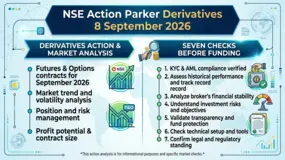
NSE Action Parker Derivatives 8 September 2026 and Seven Checks Before Funding
The NSE action Parker Derivatives 8 September 2026 is a current exchange disciplinary direction, not an expulsion notice. The National Stock Exchange page records a ₹1.5 lakh penalty and tells the member to strengthen supervision of existing Authorised Persons, stop onboarding new Authorised Persons until that work is completed, re-inspect the relevant branch or AP in the next quarter, and comply with prevailing anti-money-laundering rules. Indian clients should distinguish an Authorised Person from the broker itself. The published direction does not say that existing clients must close accounts or that trading membership has been cancelled. Before opening, funding or changing an account, verify the exact firm, website, member status, payment beneficiary and the scope of the latest direction.
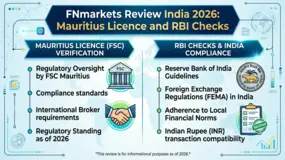
FNmarkets Review India 2026: Mauritius Licence and RBI Checks
This FNmarkets review for Indian readers starts with four verifiable facts. The Mauritius FSC public register lists FNmarkets (Mauritius) Ltd as an Investment Dealer, licensed on 12 August 2025. The broker website identifies the same entity and states licence GB25204149. However, the RBI list of authorised electronic trading platforms checked on 9 September 2026 did not show FNmarkets. The broker's help centre also sets a $50 minimum withdrawal and requires full account verification. These facts do not prove fraud, but they make FNmarkets regulation and payment checks essential before an Indian resident deposits money.
WikiFX Broker
Latest News
Silver Price Forecast: Rally puts head-and-shoulders pattern on ice
WikiFXNSE Action Parker Derivatives 8 September 2026 and Seven Checks Before Funding
WikiFXIndian Rupee: Stable range with shallow gains against US Dollar – DBS
WikiFXSilver Price Forecast: XAG/USD rises to near $66.40 as US Dollar declines, US CPI in focus
WikiFXUltima Markets Launches Weekend Gold CFD on MT5
WikiFXSwiss Franc steadies as Fed hike expectations offset safe-haven flows
WikiFXGold holds steady above $4,400 as traders await US inflation data
WikiFXForex Brokers Explained: The Battle of 'A Book' and 'B Book'
WikiFXSouth Korean Won: Gains seen moderating after sharp repricing – DBS
WikiFXFNmarkets Review India 2026: Mauritius Licence and RBI Checks
WikiFXRate Calc

