Easing geopolitical tensions pressure oil prices. Gold spikes following weak employment numbers
Abstract:Key TakeawaysOil retreated as US-Iran de-escalation signals pulled Brent from above $80 back into the mid-$70s.ADPs July print badly missed expectations (44K vs. 75K forecast), the weakest reading in

Key Takeaways
Oil retreated as US-Iran de-escalation signals pulled Brent from above $80 back into the mid-$70s.
ADPs July print badly missed expectations (44K vs. 75K forecast), the weakest reading in six months, reviving concerns about a cooling labor market.
Gold broke above $4,300, posting its best weekly close since January as falling oil, a softer dollar, and lower yields boosted non-yielding metal.
The S&P 500 and Dow Jones notched fresh record highs, with the Dow topping 54,000 for the first time.
Palantirs blowout quarter and raised guidance pushed the stock 30% higher.
Oil Slides on Hormuz Optimism
The week opened with markets fixated once again on the Strait of Hormuz, but this time the was in a positive direction. Oil had spiked into the weekend after President Trump called off what he described as a major planned strike on Iran, and Brent initially reversed early gains to drop more than 4% below $80 a barrel. That decline extended through midweek as diplomatic signals turned constructive. Brent slid further, dropping below $79 while WTI fell toward $75 after losing more than 10% combined over the prior two sessions.
By Wednesday and Thursday, the de-escalation narrative firmed up further. Additionally, OPEC+s decision to raise output for a sixth consecutive month in September added incremental supply-side pressure.
ADP NFP Misses Expectations, Gold Breaks $4,300
Wednesdays ADP employment report delivered the clearest sign yet that hiring momentum is fading. Private payrolls rose just 44,000 in July, the smallest gain in six months, badly missing the Dow Jones consensus of 75,000 and following a downwardly revised 95,000 gain in June.
Coming into the week, futures were pricing better-than-even odds of a rate hike at the September FOMC meeting. The CME FedWatch Tool had hike odds as high as 61.9% as of Monday.
The ADP miss chipped away at that positioning meaningfully, though it didnt flip the outright bias entirely by Thursday, futures markets were still pricing around 57% odds of a hike, even as the weak print left the case for the hawkish dissenters considerably harder to defend.
Gold was the cleanest expression of the shifting narrative. The precious metal opened the week near $4,051 and climbed steadily as falling oil, a softer dollar and declining Treasury yields reduced the opportunity cost of holding non-yielding bullion. By Thursday, gold traded at $4,307, up more than 4% on the day and on pace for its most profitable weekly close since January.
Dow Jones and S&P 500 Post Fresh Records
Equities had one of their strongest weeks of the summer. The S&P 500 and Nasdaq had been in a slump through much of July, but from a low point on July 29 the Nasdaq surged nearly 9% into early August.
Monday saw the Dow close at a record high with Amazon briefly crossing a $3 trillion market cap. Tuesday was the standout session and the Dow added over 900 points to close above 54,000 for the first time ever, with the rally attributed to strong corporate earnings, a rebound in tech shares, and optimism over progress on reopening the Strait of Hormuz.
Forecast for the Week Ahead (August 10–14)
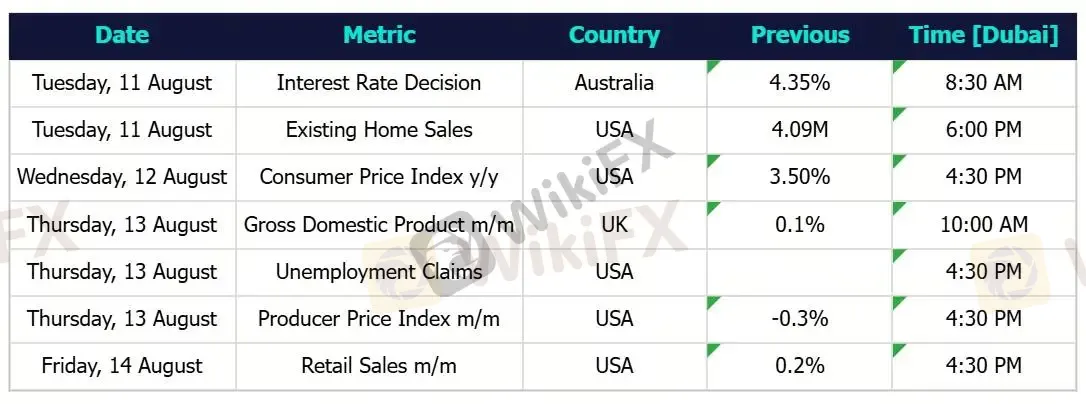
The macro calendar shifts from labor to inflation next week, and that handoff will likely dominate positioning. July CPI lands Wednesday, August 12, followed by July PPI on Thursday, August 13, both landing directly ahead of the September FOMC meeting and carrying outsized weight given how divided the Committee already is. A soft CPI print would reinforce the case the ADP and jobs data have been building and could accelerate gold‘s rally and pressure the dollar further, a hot print would hand ammunition back to the hawkish dissenters and could unwind some of this week’s rate-sensitive moves in both directions.
On the geopolitical front, the Iran-Oman shipping arrangement remains provisional and explicitly not a full reopening of the Strait of Hormuz, so any breakdown in that arrangement, a fresh Houthi incident in the Red Sea, or a stalling of the broader US-Iran talks could quickly reverse this weeks oil decline and revive the inflation-risk-premium trade that had pressured gold and rate-cut bets earlier in the summer.
For equities, the key question is whether the Nasdaq and S&P can extend record highs into a seasonally weak stretch.
Major Economic Calendar Events for the Upcoming Week

WikiFX Broker
Latest News
Trade24Seven Review: What Traders Should Know Before Depositing
 WikiFX
Luno Review: Unregulated Broker Warning After Frozen Accounts and Blocked Withdrawals
WikiFXOJK Revokes BTPN Syariah Ventura Licence, SMBC Speaks Out
WikiFXG4Trade Review: Withdrawal Warning Around a New Forex Broker
WikiFXRand Gains as Iran Talks and Soft US Jobs Data Hit Dollar
WikiFXGaitame Finest Review 2026: Regulation, MT4/MT5 Access, and User Feedback
WikiFXLOYAL PRIMUS Review: Accounts Frozen After Withdrawal Requests – What Traders Need to Know
WikiFXMetaTrader Basics: Place Your First Trade
WikiFXKeynes Investment Review: No Regulatory Licence Found, Should You Trust It?
WikiFXMoneta Markets Receives UAE Category 5 Licence
WikiFXRate Calc

