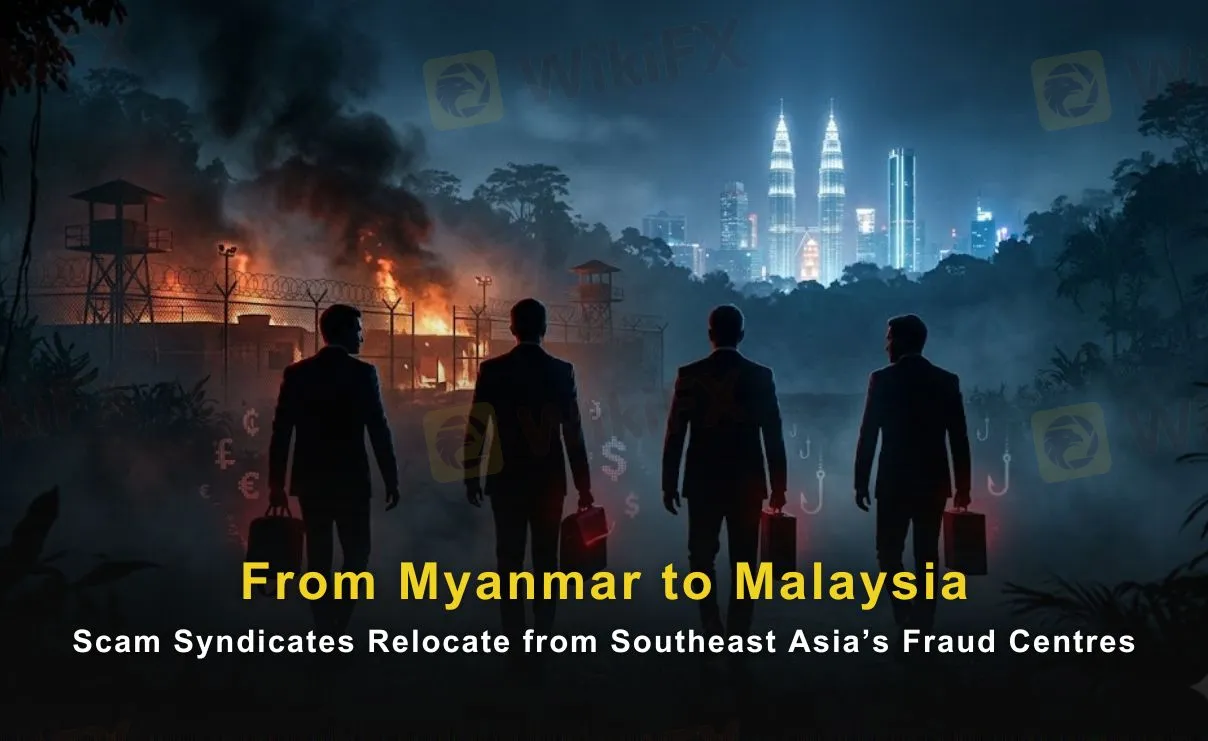
From Myanmar to Malaysia: Scam Syndicates Relocate from Southeast Asia’s Fraud Centres

Abstract:Malaysia may be emerging as a new destination for transnational scam syndicates seeking to evade mounting pressure from international law enforcement agencies, according to a leading humanitarian organisation.
Malaysia may be emerging as a new destination for transnational scam syndicates seeking to evade mounting pressure from international law enforcement agencies, according to a leading humanitarian organisation.
For years, the notorious scam compounds operating in the border regions of Myanmar, Cambodia and Laos, often referred to as part of the “Golden Triangle” fraud ecosystem, have been associated with large-scale online scams, human trafficking and cybercrime. However, fresh intelligence suggests that some of these criminal networks may now be shifting their operations into Malaysia.
The warning was issued by Malaysian International Humanitarian Organisation (MHO) Secretary-General Nathosli Sisamuddin during a press conference, where he revealed that several scam operations previously based in Cambodia, Myanmar and Laos had reportedly begun relocating to Malaysia.
According to information received by the organisation, the move appears to be a response to increasing enforcement action against scam compounds across the region. Authorities in several countries, supported by international agencies, have intensified efforts to dismantle criminal networks operating from these areas. Sisamuddin noted that growing involvement by foreign law enforcement agencies, including the United States Federal Bureau of Investigation (FBI), had placed significant pressure on syndicates operating in Myanmar and Cambodia.
Faced with tighter scrutiny and enforcement measures, these groups have reportedly sought alternative locations from which to continue their activities. Intelligence gathered by MHO indicates that Malaysia has become one of the destinations being considered and utilised by these networks.
Sisamuddin said the syndicates appear to operate in a highly adaptive and decentralised manner, allowing them to relocate quickly when faced with enforcement risks. He described the groups as functioning organically, with the flexibility to establish operations in new jurisdictions while maintaining their criminal activities.
Of particular concern are reports that one China-linked fraud syndicate has allegedly established two large-scale operational camps in Malaysia. The organisation believes these facilities have been functioning discreetly for more than six months.
While Sisamuddin declined to disclose the locations or provide additional operational details, he indicated that the information would be submitted to the relevant authorities for further investigation and action.
The revelation marks a significant development in the regional fight against organised cybercrime. Malaysia has previously been involved in efforts to rescue victims and expose scam operations abroad, particularly in Cambodia, Laos and Myanmar. The possibility that similar networks may now be operating within the country raises concerns about the evolving tactics of transnational criminal groups.
Sisamuddin stressed the importance of acting swiftly to prevent Malaysia from becoming a safe haven for these organisations. He argued that authorities and stakeholders should take proactive measures to dismantle any such operations before they become further entrenched.
MHO has also called on members of the public to play a more active role in identifying potential scam-related activities. The organisation urged individuals to report suspicious premises, unusual business operations, or recruitment activities involving local or foreign workers that could be linked to organised fraud networks.
According to Sisamuddin, public cooperation could prove critical in helping authorities uncover hidden operations and disrupt criminal activities before they expand further.
To encourage whistleblowing, MHO pledged to safeguard the identity and security of individuals who provide information. The organisation said it remains committed to working alongside law enforcement agencies and other stakeholders to combat cross-border fraud syndicates and prevent their expansion within Malaysia.
The allegations come at a time when governments across Southeast Asia are intensifying efforts to tackle cyber-enabled crime and human trafficking linked to scam compounds. If confirmed, the reported relocation of fraud syndicates into Malaysia would signal a new challenge for authorities and highlight the increasingly mobile nature of organised cybercrime networks operating across the region.

Read more

DeltaFX Review 2026: My MT5 Account Was Locked During Trade. Did the Trader Lose Everything?
Among the many DeltaFX complaints reviewed, the MetaTrader 5 (MT5) account lock during live trading was arguably the most prominent one. Secondly, a Turkish trader complained about the sudden closure of trades within five to six minutes. This raises suspicion over the trading manipulation at the broker. Looking further, we came across a complaint about the blockage of the trading account immediately after a deposit. In this DeltaFX review, we have examined several user allegations in 2026.

amari Capital Review 2026: One Trader Alleged Order Glitches, Another Claimed Fund Losses. Read on!
amari Capital, a Saint Lucia-based brokerage firm, may have limited user feedback. However, users only highlight the cons that warrant immediate attention from the broker officials to prevent a further dip in its trust score, which already sits at a low of 1.80 out of 10, according to the WikiFX data. Users have openly claimed foul play while trading on the platform. This amari Capital review aims to uncover those allegations against the broker.

VITTAVERSE Review 2026: The Broker Deleted My Profits Citing Rule Violation. But Where is the Proof?
Whether it’s South Asia, Western Asia, Europe or America, users all over are basically asking this: Why is VITTAVERSE cancelling my profits without providing any evidence? While they may be user allegations, a large volume of such complaints creates suspicion, if not affirmation, about the broker’s alleged involvement in profit cancellations. Users also complained about massive withdrawal delays in the name of ‘Account Review’ or ‘Account Upgrade’. This VITTAVERSE review article closely examines user allegations, including those concerning profit deletions, by the Seychelles-based brokerage firm. To give you a fair idea of its legitimacy, we have also provided a regulatory overview of the broker.

WHITEFOREX Review 2026: I Am Not the Only Victim of Its Profit Seizure Activity; Users Say This!
This is allegedly the case for most traders at WHITEFOREX, a Saint Lucia-based brokerage entity, as we look at real user reviews on broker investigation platforms such as WikiFX. Regardless of the profit seizure amount, whether it's $100 or $5,000, traders have expressed their utter frustration over this suspicious trading activity by the broker. Other complaints, such as poor customer support service, further add to traders’ woes. In this WHITEFOREX review 2026, we have investigated reported cases against the brokerage firm.
WikiFX Broker
Latest News
OROKU EDGE Review 2026: Blacklist Warnings, Withdrawal Complaints, and High Leverage
WikiFXReading the Market Weather: How to Identify Forex Trends and Ranges
WikiFXUsing Volatility and ATR to Fix Your Forex Stop Loss
WikiFXPIPS STAR Review 2026: Unregulated Status and What Indian Traders Should Check
WikiFXHousewife Loses RM250,000 Life Savings to Ghost Investment Scheme Promising 10% Returns
WikiFXIs It Your Fault for Falling for an Investment Scam?
WikiFXDeltaFX Review 2026: My MT5 Account Was Locked During Trade. Did the Trader Lose Everything?
WikiFXCan AI Really Improve Forex Trading? The Benefits, Risks and Hidden Limitations
WikiFXVITTAVERSE Review 2026: Offshore Regulation and Withdrawal Complaints
WikiFXSaxo Bank Review 2026: Regulation, Clone Risks, and Trading Costs
WikiFXRate Calc

