OROKU EDGE Review 2026: Blacklist Warnings, Withdrawal Complaints, and High Leverage
Abstract:OROKU EDGE presents a high-risk profile based on the available WikiFX data: it has no verified financial regulation, a WikiFX Score of 2.29, and two Malaysian Securities Commission investor-alert disclosures. Trader feedback is mixed, but recent withdrawal-related complaints make caution necessary before depositing.
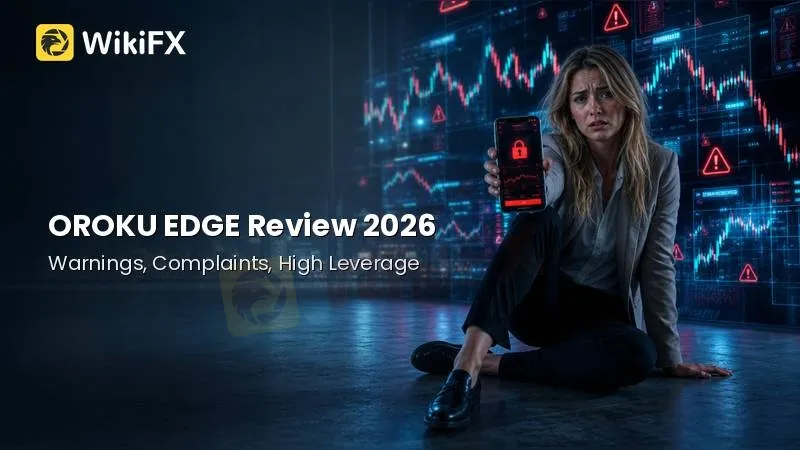
Executive Summary (TL;DR): OROKU EDGE is shown on WikiFX with a low score of 2.29 and no verified financial regulatory license. The broker also appears in Malaysian Securities Commission investor-alert disclosures, while recent user cases include several withdrawal and deposit-refund complaints.
In this OROKU EDGE review, the central question is not whether the website looks usable or whether the platform offers popular tools. The real question is whether you can trust the broker with your trading capital, especially if you are trading Forex with high leverage and limited external protection.
Before you find a broker and open an account, you should look at regulation, withdrawal history, platform access, and complaint patterns together. OROKU EDGE was established in 2021, is described as being headquartered in Saint Vincent and the Grenadines, and has a WikiFX Score of 2.29. That score should be treated as a live data point, not a permanent verdict, but it does show that WikiFX currently flags meaningful risk.
Regulation and Safety
The most serious issue in the available data is the brokers regulation status. WikiFX states that no relevant financial institution regulation was found for OROKU EDGE. The regulator list is empty, and the safety level is shown as 0. For a trader, that means there is no verified supervisory body in the provided data that can be relied on for licensing oversight, dispute handling, capital rules, or client-fund protection.
There are also two regulatory disclosure records connected to the Securities Commission Malaysia, translated from the source as the Malaysian Securities Commission. One disclosure, dated April 19, 2024, is categorized as a blacklist entry. The stated reason is unauthorized securities dealing and other capital-market activities. The notice says the list contains unauthorized entities and individuals and advises investors not to deal with or invest through them. It also warns that investors using unauthorized entities will not be protected under Malaysian securities laws.
A second disclosure, recorded on WikiFX in 2023, identifies an investor alert list entry. The reason given is unlicensed capital-market securities dealing activity. The disclosure references Oroku Edge and the website https://www.orokuedge.com/ along with a Facebook page.
This does not require dramatic language. It is already serious enough. If a broker has no verified license in the data and is also named in regulator warning materials, the practical risk is that you may have weak recourse if a withdrawal, pricing, bonus, or account dispute occurs.
WikiFX Score and Visible Risk Signals
OROKU EDGE‘s WikiFX Score is 2.29, with an influence rating of C. The available summary says the broker’s influence is mainly distributed in Malaysia, with an average influence index of 5.04. The same summary also notes that WikiFX received 5 user complaints about OROKU EDGE within the past three months.
A low score by itself is not a full investigation. Still, combined with no verified regulation, regulatory disclosures, and recent complaint records, it becomes a risk signal you should not ignore. If you are considering a deposit, the safer approach is to verify the latest license information first rather than relying on website claims, social media posts, or positive user comments alone.
Trading Conditions
OROKU EDGE lists eight account types: MT5 Cent, Social Trading Cent, Social Trading Pro, MT5 Bonus, MT5 Elite, MT5 ECN, MT5 Pro, and MT5 Prime. Minimum entry conditions are low, with several accounts starting from $15 and the MT5 Bonus account starting from $50.
The spreads listed in the account data vary. Some accounts show main spreads from 1.5, while Social Trading Pro and MT5 Pro show spreads from 0.5. MT5 ECN shows spreads from 0.0, and MT5 Elite shows spreads from 2.0. The source does not provide enough commission detail to judge the full trading cost, so spread figures should not be read as the complete cost of trading.
Leverage is the bigger issue. The data shows leverage from 1:1000 to 1:3000 depending on the account type, with the MT5 Prime account showing up to 1:3000. High leverage can make Forex positions look affordable, but it also magnifies losses sharply. In a regulated environment, leverage limits are often used as a protection tool. With an unverified regulatory position, very high leverage becomes less of a feature and more of a risk amplifier.
Platform and Account Access
OROKU EDGE uses MT4 and MT5, and the software qualification is listed as “main-label MT4/5.” The source says the review used the MT5 platform, describing it as customizable, multilingual, with good search functions and clear fee reports.
There is one account-access detail worth noting. The software description says MT5 lacks two-step login and biometric authentication for more secure login access. This is not a claim that OROKU EDGE has login failures. It simply means you should be careful about account security: use the official website, avoid entering credentials through links sent by unknown contacts, and protect your login details, especially where regulatory protection is already unclear.
The listed websites are https://www.orokuedgeglobal.com, https://www.orokuedgemarkets.com/, and https://orokuedge.com/. If you already have an account, confirm the correct domain before signing in or making a payment.
Trader Complaints and Mixed User Feedback
The exposure cases are mixed, but the negative cases are specific enough to matter.
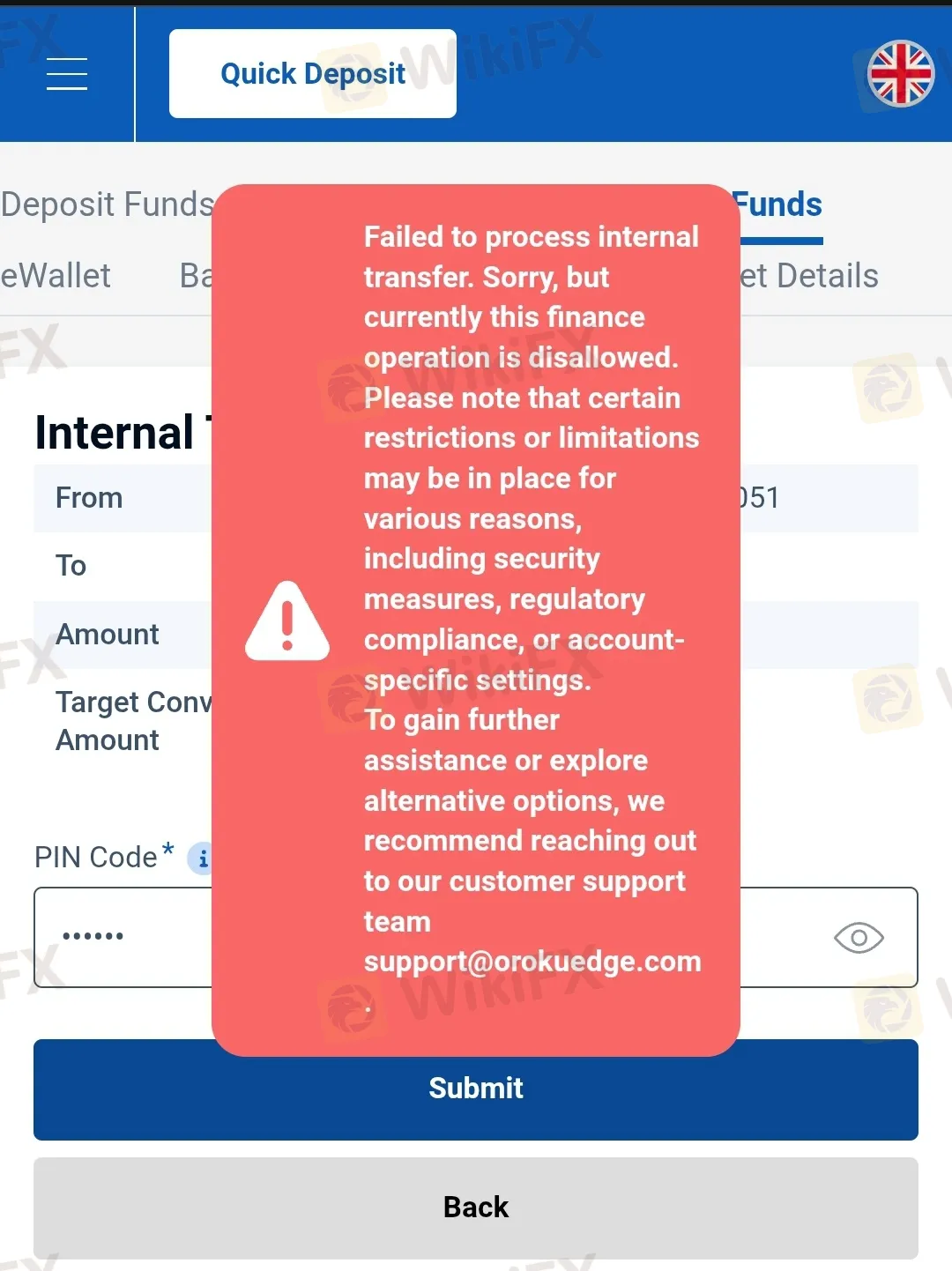
A Bangladesh-based complaint dated November 27, 2025 says the user had been trying to withdraw funds, but the request remained pending without a tangible reason. The user also said they could not make an internal transfer because the money was not available and that none of the funds had been received.
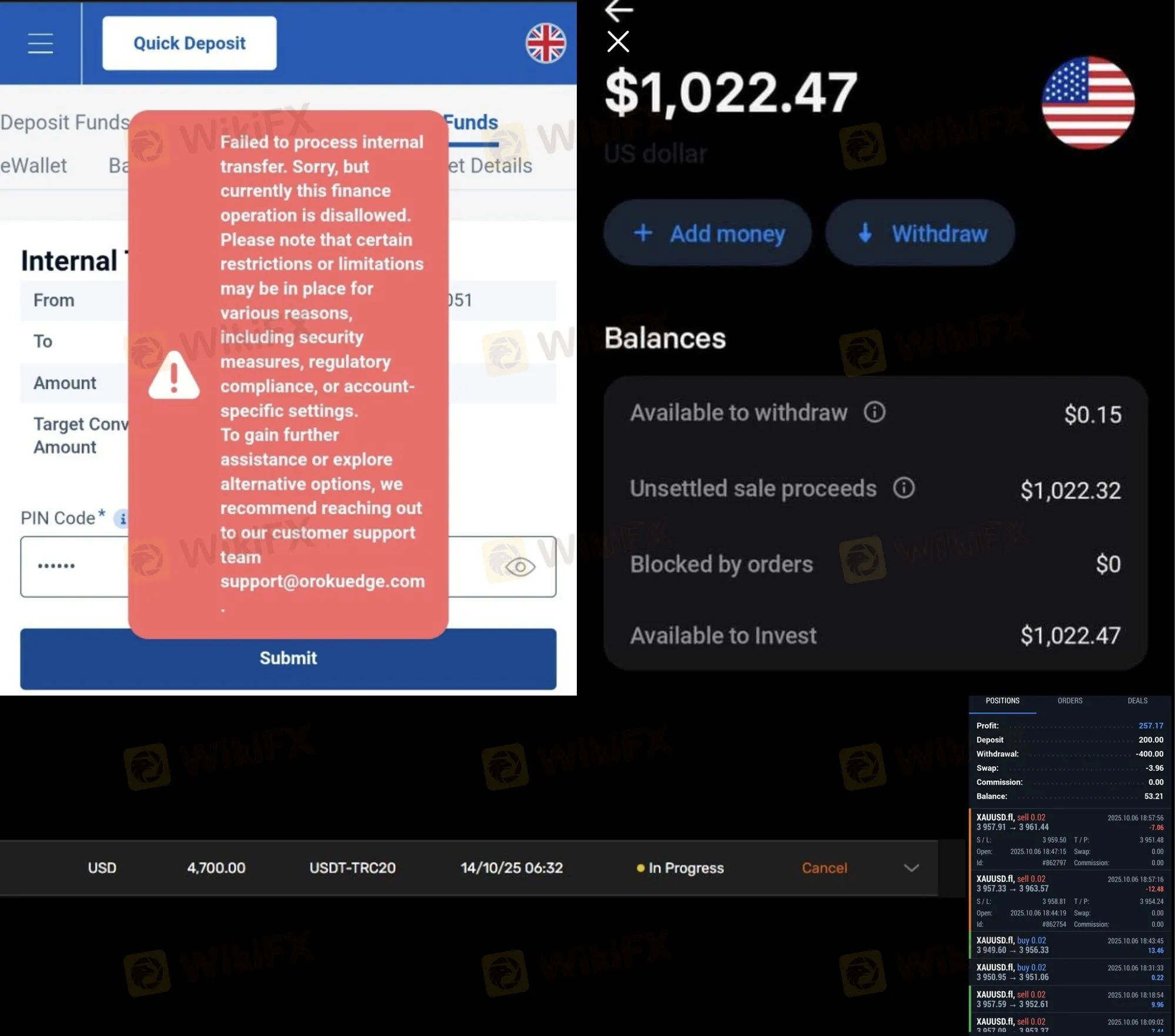
A Pakistan-based complaint dated November 23, 2025 alleges that the broker did not allow profit withdrawal and did not refund the initial deposit. The user said the account was flagged for “abuse,” claimed the broker took the profits, and reported that emails and live chat were being ignored.
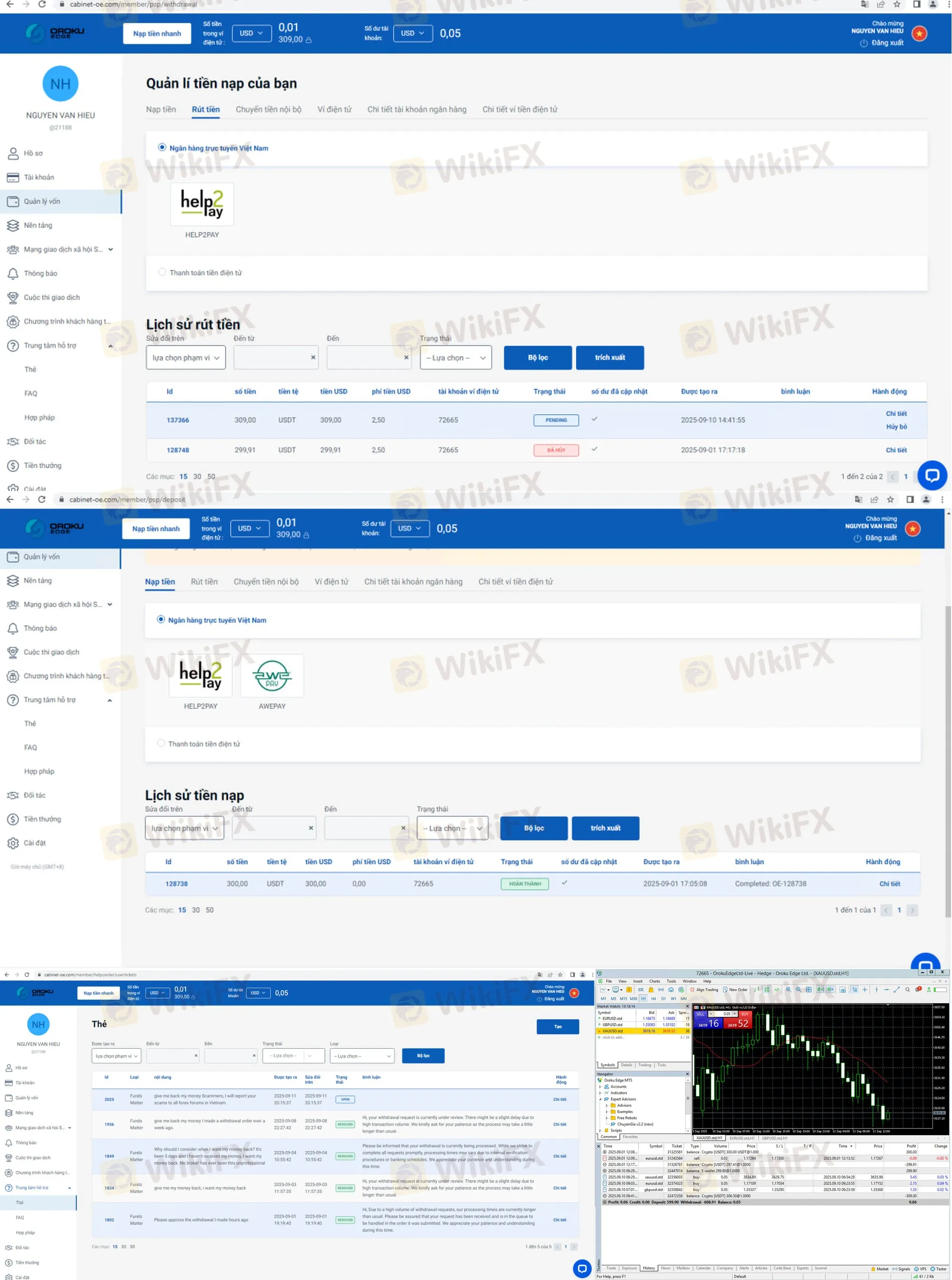
A Vietnam-based complaint dated September 11, 2025 says the user deposited money on September 1, 2025, did not join any deposit-bonus program, and later attempted to withdraw because they urgently needed the funds. According to the complaint, the broker repeatedly delayed the return of the deposit despite multiple contacts.
There are also positive comments. Users from Malaysia, Indonesia, China, New Zealand, and Nigeria praised fast withdrawals, low spreads, account variety, quick setup, responsive support, stable platforms, and high leverage. Positive feedback should be considered, but it does not erase the regulatory warnings or the withdrawal-related cases. For risk review purposes, complaints involving blocked or delayed withdrawals deserve more weight than general praise about spreads or platform convenience.
Deposits, Withdrawals, and Support
Customer service is listed as available in English through Facebook and email at support@orokuedgeglobal.com. The source says replies may be received for most relevant questions, but waiting times may be long.
That matters because several complaints involve withdrawal delays, non-refund of deposits, and alleged lack of response. If support is slow during a normal question, it may become more stressful when money is already locked in a pending withdrawal. Before depositing, test support with practical questions about withdrawal rules, identity checks, bonus conditions, internal transfers, and dispute procedures.
Final Verdict: Should I open an account?
Based only on the available WikiFX data and user cases, OROKU EDGE looks high risk. The main concerns are no verified financial regulation, two Malaysian Securities Commission investor-alert disclosures, a low WikiFX Score of 2.29, very high leverage up to 1:3000, and multiple recent complaints involving withdrawals or deposit refunds.
The broker does offer MT4/MT5, low minimum deposits, several account types, and some users report positive experiences. Even so, these features do not offset the lack of verified oversight and the regulatory warning history. If you still choose to test it, avoid large deposits, keep full records, and do not trade funds you cannot afford to have delayed.
Status changes daily. Before depositing, check the WikiFX App for the latest real-time certificate.


WikiFX Broker
Latest News
57 Booked in Pune Forex Scam Probe: The Fake Trading App Checklist Every Indian Investor Needs
 WikiFX
Accused of a RM123 Million Crypto Scam, He Fled to Malaysia and Claimed He Was Robbed
WikiFXAfrica's 10 Strongest Currencies in July 2026: Naira Absent
WikiFXU.S. and Japan Stand Ready for Further Coordinated Yen Intervention, Treasury Warns
WikiFXYen Retreats After Coordinated Intervention
WikiFXRinggit Flat Near RM4.09 After US Factory Data Surprise
WikiFXHF Market Review – A 1.76 Score, an Unverified CYSEC Licence, and a Frozen Account
WikiFXSri Lanka Rupee Slides 7.9% in H1 2026 as Bank Steps In
WikiFXMarket, Limit, and Stop Orders in Forex Explained Simply
WikiFXApple Faces Lawsuit Over Fake Crypto App Exposing $1.8 Million Theft
WikiFXRate Calc

