Can AI Really Improve Forex Trading? The Benefits, Risks and Hidden Limitations

Abstract:We are living in the age of artificial intelligence, where everything including financial matters such as forex are rapidly influenced by this phenomenon. AI-powered tools are here to identify numerous trading opportunities and analyze thousands of data, all in seconds, becoming the preferred option for both retail and institutional traders. Regardless of its immense benefits, traders often question - Whether the AI can truly transform their forex trading experience or is it just like another technology offering scope for unrealistic expectations? While the AI can ensure faster trading and more informed decisions, it is never a sure shot way to profits. As a trader, you need to understand both the strengths and limitations of AI when it comes to generating real wealth.
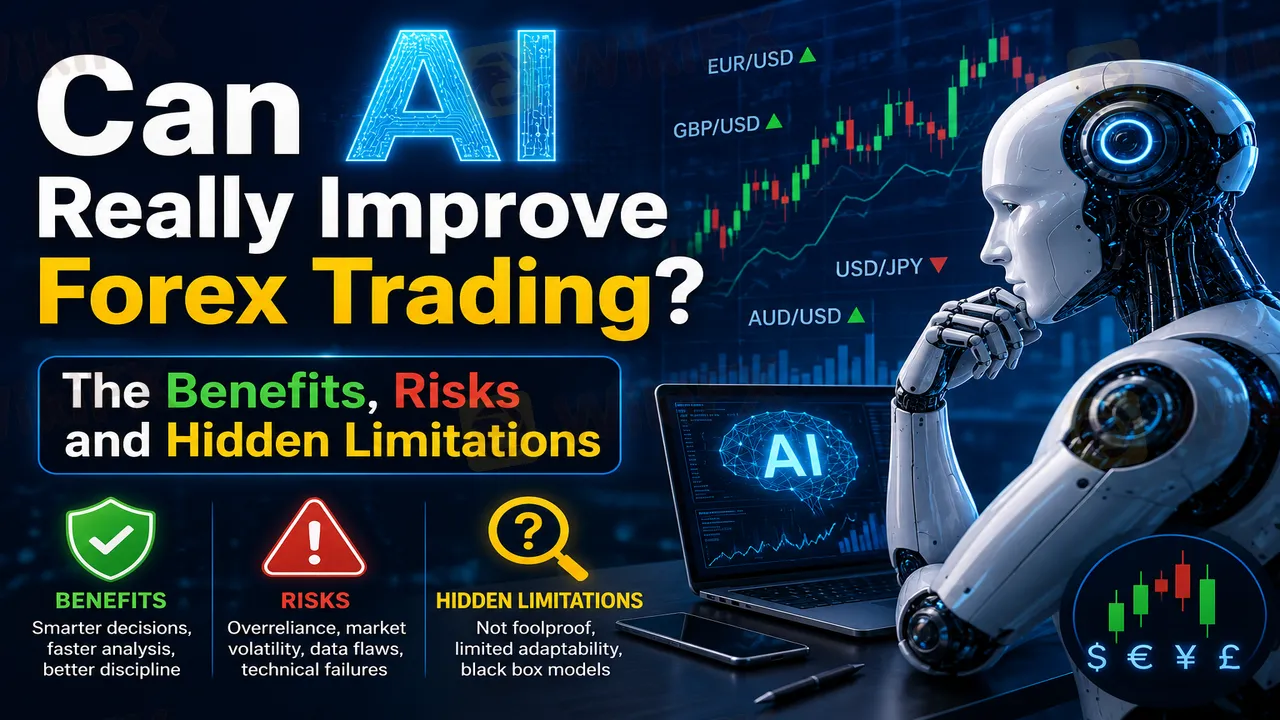
We are living in the age of artificial intelligence, where everything, including financial matters such as forex, is rapidly influenced by this phenomenon. AI-powered tools are here to identify numerous trading opportunities and analyze thousands of data points, all in seconds, becoming the preferred option for both retail and institutional traders. Regardless of its immense benefits, traders often ask whether AI can truly transform their forex trading experience or is it just like another technology offering unrealistic expectations? While AI can ensure faster trading and more informed decisions, it is never a sure-shot way to earn profits. As a trader, you need to understand both the strengths and limitations of AI when it comes to generating real money.
The Use of AI in Forex Trading
So, what is AI? Its a part of a computer system made to perform tasks requiring human intelligence. These include spotting patterns, data analysis, and estimations. If we talk about forex trading, AI is usually integrated into trading platforms, market scanners, expert advisors (EAs), and risk management systems. Advanced AI tools can help process technical indicators, historical price information, economic calendars planned for a year or more, and even financial news that might emerge during the trading day. Leveraging machine learning, some advanced systems are able to adapt to varying market conditions by analyzing the historical data as opposed to being dependent entirely on fixed trading norms. Beginner traders can leverage AI-led simple market analysis by glancing at potential trade setups, trend identification, and alert notices as specific market conditions are met.
The Benefits of AI-led Forex Trading
- Quickly processes vast amounts of market data that would take human traders significantly longer to analyze.
- Multiple market monitoring simultaneously without any distraction
- Emotion-free decision-making.
- Position size calculation, stop-loss level recommendation, reward-risk ratio evaluation
- A quick trading strategy test across markets before investing real capital
The Risks of Being Overdependent on AI
- No exact future prediction; it only spots probabilities based on historical data and current market conditions. However, unexpected events such as geopolitical crises, central bank announcements or other news can make AI predictions wrong.
- AI models may perform well during historical testing but struggle when live market conditions change unexpectedly.
- The likely inaccurate price feeds, delayed market data or incomplete datasets can cause trading call errors.
- Overreliance on AI can lead traders to ignore broader market conditions and proper risk management.
AI is a support function, not a lead function. You still need to understand market fundamentals, technical analysis and risk management thoroughly to analyze whether AI-generated signals are sensible.
Can AI Manage Forex Market Volatility?
A host of factors such as economic reports, inflation data, interest rate decisions, employment numbers and geopolitical developments influence forex markets. While some AI models use machine learning to keep adapting to the changing market conditions, they might fail during unexpected events. During these times, there can be a lack of adequate algorithms.
The Bottom Line
Artificial Intelligence has become a valuable tool in modern Forex trading. It can analyze markets faster than humans, eliminate emotional decision-making, improve risk management, and assist with strategy development. However, AI cannot guarantee profitable trades or accurately predict every market movement.
Successful traders understand that AI works best when combined with sound trading principles, disciplined risk management, and continuous learning. Rather than replacing human judgment, AI should be viewed as a powerful assistant that helps traders make better-informed decisions in an increasingly complex Forex market.
For more forex trading insights, download the WikiFX app.

Interesting Articles for You

Review 2026: The Broker Deleted My Profits Citing Rule Violation. But Where is the Proof?
Read more

Is TradingPRO Safe? FCA Warning, Indonesia Blocklist Evidence, and 7 Checks Before You Deposit
This Trading Pro broker review checks the FCA warning, Indonesia blocklist evidence, licence claims, and what South Asian users should verify before depositing.
MT4 White Label Cost in 2026: What Brokers Must Budget Beyond the Platform Fee
The visible fee in an MT4 white label proposal is rarely the real cost of operating it. For an existing broker, the decision is not simply whether an MT4 white label platform is “cheap” or “expensive.” The real question is whether the commercial model remains viable after integration, support, data, client migration, compliance, and exit costs are included. That is why an MT4 white label cost review should be built as a 24- to 36-month operating case. It should compare three credible choices: 1. Keep the present MT4 setup and improve its weakest controls. 2. Replace the MT4 white label provider but retain the client proposition. 3. Migrate selected clients or products to another platform while running MT4 in parallel. This guide explains how to build that case without relying on headline prices or generic vendor claims.

The Rise of Deepfake Investment Scams: ASIC Shares Key Warning Signs
Artificial Intelligence (AI) has grown remarkably recently. However, it has also amplified the scope for financial fraud. One such is the rapid use of deepfake technology involving AI-generated videos, images and audio clips imitating real people. Fraudsters are leveraging these technologies to impersonate financial advisers, celebrities, business leaders and government officials to lure victims into fake investment schemes. Understanding the emerging implications, the Australian Securities and Investments Commission (ASIC) has cautioned investors of investment avenues promoted through convincing AI-generated content. Seemingly authentic, deepfakes are designed to manipulate trust and make people transfer funds before authenticating the investment’s legitimacy.
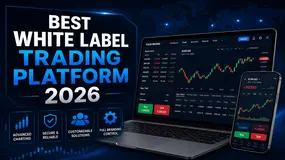
Best White Label Trading Platform 2026
The decision to switch white label providers or migrate to a modern white label trading platform is no longer a luxury for growth-minded brokers—it's a strategic necessity for survival in 2026. The convergence of technological stagnation, regulatory evolution, and shifting client expectations has created a perfect storm.
WikiFX Broker
Latest News
FBS Review: Is Your Deposit Safe?
WikiFXPocket Broker Review: Can You Actually Withdraw Your Money?
WikiFXTHINK MARKETS Broker Might Not Want You To See This
WikiFXYAIBroker Review: Website Is Down and Users Report Withdrawal Problems
WikiFXBONUS Review: Is Your Deposit Safe?
WikiFXAlpari Review 2026: Official Warnings and High Complaint Patterns
WikiFXHow to Spot Your First Trial Short on H1 After a Break
WikiFXIG Review: Broker Complaints Collide With Mixed Regulation Signals
WikiFXHow to Lock In Profits and Create a Zero-Risk Trade
WikiFXSTARTRADER Adds SK Hynix CFD Days After $26.5B US Listing
WikiFXRate Calc

