JPY Forecast: Japan Raises Debt Cost Assumption to 30-Year High

Abstract:The Japanese Yen faces renewed structural headwinds as the Ministry of Finance (MOF) prepares to raise its assumed interest rate for government borrowing to 3.0% for the 2026 fiscal year—the highest level since 1997.

The Japanese Yen faces renewed structural headwinds as the Ministry of Finance (MOF) prepares to raise its assumed interest rate for government borrowing to 3.0% for the 2026 fiscal year—the highest level since 1997.
Fiscal Reality Check
This adjustment, up from 2.6% in August and just 2.0% in the current fiscal year, acknowledges the new reality of rising Japanese Government Bond (JGB) yields. The 10-year JGB yield recently touched 2.1%, a level unseen since 1999, driven by:
- BOJ Normalization: The Bank of Japan recently hiked rates to 0.75%.
- Expansionary Spending: Prime Minister Takaichi's administration is pushing a record 122 trillion yen budget, necessitating massive new bond issuance.
Market Implications
The convergence of rising debt service costs (projected to hit 31.3 trillion yen) and aggressive fiscal spending creates a precarious scenario for the Yen.
- Bearish Case: If the BOJ cannot hike rates fast enough to offset the inflationary impact of fiscal expansion, real yields may remain negative, punishing the JPY.
- Bullish Case: If rising servicing costs force fiscal discipline or faster BOJ hikes, the JPY could stabilize.
Currently, the market views the debt sustainability issue as a long-term drag on the currency, leaving USD/JPY sensitive to any widening in the US-Japan rate differential.
Read more

Currency Briefs: GBP/JPY Pullback and USD/INR Stabilization
The pair is facing selling pressure for the second consecutive session, trading around the mid-210.00s. While the broader trend favors the Yen initially due to profit-taking, the pair remains within striking distance of its multi-year highs (highest since 2008). The correction appears technical rather than fundamental at this stage.
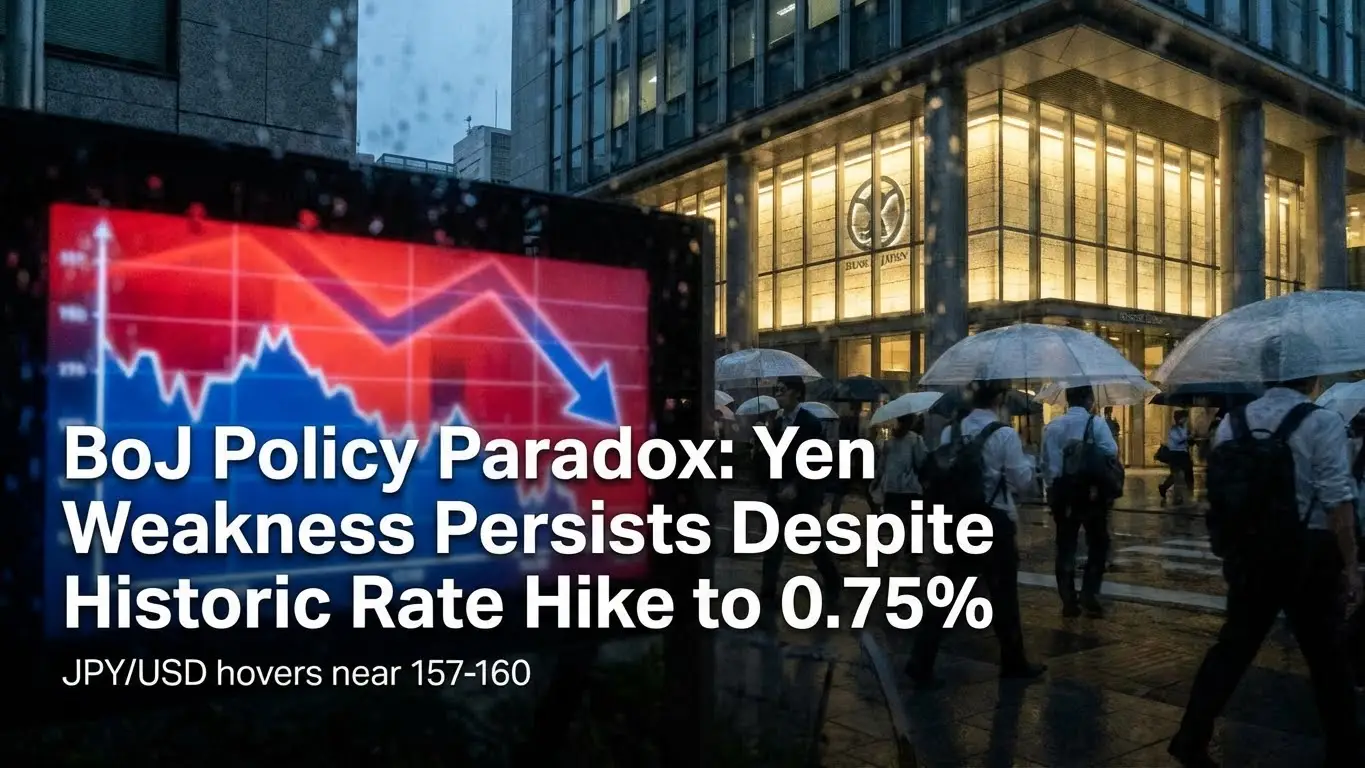
BoJ Policy Paradox: Yen Weakness Persists Despite Historic Rate Hike to 0.75%
The Bank of Japan (BoJ) finds itself trapped in a policy nightmare. Despite executing a historic rate hike to 0.75% in December—the highest level in 30 years—the Japanese Yen (JPY) remains under severe pressure, hovering near intervention danger zones around 157-160 against the Dollar.

Which Currency Pairs are Most Commonly Traded in India?
Currency pairs play a crucial role in forex trading. To effectively participate in the forex market, it's important to understand which currency pairs are most relevant in your country. For traders in India, knowing the actively traded currency pairs is essential.

Japanese Yen Technical Analysis: EUR/JPY, CAD/JPY. What Happened to Momentum?
JAPANESE YEN, EUR/JPY, CAD/JPY - TALKING POINTS AND ANALYSIS
WikiFX Broker
Latest News
Scam Victims Repatriated: Malaysia Thanks Thailand’s Crucial Help
WikiFXWhy You’re a Millionaire on Demo but Broke in Real Life
WikiFXYear of the Fire Horse 2026: Which Zodiac Signs Have the Strongest Money Luck in Trading?
WikiFXJPMorgan Chase Eyes Crypto Trading for Institutional Clients
WikiFXVoices of the Golden Insight Award Jury | Dennis Yeh, Head of Asia Pacific Region at Taurex
WikiFXFake Government Aid Scams Are Wiping Out Elderly Savings
WikiFXThe "Paper Money" Lie: Why Your Demo Win Streak Means Nothing
WikiFXQuoMarkets Review 2025: Safety, Features, and Reliability
WikiFXThe Richest Traders in History and the Strategies Behind Their Success
WikiFXCredit Suisse Hit With $7.1M Fine Over Supervisory Failures
WikiFXRate Calc

