The "Paper Money" Lie: Why Your Demo Win Streak Means Nothing

Abstract:A demo account teaches you the mechanics. A live account teaches you the psychology. You need to master both to survive in this game.
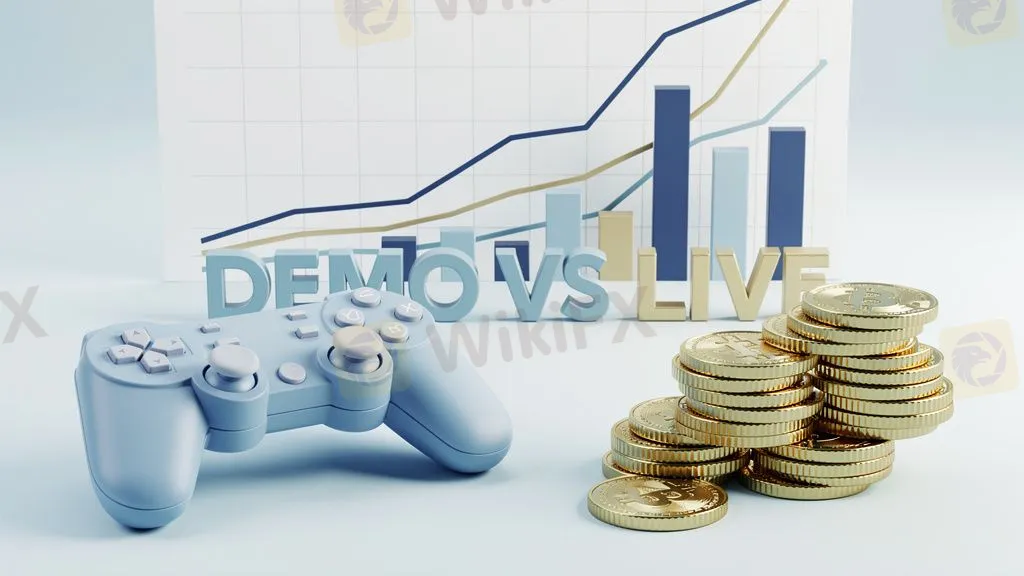
Let‘s be honest. We’ve all been there.
You download a trading app. You open a demo account loaded with $100,000 of fake cash. Within two weeks, you‘ve doubled it. You feel like a genius. You think you’ve cracked the code. You start calculating how soon you can quit your day job and buy that Lamborghini.
Then, you deposit $1,000 of your hard-earned savings into a live account.
And its gone in three days.
What happened? The charts looked the same. The strategy was the same. The currency pair was the same. So why did the result flip from massive profit to a painful loss?
Its because you fell into the “Paper Tiger” trap. Here is the cold, hard truth about the difference between demo and live trading that most gurus won't tell you.
The “Video Game” Effect vs. Real Life
The biggest difference isn‘t in the software; it’s inside your head.
When you trade on a demo account, you are playing a video game. If you lose $5,000 on a dummy trade, your pulse doesn't change. You don't lose sleep. You don't have to explain to your spouse why the savings account is empty.
Because there is no risk, there is no fear. And without fear, you trade logically. You hold winning trades longer because you don't care if they pull back. You cut losing trades quickly because your ego isn't attached to the money.
Real money has weight.
The moment you switch to a live account, simple biology takes over. When a trade goes slightly red, your heart rate spikes. You panic and close the trade too early just to stop the pain. Or worse, you hold onto a loser, praying it turns around because you can't bear to admit you lost real cash.
On a demo, you are a sniper. On a live account, you are a nervous wreck. That emotional gap is where 90% of traders fail.
Does Your Broker Fill Orders Differently?
Beyond your emotions, there is a technical reality check you need to understand.
In a demo environment, your trades are usually executed instantly at the exact price you see on the screen. The server acts as if there is infinite liquidity. You want to buy at 1.0500? Done.
The live market is dirty.
In the real world, you are competing with banks, hedge funds, and algorithms.
- Slippage: You hit “buy” at 1.0500, but because the market is moving fast, you actually get filled at 1.0505. You start the trade with a bigger loss than expected.
- Liquidity: In a demo, you can sell a huge position instantly. In a live market, there has to be a buyer on the other side. If the market crashes, you might be stuck in a trade you can't exit.
This is often where novice traders get suspicious. They think the broker is cheating them because the execution feels “slower” or “worse” than the demo. While slippage is a normal part of trading, some brokers do manipulate live feeds to hunt your stop losses.
This is where you need to be smart. Before you move from demo to live, look up your broker on WikiFX. Check their regulation score. If you are dealing with an unregulated bucket shop, that “slippage” you are experiencing might actually be the broker rigging the game against you. Never trust a broker with your deposit until you've verified they are legitimate.
The “Reset Button” Mentality
Think about how you treat a demo account. If you blow the account up—meaning you lose everything—what do you do? You hit the “Reset” button. The balance goes back to $100,000, and you try again.
You develop bad habits. You take massive risks because you know there is a safety net.
In the live market, there is no reset button. If you blow your account, that money is gone forever. You have to work, save, and deposit again. This creates a psychological pressure called “scarcity mindset.” You become afraid to pull the trigger on good trades because you are terrified of losing the money you can't replace.
Can You Handle the Transition?
So, is the demo account useless? Absolutely not. It is fantastic for learning how to use the platform and testing if a strategy has an edge.
But don't confuse being a good “demo trader” with being a profitable trader.
Here is my advice for making the jump:
- Start Micro: Do not deposit your life savings. Open a live account with money you can afford to burn—maybe $100 or $500.
- Trade Small: Use the smallest lot size possible (0.01 lots).
- Feel the Pain: The goal of this small account isn't to get rich. It's to get used to the feeling of losing real money without destroying your finances.
A demo account teaches you the mechanics. A live account teaches you the psychology. You need to master both to survive in this game.
Stay sharp, keep your emotions in check, and always verify who you are trading with.
Disclaimer: This article is for educational purposes only and does not constitute financial advice. Trading carries a high level of risk, and you can lose more than your initial deposit.
Read more
Fundamental Analysis for Day Trading: A Waste of Time or Your Secret Weapon?
Fundamental analysis for short-term trading isn't about being an economist. It's about risk management. It’s knowing when the waves are going to get big so you don’t get capsized.

Why Your Demo Account Profits Are a Lie
Real trading isn't about predicting the next candle. It's about predicting how you will react when the candles turn red.

Stop Trading the News: Why Headlines Are Killing Your Account
Don't guess what the Federal Reserve chairman will say. Wait until he finishes speaking. Look at the chart. Did price break a key support level? Did it reject a resistance level? Trade the price structure, not the words coming out of his mouth.

Why the Market Pumps When the World Seems to be Burning
Stop trying to trade logic. Trade the chart. The market can remain irrational longer than you can remain solvent, especially when “bad” news hits the wire.
WikiFX Broker
Latest News
Should You Delete Every Indicator from Your Charts? Let’s Talk Real Trading
WikiFXIs ZarVista Legit? A Critical Review of Its Licenses and Red Flags
WikiFXStop Chasing Green Arrows: Why High Win Rate Strategies Are Bankrupting You
WikiFXStop Trading: Why "Busy" Traders Bleed Their Accounts Dry
WikiFXScam Victims Repatriated: Malaysia Thanks Thailand’s Crucial Help
WikiFXXTB Review 2025: Pros, Cons and Legit Broker?
WikiFXCabana Capital Review 2025: Safety, Features, and Reliability
WikiFXWhy You’re a Millionaire on Demo but Broke in Real Life
WikiFXYear of the Fire Horse 2026: Which Zodiac Signs Have the Strongest Money Luck in Trading?
WikiFXCommon Questions About OtetMarkets: Safety, Fees, and Risks (2025)
WikiFXRate Calc

