Why Your Demo Account Profits Are a Lie

Abstract:Real trading isn't about predicting the next candle. It's about predicting how you will react when the candles turn red.

“Coach, I just turned my \$10,000 demo account into \$50,000 in two weeks. I think Im ready to quit my job and trade full-time.”
I get emails like this every single week. And every time I read one, I cringe.
If you are crushing it on a simulator but getting crushed when you put real cash on the line, you aren't alone. It‘s the classic rookie trap. You think you’ve mastered the market because you won with “Monopoly money.”
But here is the hard truth: Trading a demo account and trading a live account are two completely different sports. Its like playing FIFA on your Xbox versus trying to score a penalty kick in the World Cup final.
Here is why your simulator is lying to you, and what you need to change before you blow your savings.
The Psychology of “Zero Risk”
The charts are the same. The indicators are the same. The price action is the same. So why do you lose when it goes live?
Fear.
When you trade a demo account, you have zero emotional attachment to the money. If a trade goes against you by \$500, you don't care. You shrug and say, “Itll come back.” You hold the position with diamond hands, and often, the market does turn around, and you profit.
When that same trade goes against you by \$500 with your own hard-earned savings? Your heart starts racing. Your palms sweat. You stare at the screen, terrified of losing more. You panic-exit at the bottom, right before the market reverses.
In a demo, you are a sniper. In a live account, you are a nervous wreck. You cannot learn emotional discipline with fake money.
Does Execution Change When You Go Live?
This is the technical side most new traders ignore.
In a simulation, you usually get “perfect fills.” You click buy at \$1.00, and you get filled at \$1.00. The demo server assumes there is always someone willing to take the other side of your trade instantly.
In the live market, liquidity is real. During high volatility (like NFP or a rate hike), you might click buy at \$1.00 but get filled at \$1.02. This is called slippage, and it eats your profits.
Furthermore, some shady brokers manipulate their live feeds differently than their demo feeds. The demo signals might look clean, but the live server introduces lag or wider spreads to hunt your stop loss.
This is where you need to be paranoid. Before you ever move from demo to live, you need to vet your broker. Check their regulatory status and complaints on WikiFX. If the broker works fine in demo but has a low score or a history of “severe slippage” complaints on their WikiFX profile, do not give them your money.
The Size Trap
Most demo accounts default to \$10,000 or \$100,000 balances.
When you have \$100,000 in play, a \$200 loss is a scratch. It‘s 0.2%. You don’t even notice it.
But most new traders don't open live accounts with \$100,000. They open them with \$500 or \$1,000.
If you bring your “demo habits” to a small account, you will fail. Losing \$200 on a \$1,000 account isn't a scratch; its a 20% disaster. You spend months practicing with position sizes that don't match your reality. You train your brain to see big numbers, so when you switch to a small account, you over-leverage to chase those same big returns.
How to Bridge the Gap
So, is demo trading useless? No. Its great for learning how to use the platform (MetaTrader, TradingView, etc.) so you don't click the wrong button by mistake.
But once you know where the buttons are, get off the demo.
1. Start with a “Micro” Account
Don't jump from a demo to your life savings. Open a small live account—even just \$100. Trade 0.01 lots.
You need to feel the sting of losing a real dollar. It changes how you make decisions.
2. Verify Your Broker
I can't stress this enough. The transition to live trading exposes you to counterparty risk. Scams exist. Use WikiFX to ensure the broker you practiced with is regulated and safe for real deposits. Don't let a scammer take what the market gives you.
3. Cut Your Size in Half
Whatever lot size you think you should trade, cut it by 50%. Your emotions will be running high. Lowering your leverage keeps you in the game long enough to calm down.
Real trading isn't about predicting the next candle. It's about predicting how you will react when the candles turn red.
Stay disciplined.
Coach K
Disclaimer: This article provides information for educational purposes only and does not constitute financial advice. Trading involves high risk, and you may lose your entire capital. Always perform your own due diligence.
Read more
Fundamental Analysis for Day Trading: A Waste of Time or Your Secret Weapon?
Fundamental analysis for short-term trading isn't about being an economist. It's about risk management. It’s knowing when the waves are going to get big so you don’t get capsized.
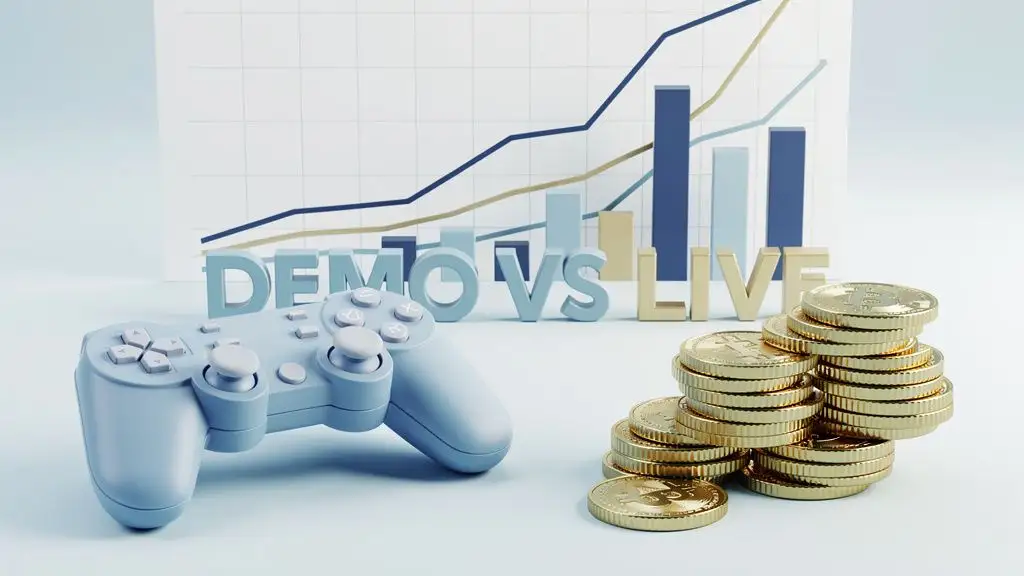
The "Paper Money" Lie: Why Your Demo Win Streak Means Nothing
A demo account teaches you the mechanics. A live account teaches you the psychology. You need to master both to survive in this game.
Stop Trading the News: Why Headlines Are Killing Your Account
Don't guess what the Federal Reserve chairman will say. Wait until he finishes speaking. Look at the chart. Did price break a key support level? Did it reject a resistance level? Trade the price structure, not the words coming out of his mouth.
Why the Market Pumps When the World Seems to be Burning
Stop trying to trade logic. Trade the chart. The market can remain irrational longer than you can remain solvent, especially when “bad” news hits the wire.
WikiFX Broker
Latest News
QuoMarkets Review 2025: Safety, Features, and Reliability
WikiFXStrifor Review 2025: A Risk Analysis of This Unregulated Broker
WikiFXThe "Paper Money" Lie: Why Your Demo Win Streak Means Nothing
WikiFXTitan Capital Markets Review 2025: Safety Warning and Scam Analysis
WikiFXYear of the Fire Horse 2026: Which Zodiac Signs Have the Strongest Money Luck in Trading?
WikiFXStop Trading: Why "Busy" Traders Bleed Their Accounts Dry
WikiFXStop Chasing Green Arrows: Why High Win Rate Strategies Are Bankrupting You
WikiFXShould You Delete Every Indicator from Your Charts? Let’s Talk Real Trading
WikiFXIs ZarVista Legit? A Critical Review of Its Licenses and Red Flags
WikiFXScam Victims Repatriated: Malaysia Thanks Thailand’s Crucial Help
WikiFXRate Calc

