Firstrade Review: Is it Really Regulated or Risk
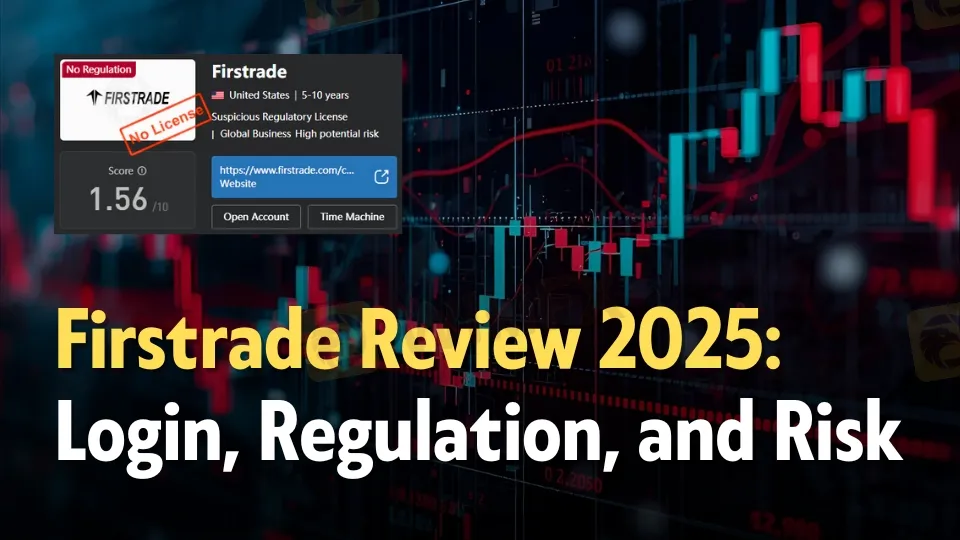
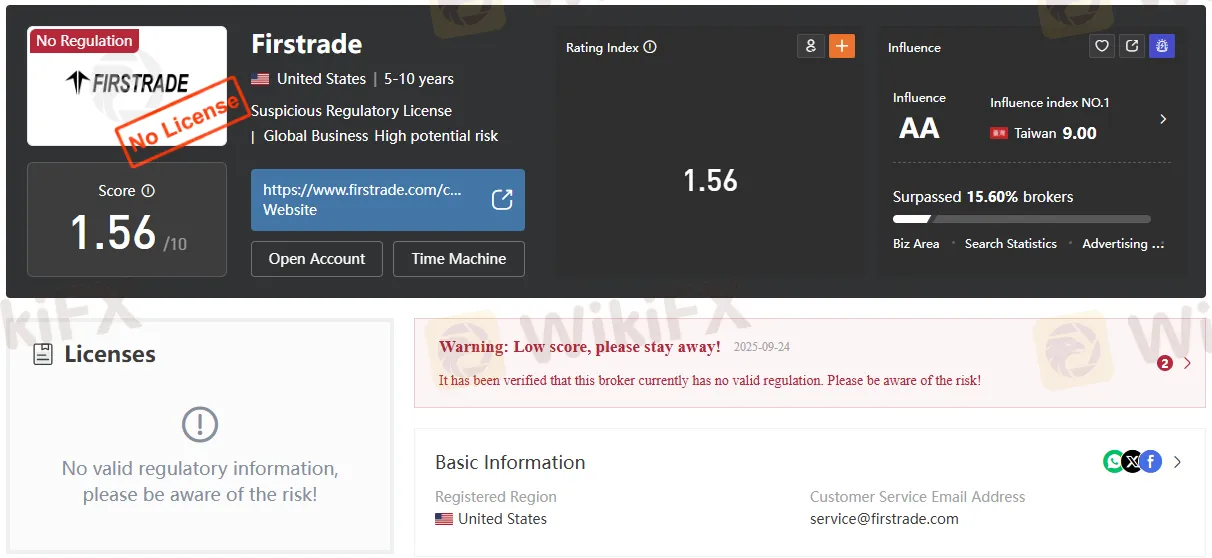
Abstract:Firstrade broker operates as an unregulated broker despite being based in the United States since 1985. The platform lacks formal licensing from major financial agencies, including the Securities and Exchange Commission (SEC) and the Financial Industry Regulatory Authority (FINRA), earning a concerning 1.56/10 safety score.
Regulatory Concerns Challenge Platform's Appeal
Firstrade operates as an unregulated broker despite being based in the United States since 1985. The platform lacks formal licensing from major financial agencies, including the Securities and Exchange Commission (SEC) and the Financial Industry Regulatory Authority (FINRA), earning a concerning 1.56/10 safety score. This regulatory gap raises significant questions about investor protection, particularly when FINRA continues to strengthen oversight requirements for member firms through its 2025 Annual Regulatory Oversight Report.
The absence of FINRA regulation means Firstrade customers miss critical protections typically available through registered brokers. While the platform maintains standard customer service channels and operational infrastructure, the lack of regulatory oversight creates inherent risks for retail investors seeking secure trading environments.
Platform Features and Account Structure
Firstrade provides two primary account categories designed for different investment objectives. The Investment Account accommodates individual or joint ownership structures for stocks, ETFs, options, and various securities trading. The Retirement Account offers traditional IRA, Roth IRA, and rollover options with tax-advantaged benefits for long-term savings strategies.
The platform eliminates minimum deposit requirements and account maintenance fees, removing traditional barriers for new investors. However, the absence of demo accounts limits risk-free strategy testing capabilities that many regulated competitors provide.
Commission-Free Trading Structure
The Firstrade broker implements zero-commission policies across major trading categories. Stocks, ETFs, options, and mutual funds execute without transaction fees or per-contract charges. This commission-free trading approach aligns with industry standards established by major regulated competitors like Charles Schwab, Fidelity, and Interactive Brokers.
Wire transfer services incur standard fees of $25 for domestic and international transfers. Account transfer services through ACAT systems range from $55 to $75, depending on transfer type and scope. These ancillary fees remain competitive within industry benchmarks.
Technology Platform and Trading Tools
The US stock trading platform operates through web-based interfaces and mobile applications for iOS and Android devices. The OptionsWizard Tool provides algorithmic strategy selection based on market forecasts and volatility expectations. This options trading broker's capability mirrors sophisticated tools offered by established platforms like Interactive Brokers.
The mobile trading app integrates portfolio management functions with real-time market data access. Advanced charting capabilities and research tools support both novice and experienced trader requirements. However, the platform limits access exclusively to US markets, restricting international diversification opportunities.
Investment Account Types and Services
Firstrade accommodates general investment accounts and retirement IRA structures without Islamic account alternatives. The platform supports over 11,000 mutual fund options alongside comprehensive stock and ETF selections from major US exchanges, including NYSE, NASDAQ, and OTC markets.
Customer support operates through multiple channels, including toll-free US numbers, international lines for Taiwan and China, plus standard email and WeChat communications. Support hours align with Eastern Standard Time trading sessions Monday through Friday.
Fee Structure Analysis
| Stock Trading | $0 | Real-time |
| ETF Trading | $0 | Real-time |
| Options Trading | $0 | Real-time |
| ACH Bank Transfer | $0 | 1-3 business days |
| Wire Transfer (US) | $25 | 1-2 business days |
| International Wire | $25 | 3-5 business days |
Non-trading fees remain minimal with free electronic services and standard charges for specialized transactions. ACAT account transfers cost $75 for full transfers and $55 for partial movements. These pricing structures compete favorably against regulated alternatives.
Risk Assessment and User Experiences
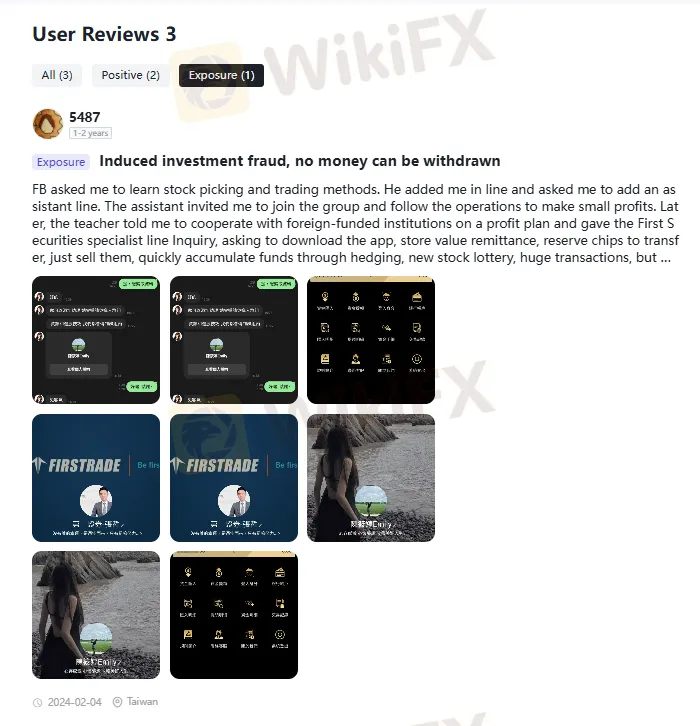
User reviews present mixed experiences with concerning fraud allegations documented in 2024. One detailed complaint describes investment fraud schemes involving platform recommendations that resulted in withdrawal restrictions. These incidents highlight risks associated with unregulated broker operations lacking FINRA oversight.
The platform's FINRA regulation creates vulnerability to potential misconduct without standard regulatory recourse mechanisms. Recent FINRA enforcement actions against various brokers demonstrate ongoing regulatory scrutiny that Firstrade avoids through its unregulated status.
Market Position Among Competitors
Commission-free trading has become standard among major US brokers, including Robinhood, Fidelity, and Interactive Brokers. Firstrade competes primarily on pricing while lacking the regulatory credibility that institutional investors typically require. The platform's 40-year operational history provides some legitimacy despite regulatory gaps.
Established competitors offer similar zero-commission structures with additional regulatory protections, advanced research capabilities, and broader international market access. Firstrade's limitations in the US markets and regulatory concerns position it unfavorably against comprehensively regulated alternatives.
Bottom Line
Firstrade‘s $0 commissions, broad mutual fund access, and options-focused tooling make it attractive for cost‑conscious U.S. stock and options investors, but the file indicates no verified regulatory license and flags a low risk score, which materially elevates counterparty and withdrawal risk. For traders prioritizing ultra‑low fees and a simple web/mobile workflow, the platform’s pricing and OptionsWizard can be compelling; however, those who value formal oversight, broader asset classes, demo or Islamic accounts, and clearer dispute‑resolution pathways may find the trade‑offs unacceptable. A prudent approach in 2025 is to verify current licensing directly, test support and withdrawals with minimal capital, and maintain an exit plan via ACAT/DTC transfers before committing meaningful funds.


Read more

Succedo Markets Review 2026: The First Withdrawal Worked—What Happened Next?
Most traders who have opened accounts with Succedo Markets, a Saint Lucia-based brokerage entity, have reported withdrawal request denials after a pleasant first experience. Traders globally, including those from India, have made these complaints. Meanwhile, some traders have reportedly taken legal recourse to recover their stuck funds. The critical nature of these complaints made us share this in-depth Succedo Markets review. This review does not only examine user allegations but also shed light on its regulatory framework.
Tattvam Review 2026: Investigating Complaints Concerning Trade Executions
Did you encounter trade-related concerns with Tattvam, a Mauritius-based brokerage entity? Several users have reportedly accused the broker of cancelling profitable trades, allegedly citing scalping as the reason. At the same time, traders have reportedly expressed concerns over the lack of understanding among the broker officials about critical trading aspects such as copy trading. In this Tattvam review, we have carefully examined user-reported allegations. Additionally, we have given a regulatory overview of the broker.
suxxessfx Review 2026: Funds Worth $5K-$42K Reportedly Lost. Check Our Investigation!
suxxessfx, a Seychelles-based brokerage entity, grabbed massive ire from traders on broker review platforms such as WikiFX, a globally recognized forex broker regulation inquiry app. Exposure reports have revealed fund losses worth over $5K-$42K on the broker’s trading platform. This suxxessfx review examines serious user allegations and its regulatory status. Read on!
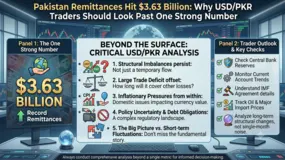
Pakistan Remittances Hit $3.63 Billion: Why USD/PKR Traders Should Look Past One Strong Number
Pakistan remittances reached $3.631 billion in July 2026, up 13% year on year and 4.5% from June, according to the latest State Bank of Pakistan data release. The SBP remittances update is a useful external-sector input, but it is not a currency forecast. This guide explains what the inflow can mean for the Pakistan forex market and USD PKR, and what it cannot prove about the next Pakistan rupee move.
WikiFX Broker
Latest News
Dow Jones Industrial Average round-trips a Fed that promised nothing
 WikiFX
Silver Price Forecast: False breakout and hawkish Fed sink XAG
WikiFXSouth Korean Won: BoK tightening supports KRW against US Dollar – Commerzbank
WikiFXOEXN Broker Review: Regulated but is it Safe for Traders?
WikiFXUSDCHF: Rising Channel Continuation Toward the Target Zone
WikiFXJapanese Yen dips further despite hotter inflation, upbeat employment data
WikiFXPoland: Growth supported by investment rebound – ING
WikiFXBreaking: Nonfarm Payrolls benchmark revision to lower US employment by 79,000 through March 2026
WikiFXMexican Peso tumbles as Warsh embarks on inflation fight
WikiFXEURUSD - BULLISH BIAS
WikiFXRate Calc

