Philippines Deports 29 Indonesians Linked to Online Scam Syndicate in Manila

Abstract:Online scam groups in the Philippines trick Filipinos into gambling and love scams, from Manila to Bacolod, causing trafficking and pain as police fight back.
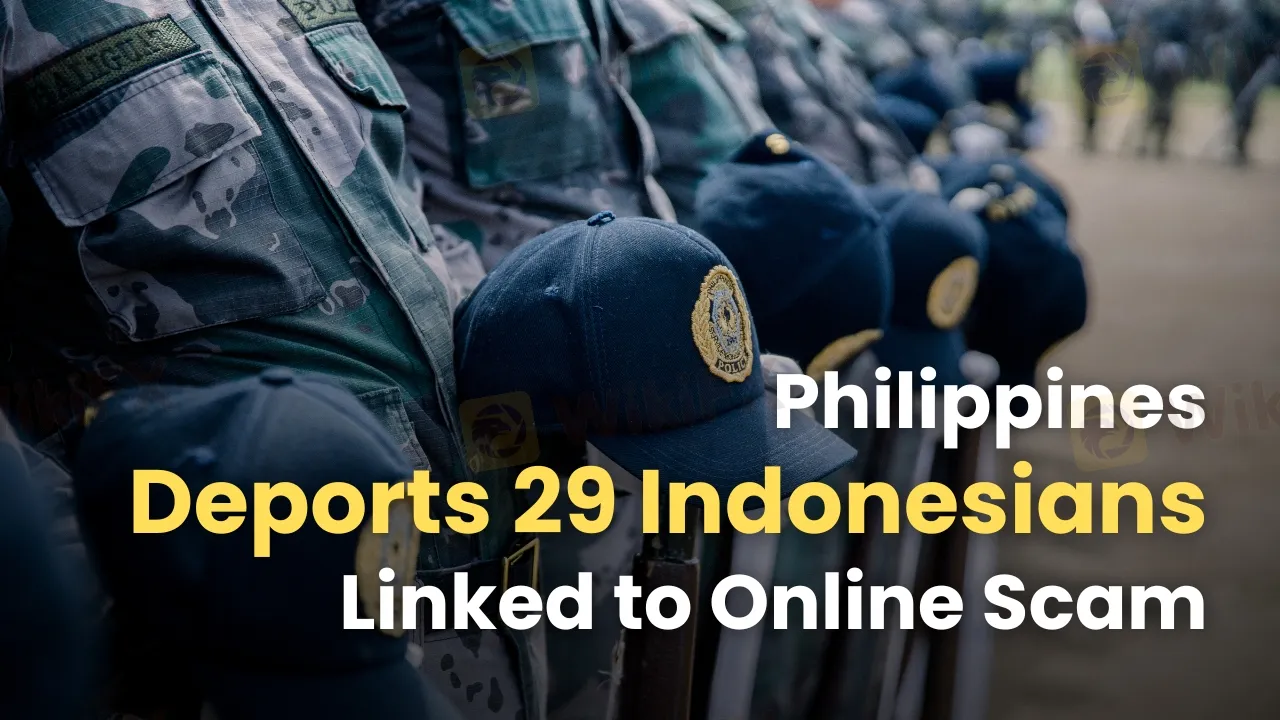
Philippine scam news, when Indonesian police brought back 29 people sent home from the Philippines. They were caught up in a group running online scams and gambling from Kanlaon Tower in Pasay City, Manila. Brig. Gen. Untung Widyatmoko, a big officer from Indonesias Interpol, shared the news. “They got arrested by Philippine police for doing online gambling and scams,” he said. The Indonesian Embassy in Manila worked hard to get them back home by Saturday night, just before midnight.
Now that they‘re back in Indonesia, the police will check them out more. “We’ll look into the group they worked with and figure out who‘s a victim and who’s a bad guy among the 29,” Untung said.
This isnt the first time something like this happened. Just a few weeks ago, Indonesia saved 554 of its people—449 men and 105 women—from scam groups in Myanmar. They were tricked with promises of good jobs in Thailand and nearby countries but ended up stuck in tough situations, like slaves online. They were part of over 7,000 people rescued with help from Chinese, Thai, and Myanmar teams.
Records from the government say that from 2020 to 2023, more than 4,700 Indonesians got pulled out of these cybercrime groups in places like Myanmar, Cambodia, Laos, and Vietnam.
Here in the Philippines, we‘re dealing with the same mess. These scam groups don’t just trick foreigners—they also drag Filipinos into their plans, making it hard to tell who‘s a victim and who’s helping. The Kanlaon Tower mess shows how Manila has turned into a center for these shady groups, and the police are trying hard to stop them. But its not just Manila—the problem spreads out to other places, hitting Filipino workers hard.

Love Scam Bust in Bacolod City
In Bacolod City, Negros Occidental, the battle against online scams got serious. On March 28, the Criminal Investigation and Detection Group (CIDG) filed big charges—human trafficking, which means no bail—against two Malaysians tied to a “love scam.” They were caught the day before in Henrietta Village, Barangay Singcang-Airport. The suspects, called “Sam Phoon,” 60, and “Abao,” in his late 20s, didnt have their real names shared because of police rules. Police Maj. Justin Noel Josol, the CIDG boss in Bacolod, said these two, who had expired visas, had been running fake dating sites for foreigners for over a year. “The Malaysians ran fake online dating sites with foreign clients,” he told reporters on March 29.

Here‘s how they did it: they paid local models to take sexy pictures, then hired 110 Filipinos to act as “sales representatives.” These workers got scripts to pretend they were the models, chatting with foreigners on the sites. They had to hit a target number of people each month. Later, most worked from home to keep things secret. But people started complaining—they weren’t paid enough and were treated badly, like they were being used.
The CIDG jumped in after someone who used to work there tipped them off. They watched for over a month, got a search warrant, and teamed up with the Bacolod City Police and the Department of Social Services and Development to raid the place and grab the two foreigners. This shows a tough truth for the Philippines—these scam groups aren‘t just a problem from the outside; they’re hurting Filipinos too, bringing trafficking and lies to places like Bacolod. As the police keep fighting, the pain these scams cause still worries everyone here.

Read more
EZINVEST Exposure: When a "Personal Advisor" Becomes Your Portfolio’s Worst Enemy
Despite holding a license from the Cyprus Securities and Exchange Commission (CySEC), the broker EZINVEST has become the subject of an alarming 32 formal complaints received by WikiFX in just the last three months. Our editorial team has analyzed a disturbed pattern of behavior involving unauthorized trading, high-pressure demands for deposits, and a near-total blockade on withdrawals. This report dissects how a purportedly regulated entity is exhibiting behavior patterns typically associated with high-risk unregulated platforms.
FINRA Imposes $150,000 Fine on Kingswood Capital Partners Over Supervisory Failures
The Financial Industry Regulatory Authority (FINRA) has imposed a $150,000 fine on Kingswood Capital Partners, LLC, after finding supervisory and compliance failures related to the sale of illiquid alternative investments to senior clients.
Change Review: The Broker Faces Massive Complaints on KYC Goof-ups and Fund Blocks
Investors have called out Change, a China-based forex broker, for allegedly carrying out illegitimate forex trading activities. These include the poor handling of the Know Your Customer (KYC) process, fund blocks, and inappropriate customer support service. Traders have openly criticized the broker for these alleged wrongdoings. In this Change review article, we have highlighted trader comments. Take a look!

Libertex Investigation: When "Expert Advice" Leads to Total Ruin
Despite holding a reputable regulatory license, the broker Libertex has become the subject of intense scrutiny, accumulating 43 user complaints within just three months. Our investigation into trader feedback reveals a disturbing pattern: aggressive "account managers" who allegedly guide clients toward financial devastation, coupled with a withdrawal system that traps funds indefinitely. Is this a safe trading environment, or a "wolf in sheep's clothing"?
WikiFX Broker
Latest News
Deriv Review: Is This Popular Broker Legit or Risky?
WikiFXLibertex Investigation: When "Expert Advice" Leads to Total Ruin
WikiFXEZINVEST Exposure: When a "Personal Advisor" Becomes Your Portfolio’s Worst Enemy
WikiFXIs CICC Broker Safe? CICC Regulation Check & In-Depth Review
WikiFXA Collapse In Germany's Chemical Sector Is A Bad Omen
WikiFXChange Review: The Broker Faces Massive Complaints on KYC Goof-ups and Fund Blocks
WikiFXFINRA Imposes $150,000 Fine on Kingswood Capital Partners Over Supervisory Failures
WikiFXWhy Smart People Still Get Scammed | The Danger of Hope and Greed
WikiFXIQ Option Review: Regulated Global Broker or Withdrawal Trap?
WikiFXInside the Elite Committee: Talk with Ayu Nur Permana
WikiFXRate Calc

