Deriv Review: Is This Popular Broker Legit or Risky?
Abstract:Deriv is a major player in the online trading world, widely recognized in regions ranging from South Africa and Nigeria to Southeast Asia and South America. Established in 2019 with its headquarters in Malta, Deriv—a rebrand of the historic Binary.com—holds a high Influence Rank of AAA and a WikiFX Score of 7.04.
Deriv is a major player in the online trading world, widely recognized in regions ranging from South Africa and Nigeria to Southeast Asia and South America. Established in 2019 with its headquarters in Malta, Deriv—a rebrand of the historic Binary.com—holds a high Influence Rank of AAA and a WikiFX Score of 7.04.
While the broker boasts a massive global user base and advanced technology, potential clients must look beyond the marketing. With a mix of solid regulations and offshore licenses, plus a rising number of user complaints, is Deriv safe for your hard-earned capital?
Regulation and Safety Analysis
Deriv operates under a complex regulatory structure. It utilizes multiple entities to serve clients across the globe. For traders, knowing which entity you are contracting with is crucial for fund safety.
Deriv currently holds the following regulatory statuses:
| Regulator | Country | Status | License Type |
|---|---|---|---|
| MFSA | Malta | Regulated | European (Tier-2) |
| LFSA | Malaysia | Regulated | Labuan (Mid-shore) |
| SCA | UAE | Regulated | Local Authority |
| VFSC | Vanuatu | Offshore Reg. | Offshore |
| BVI FSC | Virgin Islands | Offshore Reg. | Offshore |
| CIMA | Cayman Islands | Exceeded | Risk Warning |
Regulatory Context:
Deriv has legitimate licenses in credible jurisdictions like Malta (MFSA) and Malaysia (LFSA). However, a significant portion of its global retail clients are onboarded through its offshore entities (BVI or Vanuatu), which generally offer higher leverage but fewer investor protections compared to European standards.
Additionally, data shows that Deriv's license with the Cayman Islands (CIMA) is listed as “Exceeded,” meaning the broker may be operating outside the permitted scope of that specific license. Furthermore, regulators in Indonesia (BAPPEBTI) have issued warnings and blocked various domains associated with the broker for operating without local authorization.
User Feedback & Exposure
Despite its popularity and high score, Deriv has faced a surge in serious user complaints in 2024 and 2025. The broker has received over 50 complaints in recent months.
Key Complaint Categories:
- Withdrawal Struggles: Traders from Nigeria, India, and beyond have reported significant delays. In several cases, funds were deducted from trading accounts but never credited to the user's bank or mobile wallet. One user noted a refund took 13 months and required intervention from regulators.
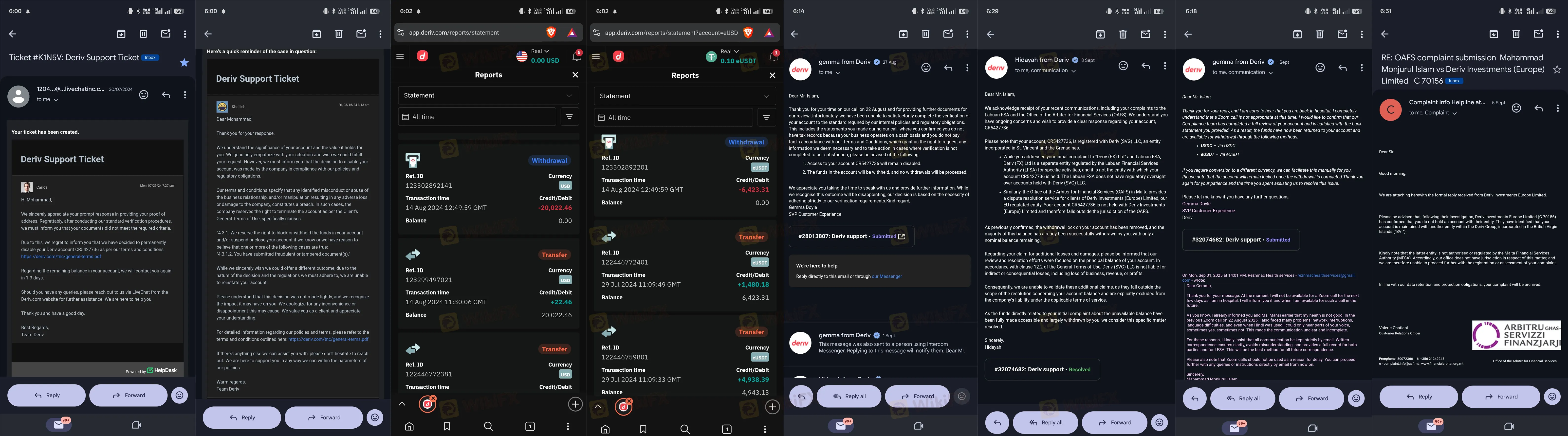
Frozen Accounts: Multiple reports suggest that Deriv freezes accounts during active trading sessions. Users describe being asked for excessive KYC documents (such as tax returns) to “verify” accounts that were previously approved, effectively locking their funds for weeks.
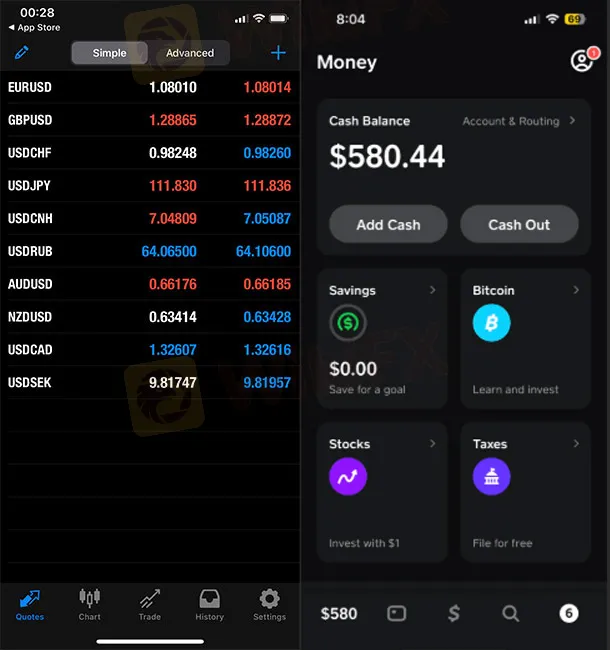
Execution Issues & Leverage Changes: A critical recurring complaint involves “sudden leverage reduction.” Users reported that their leverage was dropped from 1:200 to 1:50 without adequate warning during open trades, leading to immediate margin calls and liquidation.
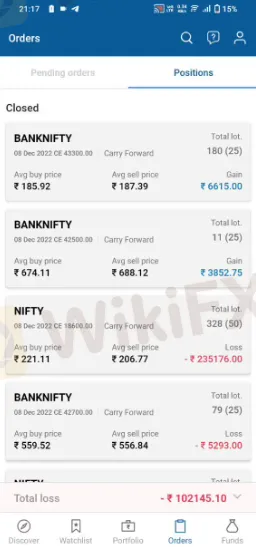
Others have reported severe slippage (price jumping) that turns winning trades into losses.
Risk Note: While many traders use Deriv without issue, the volume of complaints regarding stuck withdrawals and sudden rule changes is concerning.
Trading Environment & Features
If we look solely at the trading infrastructure, Deriv offers a competitive environment, particularly for traders in emerging markets.
Platforms
Deriv primarily supports MetaTrader 5 (MT5). This is an industry-standard platform known for its advanced charting tools, automated trading capabilities (EAs), and multi-asset support.
Payment Flexibility
One of Deriv's strongest selling points is its massive array of payment methods, catering to local needs where traditional banking is difficult. Options include:
- Crypto: Bitcoin, Ethereum, USDT (ERC20 & TRC20), Litecoin, Ripple, and more.
- E-Wallets: Skrill, Neteller, Jeton, Perfect Money.
- Local Solutions: M-PESA (East Africa), Boleto/Pix (Brazil), OXXO (Mexico), UPI (India), and general mobile money solutions like MTN and Airtel money.
This flexibility makes it very easy to deposit, though as noted above, withdrawing can sometimes be more friction-heavy.
Pros and Cons
| Pros | Cons |
|---|---|
| ✅ Global Reach: Strong presence in Africa, Asia, and South America. | ❌ High Complaint Volume: Frequent reports of withdrawal blocks and account freezing. |
| ✅ Multiple Regulations: Regulated in Malta, Malaysia, and UAE. | ❌ Offshore Risk: Most global clients are under BVI/Vanuatu laws. |
| ✅ Payment Options: Huge variety of crypto and local mobile money methods. | ❌ CIMA Warning: Operating beyond the scope of its Cayman license. |
| ✅ MT5 Support: Industry-leading software. | ❌ Execution Issues: Reports of sudden leverage reductions causing liquidation. |
Final Verdict
Is Deriv safe? The answer is nuanced. Deriv is a legitimate, established broker with valid licenses in respected jurisdictions like Malta and Malaysia. It is not a “fly-by-night” scam. Its support for diverse local payment methods makes it one of the most accessible brokers for traders in developing economies.
However, the recent spike in user complaints regarding withdrawals and sudden leverage changes introduces significant risk. Traders should be cautious, particularly when holding large balances. If you choose to trade with Deriv, ensure you understand which entity holds your account and verify your documents fully before depositing large sums.
To monitor Deriv's regulatory status or file a complaint if you experience issues, traders can visit the WikiFX app to view the broker's real-time safety score and latest user reviews.

Read more
WikiFX Alert: Three Well-Known Brokers Targeted by Impersonation Websites
WikiFX issues a warning over unlicensed trading sites posing as established brokers, highlighting the lack of regulatory safeguards and growing risks of fraud and investor losses.
Pocket Option Scam Alert: Real Trader Complaints
Pocket Option scam alert — real traders report blocked withdrawals, fake KYC, slippage, and sudden bans after profits. Read multiple 2025 complaints before you deposit.
Beware Weltrade: Scam Reports Surge in One Month
Weltrade scam surge in August 2025: traders report fake prices, slippage manipulation, and delayed withdrawals. Protect your funds and think twice before trading.
PU Prime Launches “The Grind” to Empower Traders
Discover PU Prime’s new campaign, “The Grind,” and learn how trading discipline builds long-term success. Watch and start your trading journey today!
WikiFX Broker
Latest News
ZarVista Legitimacy Check: Addressing Fears: Is This a Fake Broker or a Legitimate Trading Partner?
 WikiFX
Gold's Historic Volatility: Liquidation Crash Meets Geopolitical Deadlock
WikiFXTreasury Yields Surge as Refunding Expectations Dash; Warsh 'Hawk' Factor Looms
WikiFXThe Warsh Dilemma: Why the New Fed Nominee Puts Fiscal Plans at Risk
WikiFXEurozone Economy Stalls as Demand Evaporates
WikiFXSouth African Rand (ZAR) on Alert: DA Leadership Uncertainty Rattles Markets
WikiFXNigeria Outlook: FX Stability Critical to Growth as Fiscal Revenue Surges
WikiFXAUD/JPY Divergence: Aussie Service Boom Contrasts with Japan's Fiscal "Truss Moment"
WikiFXZarVista Regulatory Status: A Deep Look into Licenses and High-Risk Warnings
WikiFXKODDPA Review: Safety, Regulation & Forex Trading Details
WikiFXRate Calc
