AUDUSD jumps past 0.6700 on RBA’s hawkish surprise, US Dollar retreat
Abstract:The Australian dollar has racked up sharp gains on second May. In the European session, AUD/USD is trading at 0.6691, up 0.93%. As the RBA surprises markets with a 0.25% rate hike, versus the expectation of no change in the current monetary policy.

The Australian dollar has racked up sharp gains on second May. In the European session, AUD/USD is trading at 0.6691, up 0.93%. As the RBA surprises markets with a 0.25% rate hike, versus the expectation of no change in the current monetary policy. Adding strength to the Aussie pairs upside are headlines from the IMF suggesting strong Asia-Pacific growth led by China and India.
That said, the markets remain cautiously optimistic as the First Republic fears ease after JP Morgan took over the troubled US banks assets. Furthermore, recently mixed US data and consolidation ahead of the top-tier factors scheduled for release during the week also favored the upbeat sentiment, which in turn weighs on the US Dollar and yields.
NZDUSD came in second place to cheer the US Dollar's weakness amid RBNZs hawkish remarks whereas the USDJPY bucks the trend with mild gains on dovish bias surrounding the BoJ. Furthermore, EURUSD rallies ahead of the key preliminary Eurozone inflation data whereas prices of Gold remain sidelined but those of Crude Oil improve on China concerns and softer USD.
However, the Cryptocurrencies struggle to cheer the markets mildly upbeat sentiment, as well as the US Dollar, amid regulatory fears and pre-event anxiety.
Following are the latest moves of the key assets:
• Brent oil prints mild gains to pare the previous days losses near $79.50.
• Gold price remains indecisive, mostly pressured, around $1,980.
• USD Index prints the first daily loss in four around 102.00.
• Wall Street closed with minor losses but the Asia-Pacific shares remain mixed. That said, equities in Europe print mild losses while those from the UK grind higher of late.
• BTCUSD and ETHUSD grind lower around $28,000 and $1,830 as we write.
RBAs unexpected move, IMF and US default woes gain attention
RBA ignored unimpressive inflation numbers and subdued employment data to trigger a stellar AUDUSD rally early Tuesday. Adding strength to the run-up could be the headlines suggesting likely upbeat growth prospects for the Asia-Pacific zone, backed by the IMF analysis. Furthermore, US debt ceiling expiration fears joined the mixed US data and pre-event consolidation to prod the US Dollar buyers.
• Strong buy: USDJPY
• Strong sell: ETHUSD, GBPUSD
• Buy: USD Index, USDCAD, Nasdaq, EURUSD
• Sell: DAX, FTSE 100, gold, BTCUSD, AUDUSD
EU inflation, second-tier US data in focus
Having witnessed a notable move during the early hours of the day, market players may witness cautious performance ahead of the first estimations of the Eurozone inflation and the US Factory Orders. Furthermore, chatter around the US debt ceiling and growth, as well as central bank rate hikes, could also entertain market players.


Read more

TickTrader White Label in 2026: Can You Add Liquidity Depth Without Adding Operational Blind Spots?
A TickTrader white label can look like the fastest route to a modern branded trading environment, but a fast launch is not the same as a controlled launch. This 2026 broker guide explains what the TickTrader platform is, where a Soft-FX broker solution can sit in a wider operating stack, and how to evaluate the difference between a white label, a server licence, and a connected CRM or Client Office setup. It also unpacks TickTrader cost beyond the monthly headline, including implementation, integration, support, data, governance, migration, and exit assumptions. Use the practical questions, workflow tests, comparison table, and launch checklist to assess a Soft-FX TickTrader provider without mistaking a feature demo for evidence that your brokerage can run the service safely at scale.

eToro Review 2026: Why Some Users Report Withdrawal Problems - and What the Evidence Shows
eToro, a United Kingdom-based brokerage entity, is facing serious user allegations concerning the basic facility a trader expects - Fund Withdrawal. Users worldwide are complaining about the lack of a withdrawal option, account restriction, and lack of customer support in real time. Many of their complaints appeared on credible broker review platforms such as WikiFX. In this eToro review, we have examined these complaints.

Fortex White Label in 2026: Can Your Liquidity Stack Scale Without Losing Control?
A Fortex white label can look like the fastest route to a modern branded trading environment, but a fast launch is not the same as a controlled launch. This 2026 broker guide explains what the Fortex platform is, where a Fortex broker solution can sit in a wider operating stack, and how to evaluate the difference between a white label, a server licence, and a connected CRM or Client Office setup. It also unpacks Fortex cost beyond the monthly headline, including implementation, integration, support, data, governance, migration, and exit assumptions. Use the practical questions, workflow tests, comparison table, and launch checklist to assess a Fortex provider without mistaking a feature demo for evidence that your brokerage can run the service safely at scale.
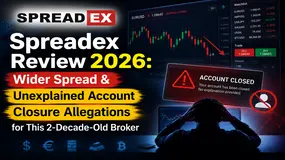
Spreadex Review: Wider Spread & Unexplained Account Closure Allegations for This 2-Decade-Old Broker
Did you incur trading losses on the Spreadex platform due to wider spreads? Have you experienced delays in trade processing by the United Kingdom-based forex broker? Has your Spreadex trading account been closed without any explanation? You are not alone! Many traders have expressed concerns on online broker review platforms. In this Spreadex review 2026, we have covered user allegations and provided a regulatory framework the broker operates under.
WikiFX Broker
Latest News
57 Booked in Pune Forex Scam Probe: The Fake Trading App Checklist Every Indian Investor Needs
 WikiFX
OANDA Broker: Regulated but Is It Really Safe for Traders?
WikiFXYen Surges on Joint Intervention
WikiFXVonway Review: Users Report Withdrawal Blocks and Account Freezes , What Traders Should Know
WikiFXMangaluru Woman, 61, Loses Rs 16.2 Lakh in Facebook Scheme
WikiFXATFX Trading Volumes Drop 29% After Record Q1
WikiFXAI GOLD Review: Is Your Deposit Safe?
WikiFXFD Review: What Traders Should Know Before Depositing
WikiFXWhy a 90% Win Rate Can Still Lose You Money
WikiFXRazor Markets Review: What Traders Should Know Before Depositing
WikiFXRate Calc

