What is PMAM Software
Abstract:To start with, a trading platform is a software system that allows people to trade various financial assets. It enables investors to open, liquidate, and manage market positions online using a financial intermediary, such as an online broker.

To start with, a trading platform is a software system that allows people to trade various financial assets. It enables investors to open, liquidate, and manage market positions online using a financial intermediary, such as an online broker.
Brokers often give free or discounted online trading platforms in exchange for maintaining a funded account and/or conducting a specific number of transactions per month. The best trading systems mix robust functionality with low expenses.
Personal Multi Account Manager (PMAM) is one of the industrys most flexible and sophisticated systems, ideal for both expert traders and money managers who can trade and handle numerous MT4 accounts at the same time. The platform provides customers with an easy-to-use money management system that includes advanced tools for optimal market execution.
PMAM: Benefits & features
The PMAM trading platform simplifies trading by removing the hassle of managing several accounts. It allows traders to concentrate on trading using the MetaTrader 4 Master Account while PMAM handles all of the other activities.
• Online order management, positions, and equity
• One-click order input
• Manage an infinite number of accounts
• Price tracking of financial instruments and currency rates
• Activity updates
• Microsoft Windows 98 or above is required
PMAM: allocation methods
PMAM supports eight volume-based allocation methods:
Allocation of lots
This is used to allocate volume from the master account to the sub-accounts depending on their predefined criteria. This will be proportional to the specified lot sizes for each sub-account. Lot allocation also permits trading on the master account with variable lot sizes.
Allocation based on the balance
This is used to calculate the magnitude of the master accounts trading volume based on the balances of the sub-accounts. This is a routine operation.
Percentage allocation of equity
This sort of allocation is employed when the user has to allocate to sub-accounts based on a percentage. The idea is to make defining the risk of each account as simple as possible. The % option specifies the percentage of the equity to be exchanged for each sub-account.
P/l percentage allocation
When the master position is closed, this is used by a deposit/withdrawal transaction, not by initiating positions on the sub-accounts. This approach, like the previous one, is utilized when the user desires allocation to other accounts on a percentage basis based on a predefined% parameter.
Allocation in percentages
This method is used to split the volume of the master trade across the sub-accounts depending on the percentage parameter they have defined. The payout will be calculated as a proportion of the total trading volume.
Equity allocation in proportion
The percentage is computed automatically in this manner, as it is in the proportion balance allocation method. The primary distinction is that equity is used instead of balance. There are no more modifications required here.
Equal risk allocation
Using this strategy, the issue of regulating margin on sub-accounts is addressed. Sub-accounts are occasionally terminated because of low margin levels. This is the only method that considers margin level. This approach, however, allows you to define the minimum% level for each sub-account.
P/l proportional allocation
No positions are active, as with the % allocation by p/l technique, but the deposit/withdrawal transaction is made to the sub-accounts after the master trade is concluded. This is used when the user wants the sub-accounts to be allocated proportionately to their balance.
Why use PMAM?
As technology progresses, more trading platforms enter the financial markets. PMAM, that is, Personal Multi Account Manager, is part of this advancement.
So, just what is PMAM? This versatile and efficient trading platform is ideal for experienced traders and investment portfolio managers who wish to handle several accounts, online orders, and positions with a single click. The application also gives clear activity statistics as well as real-time market price and rate monitoring.
PMAM was created exclusively for experienced traders to offer them all of the software tools they need to rapidly and efficiently allocate and distribute cash under a master account in real-world trading conditions.
Choosing a trading platform
When you first start trading forex online, it might be difficult to choose the ideal platform because there are so many of them. These are some of the aspects that traders seek in a platform, ranging from how easy it is to navigate to how complex its features are, how simple it is to understand, and how good the quality of its tools is.
Reliability
Select a platform provided by a reputable broker with years of industry experience.
Effectiveness
Selecting a robust platform with consistent performance and operations is also critical.
User-friendly interface
Choose a platform with minimal features and an easy-to-use user interface.
Client support
Be certain that you receive guidance at all stages of your trading adventure.
Characteristics
Adhere to a platform that better matches your wants and trading needs. A range of features should also be considered.


Read more
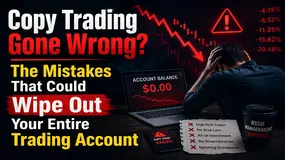
Copy Trading Gone Wrong? The Mistakes That Could Wipe Out Your Entire Trading Account
We all love trading geniuses and their strategies that earn them profits season after season. And we also love following them to make our investment journey seamless. Copy trading is one such tactic that beginners employ to enter the forex market. What do most of them usually do? They pick an experienced investor from the list and let the platform replicate every trade automatically. The fact that experienced traders continually earn profits, the feeling of copying their trades remains intense. However, the uncertain forex landscape can bite you hard by simply copying trades and not focusing on technical analysis and the charts during the day. Beginners can have a set of preconceived notions that can potentially open the gate for losses. In this article, we have highlighted such mistakes traders should avoid.

"Let Trust Be Seen" WikiFX Industry Initiative Recap, Driving the forex industry toward a more trust
As the global forex market continues to move toward regulatory convergence and greater transparency, “trust,” a concept long and frequently emphasized, is gradually evolving from a subjective perception into a quantifiable and verifiable industry standard. WikiFX announces that its industry initiative, “Let Trust Be Seen,” has achieved phased results, attracting broad attention and participation worldwide.

【WikiEXPO Global Expert Interview】Penetrating Asset Narratives to Understand Trading Risks
On July 23–24, renowned economist Fu Peng will attend WikiEXPO Hong Kong in Hong Kong, joining global industry leaders, regulatory representatives, and fintech experts to discuss the evolving challenges of trading safety amid macroeconomic transformation. Against the backdrop of accelerating restructuring in global financial markets, the trading environment is facing unprecedented uncertainty. To explore this critical theme, WikiEXPO conducted an exclusive interview with Mr. Fu Peng. This interview series will be released in multiple episodes, each focusing on a key question and presenting his in-depth insights into the global trading risk landscape. Following the first episode, which examined macro structural shifts, this third episode turns to one of the most pressing topics for investors today:About asset allocation in an uncertain world, how should investors interpret the concept of “hard currency”? And which asset classes offer greater transparency and more controllable risks?
Basics of Foreign Exchange and Currency Pairs in India by Junior Oneii
The countdown for a full-fledged discussion on the topic titled - Basics of Foreign Exchange and Currency Pairs - has begun. On March 17, 2026, the WikiFX team will conduct a live session with Junior Oneii, a full-time Forex and Crypto trader, while also earning the reputation of a Key Opinion Leader (KOL) across financial markets. The hon’ble guest will share insights on the Indian forex market ecosystem, including its mechanisms, advantages, and inherent challenges
WikiFX Broker
Latest News
LQH MARKETS Review: Multiple Traders Report Withdrawals Blocked and Accounts Terminated
 WikiFX
Spread Cheating: The Invisible Trading Cost That Could Be Working Against You
WikiFX"They Want to See Your Face": Inside ATFX Cambodia's Rise
WikiFX57 Booked in Pune Forex Scam Probe: The Fake Trading App Checklist Every Indian Investor Needs
WikiFXAccused of a RM123 Million Crypto Scam, He Fled to Malaysia and Claimed He Was Robbed
WikiFXAfrica's 10 Strongest Currencies in July 2026: Naira Absent
WikiFXU.S. and Japan Stand Ready for Further Coordinated Yen Intervention, Treasury Warns
WikiFXMarket, Limit, and Stop Orders in Forex Explained Simply
WikiFXSri Lanka Rupee Slides 7.9% in H1 2026 as Bank Steps In
WikiFXHF Market Review – A 1.76 Score, an Unverified CYSEC Licence, and a Frozen Account
WikiFXRate Calc

