A NEW CHALLENGER. META ENTERS THE AI RACE
Abstract:After Microsoft ChatGPT and Google's Bard, Meta is joining the AI chatbot race with its own state-of-the-art foundational large language model designed to help researchers advance their work in the field of artificial intelligence.

After Microsoft ChatGPT and Google's Bard, Meta is joining the AI chatbot race with its own state-of-the-art foundational large language model designed to help researchers advance their work in the field of artificial intelligence.
This was announced last Friday, and said that it is releasing a large language model, the core software of a new AI system, to researchers, fueling the AI race as big tech companies rush to integrate the technology into their products and impress investors.
The battle for AI dominance began late last year with the launch of Microsoft-backed OpenAI ChatGPT and prompted tech heavyweights from Alphabet Inc to China's Baidu Inc to pitch in with their solutions.
However, Meta's Large Language Model Meta AI (LLaMA) isn't like ChatGPT-driven Bing at the moment as it can't yet talk to humans but will help researchers.
LLaMA, short for Large Language Model Meta AI, will be made available under a non-commercial license to researchers and organizations associated with government, civil society and academia, according to a promo blog.
The model, which Meta says requires “much less” processing power than other alternatives, is trained in 20 languages, with a focus on Latin and Cyrillic languages.
AI has reinvigorated investments into the tech industry, whose slowdown has led to mass layoffs and cuts to experimental bets.
Meta claims that LLaMA outperforms competitors who explore more parameters or variables taken into account by the algorithm. In particular, the LLaMA version with 13 billion parameters could outperform GPT-3, the recent predecessor to the model on which ChatGPT is built.


Read more
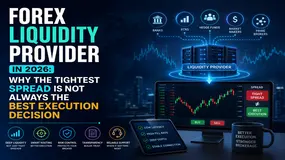
Forex Liquidity Provider in 2026: Why the Tightest Spread is Not Always the Best Execution Decision
Choosing a forex liquidity provider is not a search for the lowest displayed spread or the longest provider list. It is a broker decision about pricing integrity, depth, routing, credit, reporting, incident response, and client communication. This 2026 guide explains how a forex LP, FX liquidity provider, or liquidity provider forex arrangement fits into a broker’s execution chain; what to test before onboarding; why a “best forex liquidity provider” claim cannot replace due diligence; and how to compare cost beyond commission. Use the execution-quality scorecard, provider questions, routing scenarios, and 90-day onboarding plan to assess whether a liquidity relationship can support your actual client mix, instruments, risk model, and jurisdiction. The goal is not to make a universal ranking. It is to build evidence that your broker can explain, supervise, reconcile, and recover its execution service when market conditions are difficult.
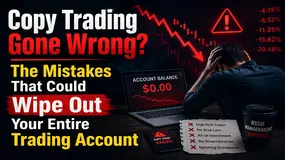
Copy Trading Gone Wrong? The Mistakes That Could Wipe Out Your Entire Trading Account
We all love trading geniuses and their strategies that earn them profits season after season. And we also love following them to make our investment journey seamless. Copy trading is one such tactic that beginners employ to enter the forex market. What do most of them usually do? They pick an experienced investor from the list and let the platform replicate every trade automatically. The fact that experienced traders continually earn profits, the feeling of copying their trades remains intense. However, the uncertain forex landscape can bite you hard by simply copying trades and not focusing on technical analysis and the charts during the day. Beginners can have a set of preconceived notions that can potentially open the gate for losses. In this article, we have highlighted such mistakes traders should avoid.

"Let Trust Be Seen" WikiFX Industry Initiative Recap, Driving the forex industry toward a more trust
As the global forex market continues to move toward regulatory convergence and greater transparency, “trust,” a concept long and frequently emphasized, is gradually evolving from a subjective perception into a quantifiable and verifiable industry standard. WikiFX announces that its industry initiative, “Let Trust Be Seen,” has achieved phased results, attracting broad attention and participation worldwide.
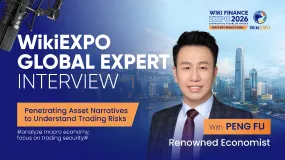
【WikiEXPO Global Expert Interview】Penetrating Asset Narratives to Understand Trading Risks
On July 23–24, renowned economist Fu Peng will attend WikiEXPO Hong Kong in Hong Kong, joining global industry leaders, regulatory representatives, and fintech experts to discuss the evolving challenges of trading safety amid macroeconomic transformation. Against the backdrop of accelerating restructuring in global financial markets, the trading environment is facing unprecedented uncertainty. To explore this critical theme, WikiEXPO conducted an exclusive interview with Mr. Fu Peng. This interview series will be released in multiple episodes, each focusing on a key question and presenting his in-depth insights into the global trading risk landscape. Following the first episode, which examined macro structural shifts, this third episode turns to one of the most pressing topics for investors today:About asset allocation in an uncertain world, how should investors interpret the concept of “hard currency”? And which asset classes offer greater transparency and more controllable risks?
WikiFX Broker
Latest News
Interactive Brokers changes overnight order default in TWS
 WikiFX
Exclusive Capital Review: Regulated by CySEC, but Traders Report Withdrawal Problems
WikiFXTenTrade Review 2026: Complaints, Withdrawals, and Risk Signals
WikiFXFiji-deported man faces charges in $165M crypto Ponzi
WikiFXReview 2026: XORKETS FX Withdrawal Complaints and Unregulated Risk
WikiFXTrendo Review: Is Your Deposit Safe?
WikiFXRinggit jumps 225 pips as US data cools Fed hike bets
WikiFXU.S. Rates and Tariffs Shape Macro Risk Sentiment
WikiFXMalaysian Doctor Loses RM558,000 to Forex-Crypto Scam
WikiFXLQH Markets Review: Unregulated Broker With Growing Withdrawal Complaints
WikiFXRate Calc

