Japanese Candlesticks Analysis 07.02.2023 (XAUUSD, NZDUSD и GBPUSD)
Abstract:Japanese Candlesticks are a technical analysis tool that traders use to chart and analyze the price movement of securities. To read Japanese candlestick patterns, you'll need to familiarise yourself with three elements on each candle: its colour, its body and its wick. Let's take a look at the Japanese Candlesticks Analysis;

Japanese Candlesticks are a technical analysis tool that traders use to chart and analyze the price movement of securities. To read Japanese candlestick patterns, you'll need to familiarise yourself with three elements on each candle: its colour, its body and its wick. Let's take a look at the Japanese Candlesticks Analysis;
XAUUSD, “Gold vs US Dollar”
At the support level, gold has formed a Hammer reversal pattern. Currently, the instrument might go by the pattern in an ascending wave. The goal if the growth might be 1895.50. After a test of the resistance level, the pair might break through it and continue the uptrend. However, the quotes may pull back to 1860.00 before growth.

NZDUSD, “New Zealand Dollar vs US Dollar”
On H4, at the support level, the pair has formed a Hammer reversal pattern. Currently, the instrument might go by the pattern in an ascending wave. The goal if the growth might be 0.6385. After a breakaway of the resistance level, the pair might get a chance for continuing the uptrend. However, the price may pull back to 0.6270 before growth.

GBPUSD, “Great Britain Pound vs US Dollar”
On H4, at the support level, the pair has formed an Inverted Hammer reversal pattern. Currently, the instrument might go by the pattern in an ascending wave. The goal if the growth might be the resistance level of 1.2160. However, the price may pull back to 1.1990 and continue the uptrend after a correction.


Read more
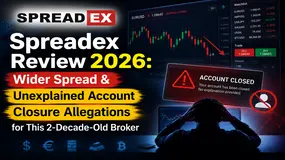
Spreadex Review: Wider Spread & Unexplained Account Closure Allegations for This 2-Decade-Old Broker
Did you incur trading losses on the Spreadex platform due to wider spreads? Have you experienced delays in trade processing by the United Kingdom-based forex broker? Has your Spreadex trading account been closed without any explanation? You are not alone! Many traders have expressed concerns on online broker review platforms. In this Spreadex review 2026, we have covered user allegations and provided a regulatory framework the broker operates under.

cTrader White Label Platform: A Practical Guide for Broker Evaluation and Multi-Asset Expansion in 2
A broker can launch a white-label platform quickly and still fail the first serious operating test. The failure often begins quietly: an assets expansion has been approved, the client app is branded, and a new account journey looks complete. Then a client asks why a trade-related status, funding hand-off, or account restriction looks different across channels. Support cannot see the same reference trail as operations. The product owns the screen, but no one owns the explanation. The issue is not a missing feature. It is an untested operating model. That is why a cTrader white label platform should be evaluated as a route to a multi-asset service - not as a shortcut to a more attractive terminal. The central question is whether the broker can add instruments, client channels, integrations, and service capacity without making its controls harder to operate or explain.

Is TradingPRO Safe? FCA Warning, Indonesia Blocklist Evidence, and 7 Checks Before You Deposit
This Trading Pro broker review checks the FCA warning, Indonesia blocklist evidence, licence claims, and what South Asian users should verify before depositing.
MT4 White Label Cost in 2026: What Brokers Must Budget Beyond the Platform Fee
The visible fee in an MT4 white label proposal is rarely the real cost of operating it. For an existing broker, the decision is not simply whether an MT4 white label platform is “cheap” or “expensive.” The real question is whether the commercial model remains viable after integration, support, data, client migration, compliance, and exit costs are included. That is why an MT4 white label cost review should be built as a 24- to 36-month operating case. It should compare three credible choices: 1. Keep the present MT4 setup and improve its weakest controls. 2. Replace the MT4 white label provider but retain the client proposition. 3. Migrate selected clients or products to another platform while running MT4 in parallel. This guide explains how to build that case without relying on headline prices or generic vendor claims.
WikiFX Broker
Latest News
ForexMart Review: Profit Canceled, Principal Withheld, and a Broker Warning Traders Cannot Ignore
 WikiFX
How a 'Legitimate' Investment Became a RM67.5 Million Ponzi Scheme That Scammed 206 Investors
WikiFXTitan Capital Markets Review 2026: Complaints, Withdrawals, and Severe Risk Signals
WikiFXRupee Hits Two-Week High as RBI Defends 97 Mark
WikiFXSingapore Dollar Holds Tight Range as FOMC Looms
WikiFXcTrader White Label Platform: A Practical Guide for Broker Evaluation and Multi-Asset Expansion in 2
WikiFXWhat a divided Fed means for investors
WikiFXReview 2026: Dollars Markets Regulation, Withdrawal Complaints, and Platform Risks
WikiFXCapital Guard Liquidated: $17.4m Raised, Most Funds Gone
WikiFXPocket Broker Review: Is Your Deposit Safe?
WikiFXRate Calc

