GOLD TRADING STRATEGIES AND TIPS
Abstract:If you utilize a spread-betting platform, trading gold is similar to trading forex. A gold trading strategy may include fundamental, emotive, and technical research. Advanced gold traders understand that the yellow metal is valued in US dollars and will factor this into their gold analysis.

THE MAIN TRADING STRATEGY AND WHY YOU SHOULD TRADE GOLD?
Trading gold used to be difficult since you had to buy and sell the metal itself. Then came futures and options, which allowed traders to take positions without having to open a safe full of gold bars, coins, or jewelry. Gold exchange-traded funds (ETFs) made it even easier; trading gold was similar to trading stocks.
Today, trading gold is nearly identical to trading foreign exchange. When a retail investor utilizes a spread-betting platform, it is just a question of buying or selling based on whether they believe the gold price will climb or fall.
Trading gold is appealing to some people simply because the underlying asset is tangible rather than a figure on a bank account. There are several tactics for trading gold, ranging from researching the fundamental variables driving supply and demand to study current gold trader positioning, to technical analysis and monitoring the gold price chart.
Even for those who depend solely on fundamentals, many experienced traders would agree that integrating some elements of fundamental, sentiment, and technical research makes for a superior gold trading approach. We recommend that you study the gold price chart and patterns to help you enter and exit particular trades. Fundamental and sentiment research can help you recognize trends, but a study of the gold price chart and patterns can help you enter and exit individual trades.
TRADING FOREX VS TRADING GOLD
Gold has long been seen as a store of value because, unlike currencies, it is not susceptible to the whims of governments and central banks. Gold prices are not directly impacted by either fiscal or monetary policy and will always be worth something — unlike a currency, which might become nearly worthless due to runaway inflation, for example.
Traders can also utilize gold as a “safe haven,” along with assets such as the Japanese yen, the Swiss franc, and US Treasury notes and bonds. That is, when traders are concerned about risk patterns, they will seek to acquire safe-haven assets. On the other hand, as risk appetite rises, traders seek to sell haven assets in favor of equities and other currencies with higher interest rates. As a result, gold is a crucial inflation hedge and a valued asset.
Market liquidity is another important thing to consider while learning how to trade gold. According to the World Gold Council, average daily trading volumes in gold are bigger than in any other currency pair except EURUSD, USDJPY, and GBPUSD. This makes it greater than the daily trading volume in EURJPY, for example, thus spreads - the difference between buying and selling prices – are low, making gold comparatively affordable to trade.
Gold trading hours are approximately 24 hours a day. Gold exchanges are virtually always open, with trade flowing fluidly from London and Zurich to New York to Sydney, and then to Hong Kong, Shanghai, and Tokyo before Europe takes over again. This implies that liquidity is abundant around the clock, albeit, as with foreign currency, it might be rather quiet after the New York close, with fewer volumes and, as a result, the risk of dramatic price changes.

TRADING GOLD USING TECHNICAL ANALYSIS
Technical traders will observe how the gold price chart's market state has altered over time. From 2005 to 2015, gold prices exhibited a significant upward trend. Since 2015, gold prices have been trading in a narrow band between $1,000 and $1,400. Use a momentum approach if the market is trending. Use a low volatility or range approach if the gold chart is range-bound. This is an important component of a gold trading strategy. In an uptrend, a line linking past highs will operate as resistance when it is above the present level, while a line connecting recent higher lows would work as support — the opposite is true in a falling market. Chart patterns such as head-and-shoulders tops and double bottoms are equally as important when trading currency pairings. Elliott Wave analysis, Fibonacci retracement levels, momentum indicators, and other approaches may all assist the more expert technical trader to predict anticipated future moves.
GOLD TRADING TIPS FOR TRADER
Returning to fundamental analysis, the novice should keep one thing in mind: is market sentiment going to be favorable or negative? If the former, the gold price is expected to decline; if the latter, the gold price is likely to climb. As a result, this is the most basic approach to employ while trading gold. However, for the more experienced trader, it is also vital to evaluate what is going to happen to the Dollar. In recent years, the Dollar has also grown to be seen as a safe haven, which helps to explain why the gold price in Dollars has stayed relatively consistent. In terms of supply, advanced traders should keep a watch on output numbers from major producers such as Barrick Gold and Newmont Mining.
PRINCIPAL GOLD TRADING TIPS ARE AS FOLLOWS:
· Consider if the markets are “risk-on” or “risk-off.”
· Consider the expected behavior of the US dollar and the gold price.
· Consider combining basic, emotional, and technical analyses.
· Keep an eye out for central bank purchases or sales.
· Consider the popularity of gold jewelry.
· Examine the industrial demand for gold.
· Also, consider the supply situation.

Related broker


Read more
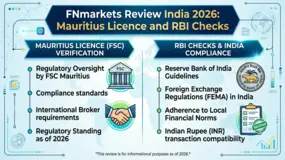
FNmarkets Review India 2026: Mauritius Licence and RBI Checks
This FNmarkets review for Indian readers starts with four verifiable facts. The Mauritius FSC public register lists FNmarkets (Mauritius) Ltd as an Investment Dealer, licensed on 12 August 2025. The broker website identifies the same entity and states licence GB25204149. However, the RBI list of authorised electronic trading platforms checked on 9 September 2026 did not show FNmarkets. The broker's help centre also sets a $50 minimum withdrawal and requires full account verification. These facts do not prove fraud, but they make FNmarkets regulation and payment checks essential before an Indian resident deposits money.
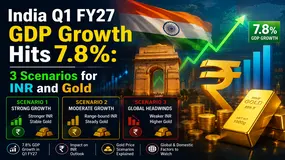
India Q1 FY27 GDP Growth Hits 7.8%: 3 Scenarios for INR and Gold
India's Q1 FY27 GDP grew 7.8%, beating a 7.4% poll and RBI's 7.0% projection. See three conditional scenarios for INR, rates and gold.
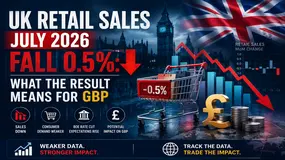
UK Retail Sales July 2026 Fall 0.5%: What the Result Means for GBP
UK retail sales fell 0.5% in July 2026, while the three-month measure rose 1.1%. See the ONS details and what the mixed result may mean for GBP.

Pakistan Forex Reserves Reach $22.5 Billion: Why a Stable USD/PKR Snapshot is Not Yet a Trend
Pakistan forex reserves stood at $22.506 billion on 13 August 2026, while the SBP dashboard showed a USD/PKR mark to market rate of 277.5713 on 20 August. This article separates the SBP forex reserves facts from predictions about the Pakistan rupee and the forex market Pakistan.
WikiFX Broker
Latest News
Australian Dollar posts fresh three-month high amid hawkish RBA prospects
 WikiFX
Vietnam: Inflation and trade trends shape VND – Commerzbank
WikiFXBritish Pound climbs as USD fades, Hormuz risk keeps Fed in play
WikiFXSilver Price Forecast: Head-and-Shoulders risk builds below $67
WikiFXMT4 Phase-Out Accelerates as More Forex Brokers Move to MT5
WikiFXNSE Action Parker Derivatives 8 September 2026 and Seven Checks Before Funding
WikiFXDo You Know Your Cost of Swinging Gold? Gold CFD Costs Shift From Spreads To Overnight Fees
WikiFXBlackwell Global UK Loss Widens as Revenue Falls 37%
WikiFXXMR Markets Review 2026: Allegations of Failed Withdrawals & Bonuses
WikiFXAustralian Dollar rides thin-trading lift as Fed test looms
WikiFXRate Calc

