Light FX-Overview of Minimum Deposit, Spreads & Leverage
Abstract: LIGHT FX is a Japan-based broker founded in 2002, regulated by FSA. It offers Forex and Cryptocurrency trading.
| LIGHT FX Review Summary | |
| Founded | 2002 |
| Registered Country/Region | Japan |
| Regulation | Regulated by FSA (Japan) |
| Market Instruments | Forex, Cryptocurrency |
| Demo Account | / |
| Leverage | Up to 1:25 |
| EUR/USD Spread | Floatig around 0.28 pips |
| Trading Platform | LIGHT FX App, Simple Trader, Advanced Trader |
| Minimum Deposit | 0 |
| Customer Support | Contact Form |
| Tel: 0120-637-105 | |
| Address: Traders Securities Co., Ltd. “LIGHT FX” 28th Floor, Ebisu Garden Place Tower, 20-3 Ebisu 4-chome, Shibuya-ku, Tokyo 150-6028 | |
| Social Media: X | |
LIGHT FX Information
LIGHT FX is a Japan-based broker founded in 2002, regulated by FSA. It offers Forex and Cryptocurrency trading.

Pros and Cons
| Pros | Cons |
| Regulated by FSA | Limited trading assets |
| Multiple trading platforms | No MT4 and MT5 support |
| No commission fee | No demo accounts |
| Allow small amount trading | |
| Physical office proved | |
| Long operation time |
Is LIGHT FX Legit?
LIGHT FX is regulatedby Financial Services Agency (FSA), under トレイダーズ証券株式会社, with license number 関東財務局長(金商)第123号.
| Regulatory Status | Regulated By | Licensed Institution | License Type | License Number |
| Regulated | Financial Services Agency (FSA) | トレイダーズ証券株式会社 | Retail Forex License | 関東財務局長(金商)第123号 |

WikiFX Field Survey
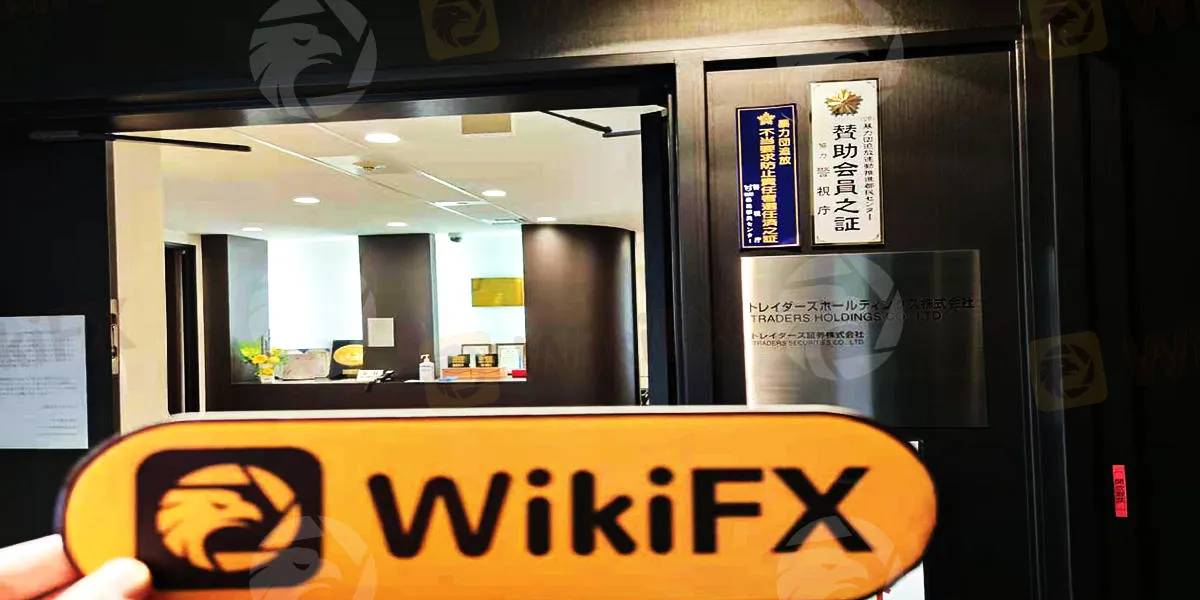
WikiFX field survey team visited LIGHT FX's address is Japan, and we found its office on site, which means the company operates with an physical office.
What Can I Trade on LIGHT FX?
| Trading Instruments | Supported |
| Forex | ✔ |
| Cryptocurrency | ✔ |
| Commodity | ❌ |
| Indice | ❌ |
| Stock | ❌ |
| Bond | ❌ |
| Option | ❌ |
| ETF | ❌ |


Leverage
LIGHT FX offers leverage of up to 1:25, depending on the instrument and account type. Leverage allows traders to control larger positions with smaller capital, amplifying both potential profits and losses.

Trading Platform
| Trading Platform | Supported | Available Devices | Suitable for |
| LIGHT FX App | ✔ | iOS, Android | / |
| Simple Trader | ✔ | Web (browser-based) | / |
| Advanced Trader | ✔ | Web (browser-based) | / |
| MT4 | ❌ | / | Beginners |
| MT5 | ❌ | / | Experienced traders |


Deposit and Withdrawal
LIGHT FX does not have a minimum deposit requirement, which is ideal for new investors and those without much capital to put down.
| Deposit Method | Minimum Deposit | Deposit Fee | Deposit Time |
| Bank Transfer | 0 | 0 | Below 24 hours |


The withdrawal service is provided by LIGHT FX, having a minimum withdrawal amount for JPY 2000, with 3 business days of withdrawal time.
| Withdrawal Method | Minimum Withdrawal | Withdrawal Fee | Withdrawal Time |
| Bank Transfer | JPY 2000 | / | 3 business days |


Read more
PURPLE TRADING Review: Do Withdrawal Delays, Wide Spreads & Customer-Service Complaints Hold Weight?
PURPLE TRADING, a Seychelles-based forex brokerage entity, is constantly criticized by numerous traders on review platforms such as WikiFX. While withdrawal delays or denials are reportedly a common issue here, there are also complaints about wide spreads and poor customer services. This PURPLE TRADING review examines user-reported allegations against the trading enterprise. Additionally, the article takes a close look at the broker’s regulatory status.
Exness Review for Indian Traders 2026: The RBI Question Comes Before Leverage and Spreads
Exness review for Indian traders in 2026. This guide explains what the RBI Alert List says, what it does not say, why a global license is not Indian authorization, and how to verify permitted forex routes before funding an account.
HSB Investasi Review 2026: Is “Instant Withdrawal” Really Under One Minute?
HSB Investasi review 2026: check the Instant Withdrawal claim, the IDR 14 million per-proposal limit, the three-request daily cap, transfer costs, transaction statuses, and what Bappebti data does—and does not—tell traders.

Branded Trading Platform in 2026: When Does Your Brand Become a Real Operating Advantage?
A branded trading platform can look like the fastest route to a modern branded trading environment, but a fast launch is not the same as a controlled launch. This 2026 broker guide explains what the custom trading platform is, where a provider broker solution can sit in a wider operating stack, and how to evaluate the difference between a white label, a server license, and a connected CRM or Client Office setup. It also unpacks proprietary platform costs beyond the monthly headline, including implementation, integration, support, data, governance, migration, and exit assumptions. Use the practical questions, workflow tests, comparison table, and launch checklist to assess a platform provider without mistaking a feature demo for evidence that your brokerage can run the service safely at scale.
WikiFX Broker
Latest News
Exness Review for Indian Traders 2026: The RBI Question Comes Before Leverage and Spreads
 WikiFX
EMAR MARKETS Review 2026: Severe Withdrawal Complaints and Risk Signals
WikiFXTrader's Way Review: Trades Vanished Overnight , And There's No Regulator to Call
WikiFXLockwood Review: AMF-Blacklisted Broker with Users Reporting Blocked Withdrawals
WikiFXBYBIT Review: What Traders Should Know Before Depositing
WikiFXPocket Broker Review: What Traders Should Know Before Depositing
WikiFXIC Markets Global Review for South Asian Traders: A Global License Isn't the Same as Local Permit
WikiFXTraze Review: What Traders Should Know Before Depositing
WikiFXMatch-Trade Gives AI Direct Access to Broker Trading APIs
WikiFXWhy Sovereign Debt Can Sink a Currency: The Credit Risk Channel
WikiFXRate Calc

