Is PocketOption a Safe Bet for Your Forex Trading? A Deep Dive into Its Regulatory Status and User E
Abstract:Uncover the truth about PocketOption broker. This in-depth PocketOption review examines its regulatory standing, WikiFX score, and recent user complaints from 2025 to present, helping you make informed decisions about PocketOption Forex trading and PocketOption login safety.
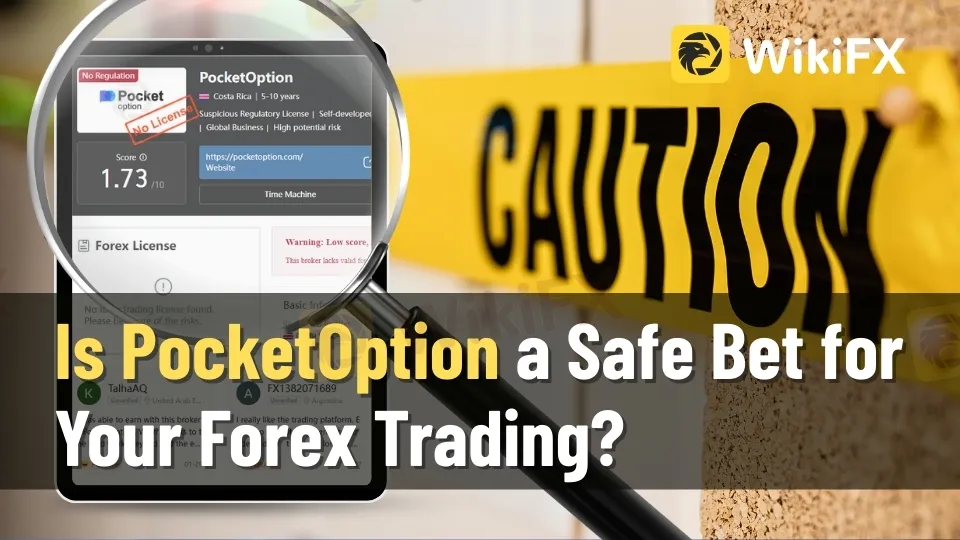
Understanding PocketOption: A Critical Review
In the dynamic world of online trading, choosing a reliable and regulated broker is paramount. Many traders are constantly searching for platforms that offer competitive advantages, user-friendly interfaces, and, most importantly, security for their investments. PocketOption often appears in discussions, with many searching for “PocketOption review” or “PocketOption broker” to understand its offerings. However, a closer look at its operational framework, particularly its regulatory status and user feedback, reveals critical information that potential investors must consider.
This article aims to provide a comprehensive and awareness-oriented analysis of PocketOption, focusing on its regulatory environment, its WikiFX score, and recent investor experiences. Our goal is to equip you with the necessary insights to evaluate the risks associated with this platform, especially concerning “PocketOption regulation” and the safety of your “PocketOption login” details and funds.
The Alarming Lack of PocketOption Regulation
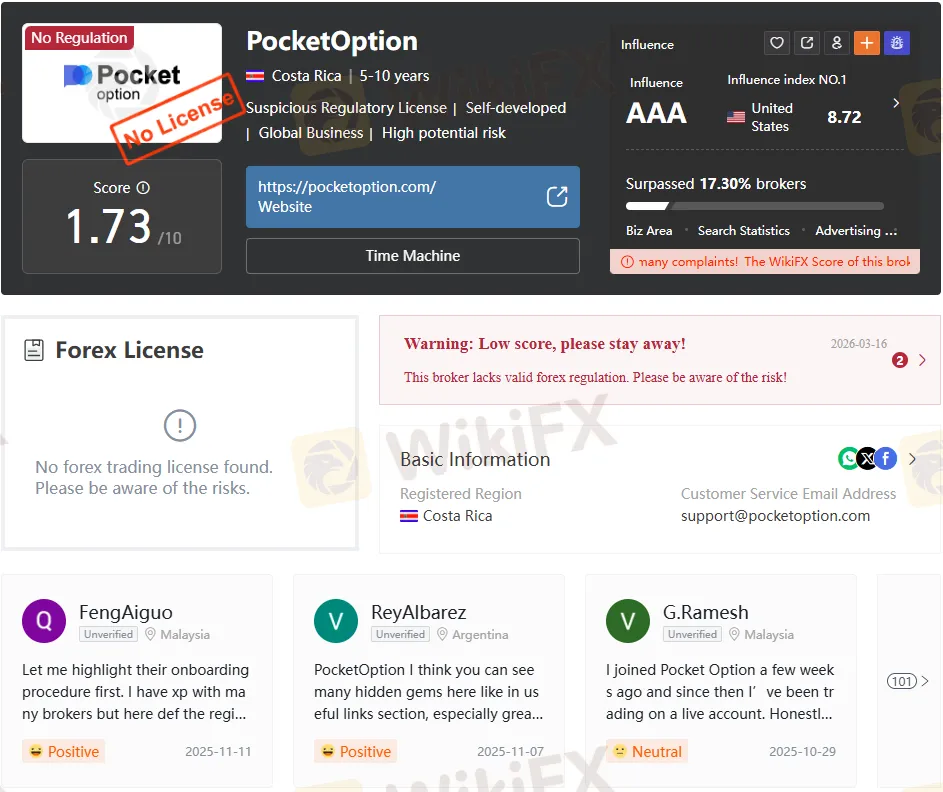
One of the most significant red flags concerning PocketOption is its apparent lack of robust regulatory oversight. According to WikiFX, a reputable third-party platform for broker evaluations, PocketOption operates with “No Regulation” and explicitly states, “No forex trading license found. Please be aware of the risks.” This is a critical point for any trader, as regulatory bodies exist to protect investors by enforcing strict financial and ethical standards on brokers. Without such oversight, traders are left vulnerable to potential malpractices, fund mismanagement, and a lack of recourse in disputes.
For those considering “PocketOption Forex” trading, the absence of a valid forex trading license means that the broker is not subject to the stringent rules that govern licensed entities. This can include requirements for capital adequacy, segregation of client funds, transparent pricing, and fair dispute resolution mechanisms. The warning from WikiFX, “Low score, please stay away! This broker lacks valid forex regulation. Please be aware of the risk!”, serves as a stark reminder of the inherent dangers.
WikiFX Score: A Cause for Concern
The WikiFX score is a crucial indicator of a brokers reliability, derived from various factors including regulatory compliance, software quality, risk management, and user complaints. PocketOption currently holds a dismal WikiFX score of 1.73 out of 10. This exceptionally low score is attributed to “too many complaints,” as highlighted by WikiFX itself. A score this low suggests significant underlying issues that go beyond minor operational glitches.
Such a low rating should prompt serious consideration for anyone looking into “review PocketOption” or “broker PocketOption.” It indicates a pattern of dissatisfaction among users and a potential failure by the platform to meet basic standards of service and security. The implications for “PocketOption login” security and the overall safety of funds on such a platform cannot be overstated.
Recent Investor Concerns: Cases from 2025 to Present
The concerns surrounding PocketOption are not merely theoretical; they are substantiated by recent user experiences and complaints. The following cases, reported from 2025 to the present, illustrate the tangible risks faced by traders on this platform. These incidents underscore the importance of thorough due diligence, especially when dealing with unregulated entities.
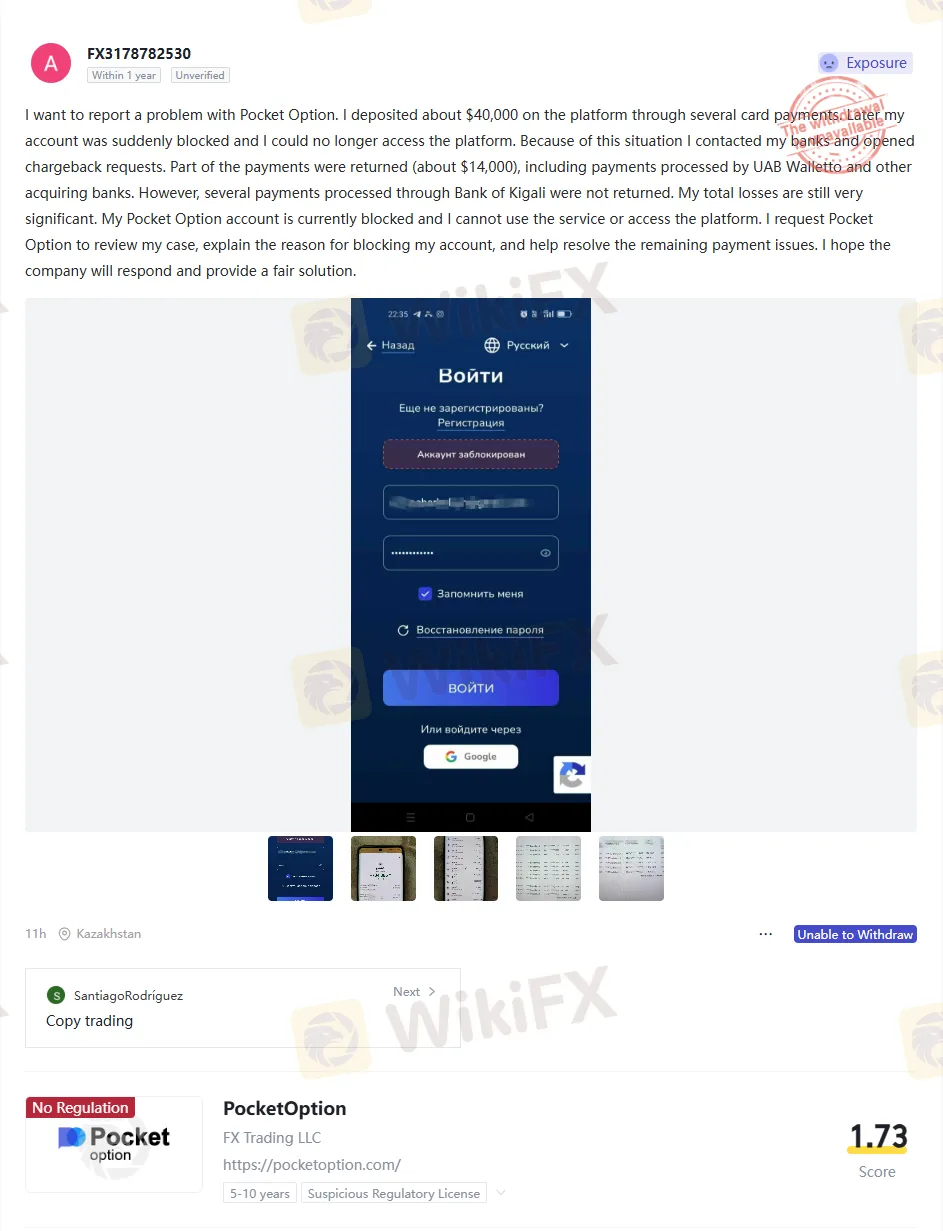
Case 1: Account Blocking and Unresolved Withdrawals (Kazakhstan, 2026)
An investor from Kazakhstan reported depositing approximately $40,000 into their PocketOption account through various card payments. Subsequently, their account was abruptly blocked, preventing access to the platform. While some payments were successfully recovered through chargeback requests (around $14,000), several payments processed via Bank of Kigali remained unreturned. The users account remains blocked, and they are seeking resolution for the significant remaining losses. This case, reported in 2026, highlights severe issues with account access and fund withdrawal, directly impacting the trust in “PocketOption regulation” and the security of “PocketOption login.”
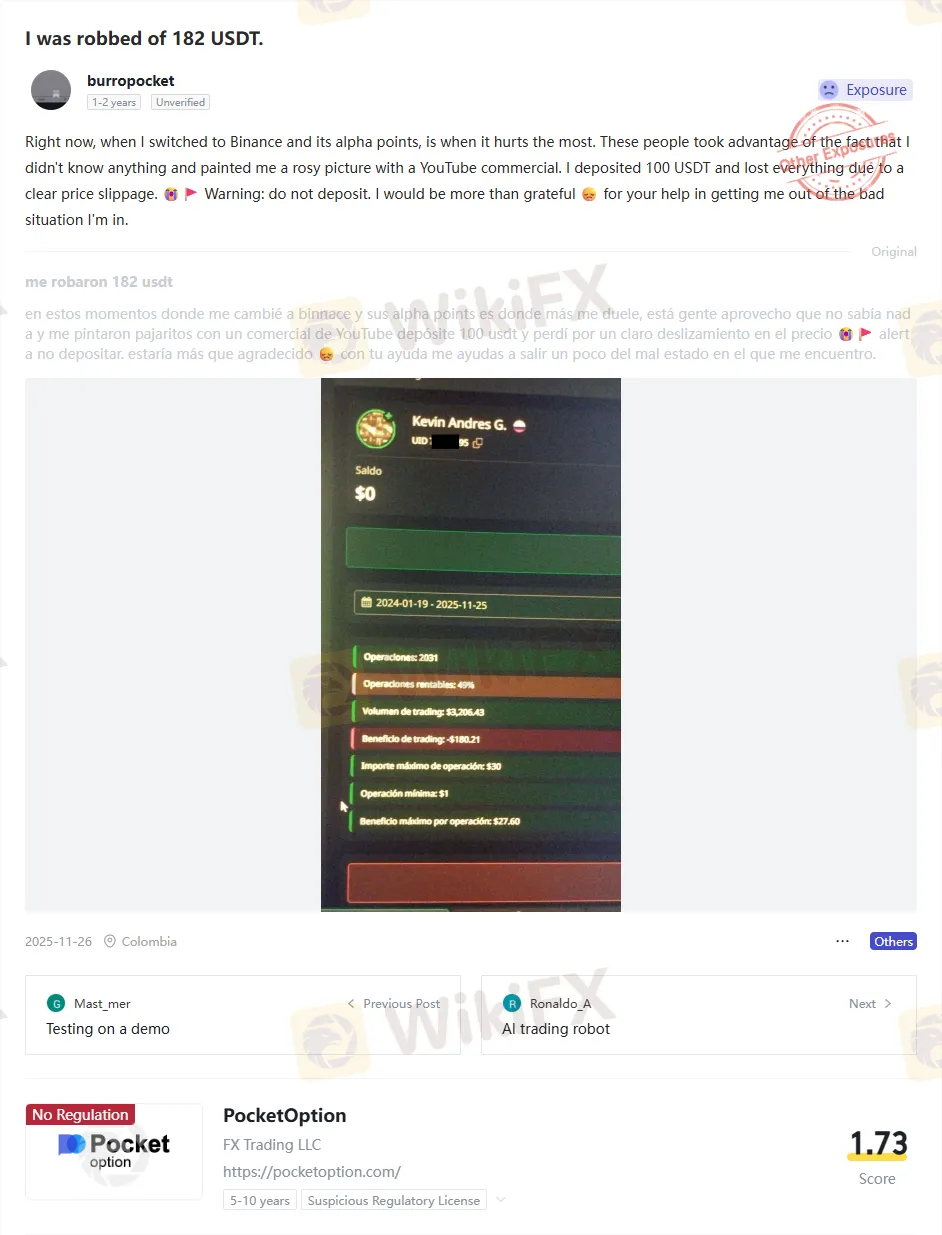
Case 2: Price Slippage and Fund Loss (Colombia, 2025)
In November 2025, a user from Colombia, identified as “burropocket,” reported losing 100 USDT due to what they described as “clear price slippage.” The user expressed feeling misled by promotional material and warned others against depositing funds, emphasizing the lack of transparency and fairness in trading conditions. This incident raises questions about the integrity of trading execution on the platform and the potential for unfair practices that can lead to investor losses, further eroding confidence in “PocketOption Forex” operations.
Case 3: Manipulative Trading Conditions and Verification Delays (Spain, 2025)
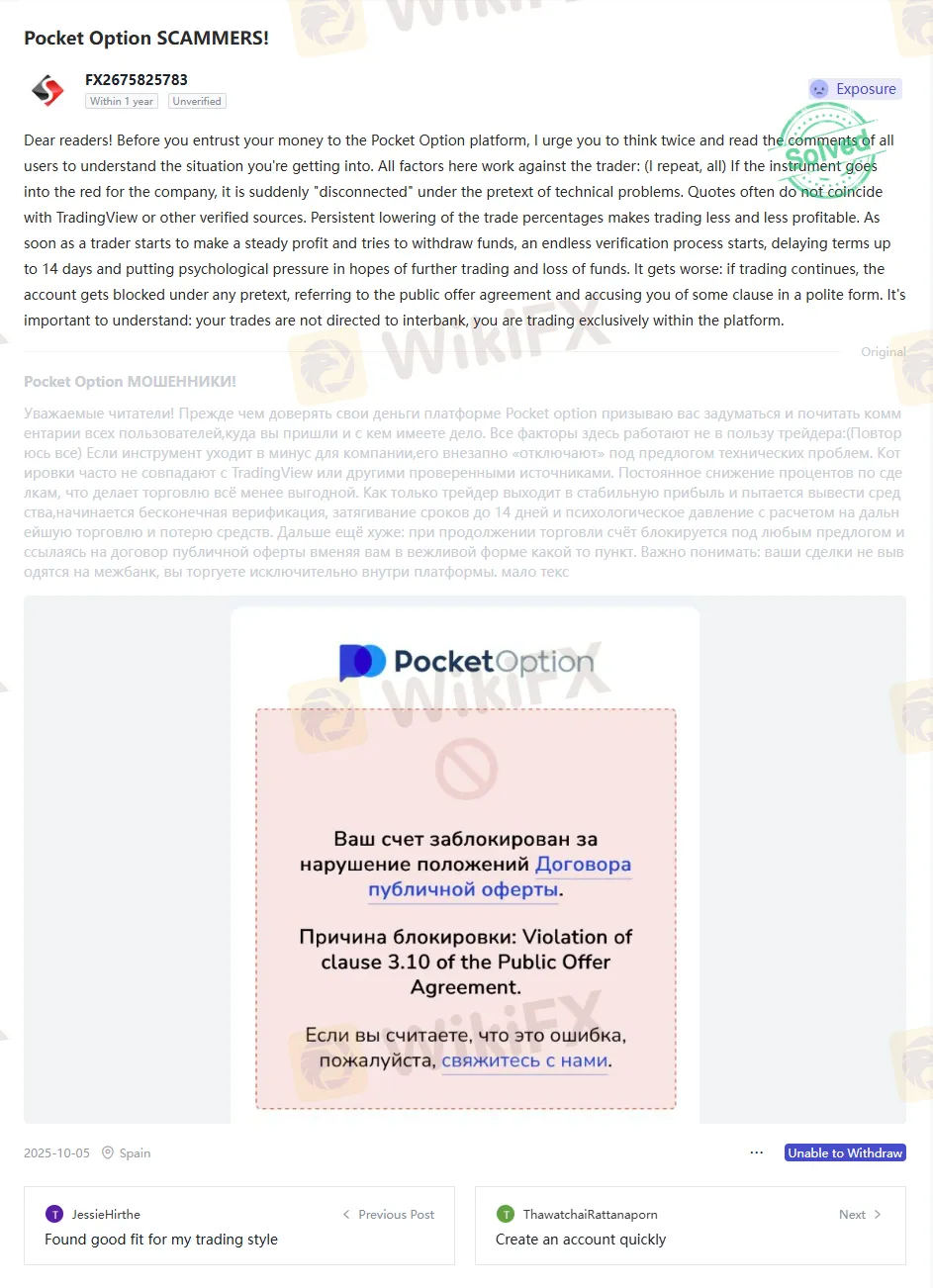
An investor from Spain, reporting in October 2025, detailed a series of manipulative trading conditions. They claimed that instruments would be “disconnected” during unfavorable market movements for the company, quotes often diverged from reliable sources like TradingView, and trade percentages were persistently lowered. Furthermore, attempts to withdraw funds by profitable traders were met with “endless verification processes,” delaying payouts for up to 14 days and exerting psychological pressure. The user explicitly stated that trades are not directed to interbank markets but are handled exclusively within the platform, suggesting a potential conflict of interest. These allegations paint a picture of a platform designed to disadvantage traders, directly contradicting expectations of fair “PocketOption regulation.”
Conclusion: Exercise Extreme Caution with PocketOption
The evidence presented, including the complete absence of regulatory oversight, a critically low WikiFX score, and a pattern of severe user complaints from 2025 to the present, strongly suggests that PocketOption poses significant risks to traders. The lack of “PocketOption regulation” leaves investors without the fundamental protections offered by licensed brokers, making funds vulnerable and dispute resolution challenging.
For anyone considering “PocketOption Forex” trading or a “PocketOption login,” it is imperative to exercise extreme caution. The documented cases of blocked accounts, unresolved withdrawals, price slippage, and manipulative trading conditions are not isolated incidents but rather indicators of systemic issues. Prioritizing regulated brokers with strong track records and transparent operations is always the safest approach to online trading. Your investment security should never be compromised by platforms that operate outside the bounds of established financial regulations. Always conduct thorough research and consider the warnings from reputable sources like WikiFX before committing your capital.

Read more

The 6 Best ECN Brokers for 2026: Who Really Delivers Raw Spreads and Institutional-Grade Execution
Every broker with a marketing budget now slaps the letters "ECN" on its homepage. Few of them actually deliver what those letters promise. For a serious trader — a scalper, a day trader, an algo trader, anyone whose edge lives or dies on execution quality — the gap between a true ECN broker and a market maker wearing an ECN costume can quietly cost you hundreds of pips a year in slippage, requotes, and inflated spreads. So we cut through the marketing, looked at the brokers that genuinely offer raw pricing and deep liquidity, and cross-checked every one of them on WikiFX. Here are the six ECN accounts that actually earn the label in 2026 — ranked. First, a short primer, because understanding ECN is what lets you judge these brokers properly.
FX Novus vs VCG Markets:Two Brokers, Two Very Different Kinds of Risk — Which One Is the Lesser Evil
If you have been shopping around for a forex broker and landed on FX Novus and VCG Markets, you have stumbled onto a genuinely instructive pair. On the surface they look like cousins: both are relatively young, both wave around multi-asset trading and tight spreads, and both operate from the kind of offshore corners of the world that should make any beginner slow down. But dig into the data on WikiFX and the two part ways sharply. One carries active, screaming red flags. The other is merely standing in a yellow zone. Neither is what a cautious newcomer would call "safe" — but understanding how they differ is exactly the kind of lesson that protects your money. Let's put them head to head, decode the jargon along the way, and reach an honest verdict.
Deposited at New Frontier, Then Locked Out—Funds Never Came Back - The Real Story of a Trader
There are few feelings in trading more sickening than this one: you funded your account, you walked away confident your money was safe, and when you came back to check on it, the platform calmly informed you that your login details were wrong. Not your trades — your very identity, locked out. And on the other side of that login screen sits a balance you can no longer touch and a support team that has gone silent. That is the heart of a complaint filed against New Frontier on WikiFX. One trader reported depositing 40,500 pesos, returning to log in with the exact email and password they had registered, and being told the data was "incorrect" — which, in their words, meant their earnings had simply been taken. Customer service, they said, did not react. Let's look closely at this broker, what makes its profile so unsettling, and why verification here is not optional.
Headway Review 2026: Examining the Latest Withdrawal, Slippage and Spread Complaints
Did your profits disappear just as you tried to withdraw funds from your Headway account? Have you been manipulated in the name of a forex bonus challenge by receiving a negligible sum compared to what was promised? Did you face capital losses due to abnormal spreads and slippages? Your issues resonate with others who have complained about the broker online. In this Headway review article, we have investigated these complaints while providing our firm view on the broker’s regulatory oversight.
WikiFX Broker
Latest News
The Hidden Risks of Margin Calls and How to Trade Trends Safely
 WikiFX
T4Trade Review 2026: Official Warnings and Withdrawal Risks
WikiFXLONG ASIA Review 2026: Withdrawal Complaints and Unverified Regulation
WikiFXTotalFX Dangles 1:1000 Leverage and a $0 Minimum Deposit - But Is Its Regulation Strong?
WikiFXPay a 17% Tax First, Then You Can Withdraw" — How Nixse Allegedly Held One Trader's €25,000 Hostage
WikiFXHow to Read Market Reversals Through Price Action and Indicators
WikiFXA Single TikTok Ad Cost Him RM100,000
WikiFXLONG ASIA Review: Broker Complaints, Regulation Gaps, and Withdrawal Alarms
WikiFXHow Proprietary Trading and Artificial Volume Move Prices
WikiFXCrude Jumps Amid Structural FX Shifts
WikiFXRate Calc

