Markets Roiled: USD Surges, Wall Street Bleeds as Middle East Tensions Escalate

Abstract:Global markets face a sharp sell-off as escalating Middle East tensions drive a flight to the US Dollar, crushing equities and sending Gold plunging over 4% amid rising yields.
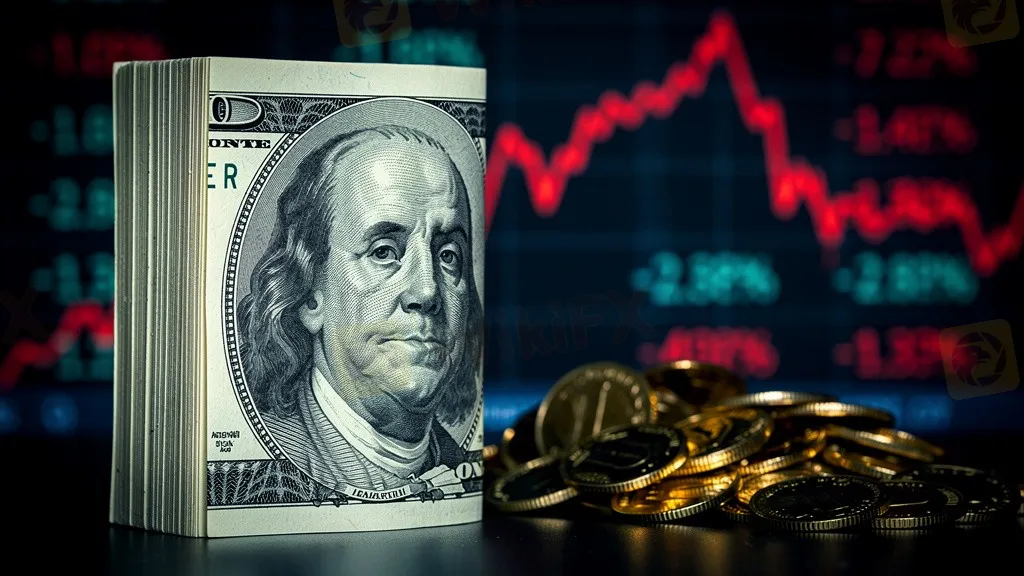
Global financial markets are in the grip of severe risk aversion on Tuesday as fears of an escalating “Iran war” ripple through asset classes. The geopolitical shockwave has triggered a decisive flight to safety in the US Dollar (USD), while simultaneously prompting a massive sell-off in equities and, counter-intuitively, precious metals.
Severe Equity Rout & USD Dominance
Wall Street opened to a sea of red, with the Dow Jones Industrial Average plummeting approximately 850 points (-1.7%) to trade near 48,000. Tech-heavy indices fared no better, with the Nasdaq Composite shedding 1.72% and the S&P 500 falling 1.62%.
In the currency markets, cash is king, and the Greenback is the preferred asset. The US Dollar Index (DXY) has surged, wrecking havoc on high-beta peers:
- AUD/USD has collapsed through the psychological 0.7000 support, trading down 1.36% at 0.6990—multi-week lows.
- USD/JPY has ignored typical safe-haven flows into the Yen, rising to 157.77, its highest level since late January, driven by the widening yield differential and pure USD demand.
The Gold Anomaly & Yield Spike
Perhaps the most striking move of the session is in the commodities space. Despite its traditional status as a geopolitical hedge, Gold (XAU/USD) has slumped over 4%.
This divergence is largely attributed to a sharp spike in US Treasury yields, which increases the opportunity cost of holding non-yielding bullion. Investors appear to be liquidating positions to cover margin elsewhere or flocking strictly to the liquidity of the US Dollar and Treasuries rather than metals.
Fed Watch: Kashkari Weighs In
Amid the chaos, Minneapolis Fed President Neel Kashkari offered a cautious take at the Bloomberg Invest Conference. While acknowledging the conflict could impact monetary policy, Kashkari stated it is “too soon to know” how the situation will affect inflation dynamics. His comments suggest the Fed remains in a data-dependent “wait and see” mode, even as supply chain risks loom.
WikiFX Broker
Latest News
Blueberry Markets Review: Examining the Latest User Complaints in 2026
WikiFXMSquare Review 2026: Is this Forex Broker Legit or a Scam?
WikiFXThe MSquare Review: Forged Blockchain Receipts, Frozen Accounts, and Severe Anomalies Exposed
WikiFXHow Trading Volume Tells You If a Price Move is Real
WikiFXWhy Judging Trades by Profit Teaches the Wrong Lesson
WikiFXEC Markets Reports Record $5.13 Trillion Q1 Volume in 2026
WikiFXWhen Scammers Forge a Minister's Signature: Malaysia's Fake Investment Letter Exposed
WikiFXMalaysia Takes Aim at Online Scams: New Laws and a Unified Task Force on the Horizon
WikiFXAI Powered, Nearly Invisible: How Crypto Scammers Are Evolving with NEW Tactics
WikiFXHEADWAY Rebate Service Review 2025: Is This Forex Broker Safe?
WikiFXRate Calc

