LONGSHARK Flagged as Unauthorised Broker, Faces Access Restrictions in Italy
Abstract:The LONGSHARK platform is facing access restrictions after being classified as an unauthorised website, amid the absence of financial regulation and a WikiFX rating of 1.11/10.
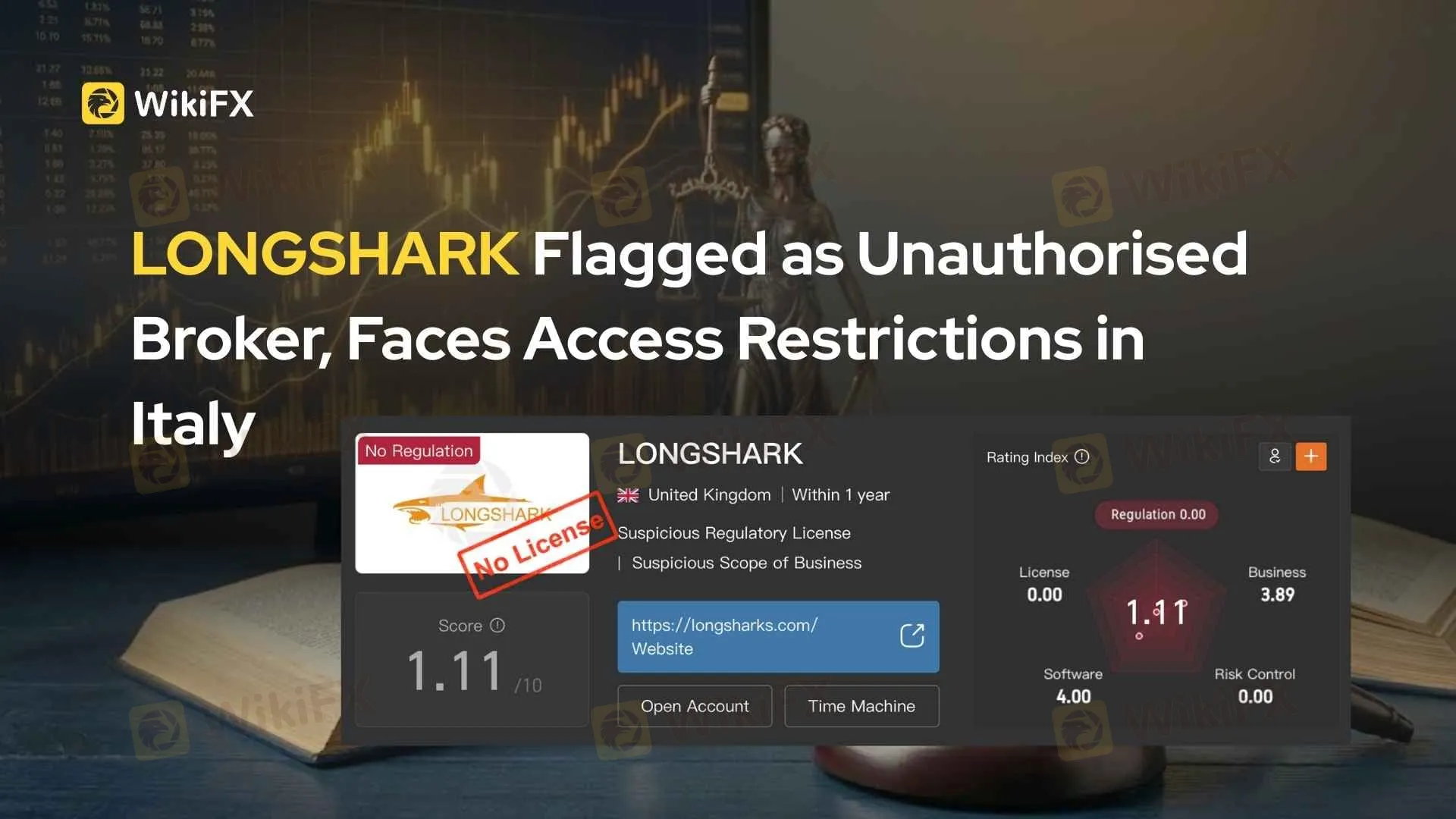
LONGSHARK, a trading platform operating under the domain longsharks.com, has recently drawn regulatory attention after being identified as an unauthorised broker. According to publicly available information, the platform does not hold any recognised financial licence and has been subject to regulatory action aimed at limiting investor exposure.
Score & Regulation Status
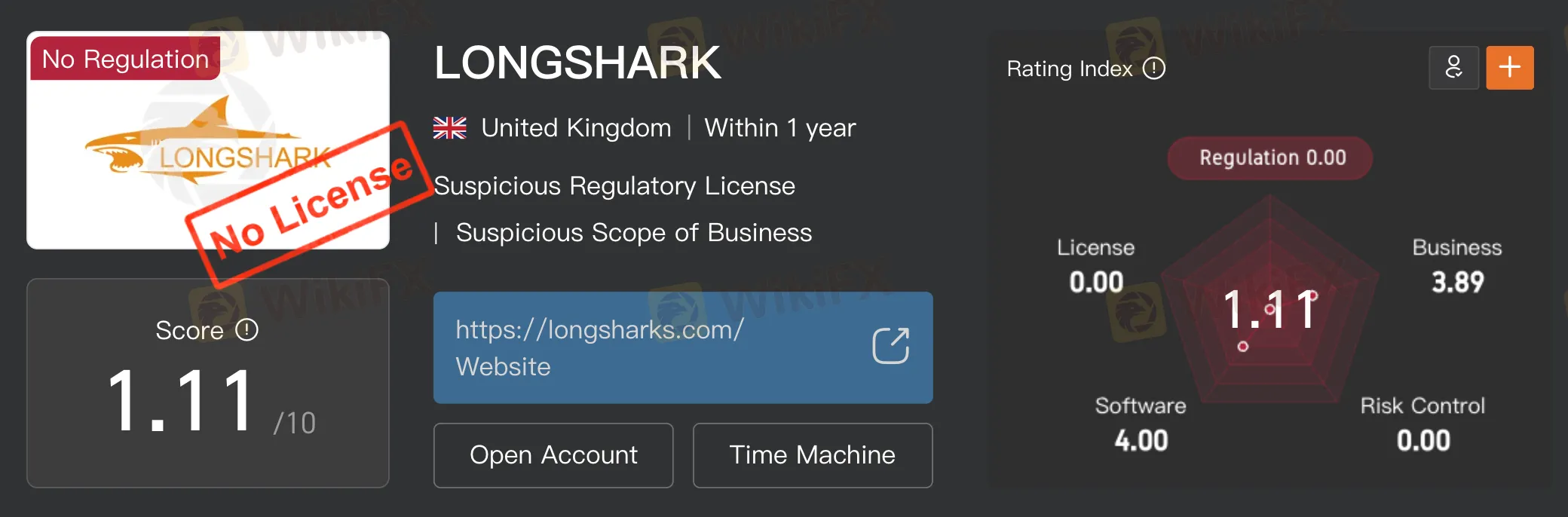
Data from WikiFX shows that LONGSHARK currently carries a score of 1.11 out of 10, reflecting significant concerns across key assessment categories. The platform is marked as “No Regulation”, with additional flags indicating a suspicious scope of business and questionable regulatory claims.
Notably, WikiFX also reports that LONGSHARK does not provide any verified trading software, a critical component for any legitimate brokerage operation. The absence of licensed trading infrastructure further undermines the platforms credibility and raises questions about how, or whether, trades are actually executed.
Lack of Authorisation and Regulatory Standing
Beyond its low rating, LONGSHARK has been formally classified as an unauthorised website by regulators. Authorities have determined that the platform is offering investment-related services without the necessary legal approval, placing it outside the regulated financial system.
As a result, regulatory bodies have moved to order the blocking of access to the LONGSHARK website within their jurisdictions, a step typically taken when a platform is deemed to pose potential risks to the public.

Such access restriction measures are designed to prevent further onboarding of users and to limit the reach of unlicensed financial services. While technical implementation may take time, the issuance of a blocking order itself signals serious regulatory concern.
Key Findings at a Glance
Based on available information from WikiFX and regulatory disclosures:
- LONGSHARK holds no valid financial licence
- The platform shows no evidence of approved trading software
- Its WikiFX score stands at 1.11/10
- It has been flagged as an unauthorised entity
- Authorities have ordered restrictions on access to its website
Why Independent Verification Matters
Cases like LONGSHARK highlight the importance of independently verifying a brokers regulatory status before engaging with any online trading platform. In an environment where professional-looking websites can be launched quickly, surface-level presentation alone is no longer a reliable indicator of legitimacy.
Platforms such as WikiFX compile regulatory data, licence records, and operational details from multiple jurisdictions, helping users identify whether a broker is authorised, how long it has operated, and whether basic infrastructure — such as trading software — is in place.
While no single tool replaces due diligence, access to consolidated, transparent information can help market participants better understand the regulatory standing of platforms like LONGSHARK before making any decisions.


Read more
XM Review 2026 for India: RBI Alert, Regulation, Login and Forex Risk
The RBI Alert List, updated on 19 November 2025, names XM and www.xm.com at row 33. RBI says listed entities are not authorised to deal in forex under FEMA or operate an authorised forex ETP in India. XM also publishes overseas licence and risk information. These facts must stay separate. An overseas licence does not create RBI authorisation for an Indian resident.
eToro Review 2026 for India: RBI Alert, Regulation, Login and Forex Risk
The RBI Alert List, updated on 19 November 2025, names eToro and www.etoro.com at row 5. RBI says listed entities are not authorised to deal in forex under FEMA or operate an authorised forex ETP in India. eToro also lists regulated companies in the UK, Europe, Australia, and other markets. Those overseas licences are entity-specific. They do not create RBI authorisation.
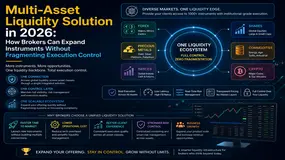
Multi-Asset Liquidity Solution in 2026: Expand Instruments Without Fragmenting Execution
A multi-asset liquidity solution can help a broker support FX, CFDs, commodities, and indices through a more unified operating model. But adding asset classes can also create fragmented symbols, pricing, routing, margin rules, records, and client messages if controls are not designed first. This 2026 guide explains how a multi asset liquidity provider, forex CFD liquidity setup, commodity liquidity provider, and indices liquidity provider fit into a broker-owned execution service. It outlines the due-diligence questions, shared-control model, cost drivers, and 90-day implementation plan that help teams expand without making the execution chain harder to explain. The aim is not to promise deeper liquidity or better trading outcomes. It is to create evidence that a broker can supervise market access, trace order events, reconcile costs, and communicate consistently to the relevant clients when conditions are difficult.
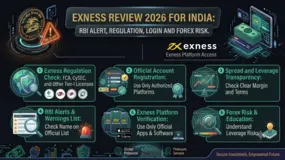
Exness Review 2026 for India: RBI Alert, Regulation, Login and Forex Risk
The RBI Alert List, updated on 19 November 2025, names Exness and the website www.exness.com. RBI says listed entities are not authorised to deal in forex under FEMA or operate an authorised forex ETP. Exness also publishes overseas regulatory records. These facts must not be mixed. Overseas regulation does not create RBI authorisation for an Indian resident.
WikiFX Broker
Latest News
Australia dollar on longest weekly winning streak since 2020
 WikiFX
DFSA warns of scam cloning authorised firm Menhir Capital
WikiFXSri Lanka to Criminalize Unauthorized Forex Transfers
WikiFXReview 2026: EMAR MARKETS Complaints, Regulation, and Account Access Risks
WikiFXTrump bemoans Fed interest rate policy, says U.S. should be paying much less
WikiFXReview 2026: STMARKET Regulation, MT5 Access, and Withdrawal Complaint Signals
WikiFXSingapore orders Facebook, Instagram, TikTok to ban scam ads
WikiFXA Losing Streak Hijacks Your Judgement. Here's a 4-Step Reset
WikiFXDFSA warns of scam impersonating firm Menhir Capital
WikiFXBessent says Treasury buyback operation could be more than $4 billion
WikiFXRate Calc

