Trade War 2.0: Trump’s Greenland Ultimatum Rattles Transatlantic Alliance

Abstract:President Trump has issued an ultimatum to eight European nations, threatening 10% tariffs starting February 1 if they oppose his bid to purchase Greenland, prompting the EU to consider activating its 'Anti-Coercion Instrument.'
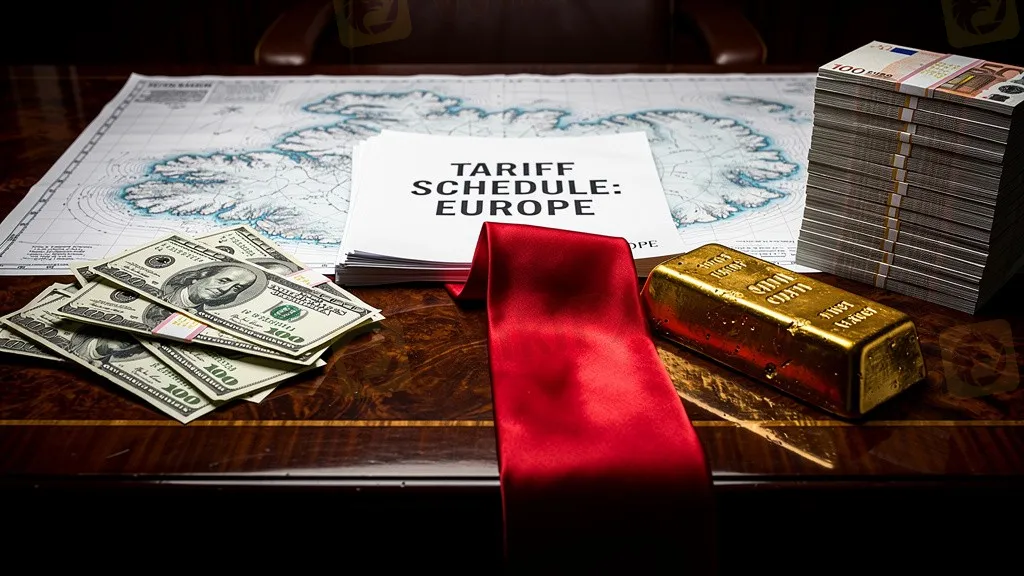
Washington/Brussels — The transatlantic trade relationship faces a potential rupture after President Donald Trump formally announced punitive tariffs on eight European nations, linking trade policy directly to his geopolitical ambition to purchase Greenland.
The announcement has injected severe volatility into currency markets, with EUR/USD surging above 1.1640 as investors question the stability of US administrative policy.
The Tariff Timeline
In a statement issued over the weekend, the White House declared that a 10% tariff will be imposed on all goods imported from Denmark, Norway, Sweden, France, Germany, the UK, the Netherlands, and Finland, effective February 1, 2026.
The President escalated the threat further, instating a “trigger mechanism”: if a deal for the “complete and total purchase” of Greenland is not reached by June 1, the tariff rate will more than double to 25%.
Europes “Anti-Coercion” Dilemma
The ultimatum has forced the European Union into a corner. While German Finance Minister Lars Klingbeil and his French counterparts have publicly stated that Europe “will not be blackmailed,” the path to retaliation is fraught with internal division.
The EU is currently weighing the activation of its Anti-Coercion Instrument (ACI), a powerful policy tool designed specifically for such scenarios.
- The Nuclear Option: Analysts warn that Europe holds over $10 trillion in US assets, signaling a potential weaponization of capital.
- Immediate Counters: Responses may include reactivating tariffs on US goods like Boeing aircraft and Bourbon whiskey.
Market Reaction
- Gold (XAU/USD) continued its meteoric rise, trading near $4,670.
- The Euro climbed as the Empire State's currency dipped on governance concerns.
- Foreign exchange markets defied typical safe-haven logic, reacting negatively to the Greenland demands.
WikiFX Broker
Latest News
China Holds Rates Steady After Hitting 5% Growth Target, Easing Expected in Q1
WikiFXJPY Volatility Ahead: PM Takaichi Calls Snap Election Amid Rate Hike Speculation
WikiFXIs Forex Still Worth It in 2026? Global Central Banks Are Splitting
WikiFXThe Fed on Trial: Markets Brace for Supreme Court Showdown Over Central Bank Independence
WikiFXTrade War 2.0: Trump’s Greenland Ultimatum Rattles Transatlantic Alliance
WikiFXEuro Stabilizes as France Forces 2026 Budget; Bond Spreads Narrow
WikiFXJPY Volatility Spikes as PM Takaichi Calls Snap Election and Fiscal Gamble
WikiFXJGB Yields Breach 4% as PM Takaichi's Fiscal Gambit Triggers 'Sell-Off'
WikiFXScrolled, Clicked, Lost RM166,000: Factory Worker Trapped by Online Investment Scam
WikiFXChina Macro: Liquidity Trap Signals Persist Despite Credit Bump
WikiFXRate Calc
