Oil Slide Deepens: Trump Secures 50M Barrels from Venezuela Following Regime Change

Abstract:Crude oil prices face renewed downward pressure after the Trump administration secured a massive transfer of strategic reserves from Venezuela's transitional government, offsetting geopolitical risk premiums.
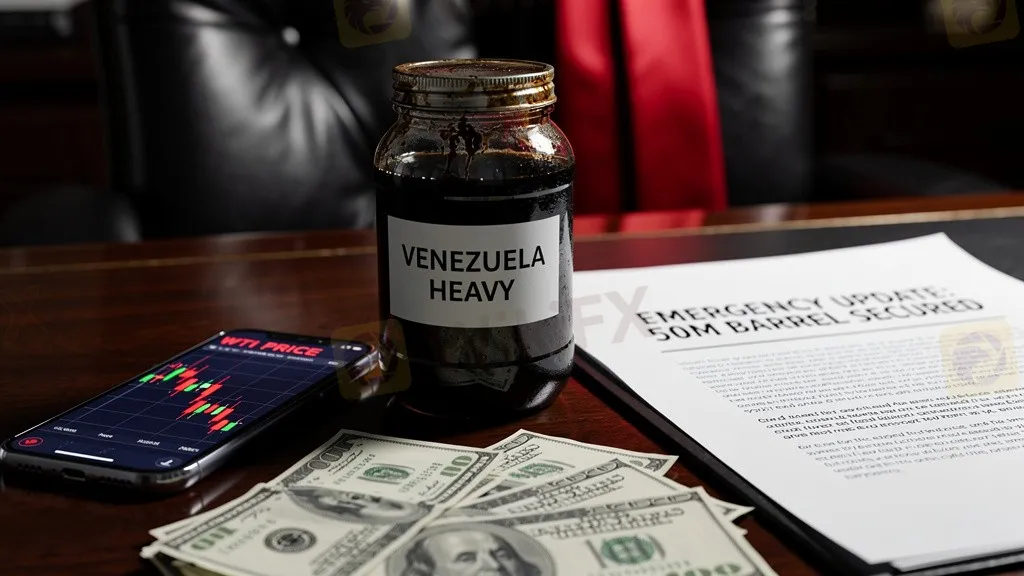
Global energy markets are witnessing a sharp decoupling of geopolitical risk and price action. Despite the dramatic U.S. military intervention in Caracas and the detention of Nicolas Maduro, WTI Crude and Brent prices have retreated, driven by immediate supply-side assurances from the White House.
Additional Supply Overwhelms Geopolitical Risk
In a move that caught commodity traders off guard, President Trump announced via social media that Venezuela's interim government would transfer between 30 million and 50 million barrels of high-quality crude to U.S. custody. The administration explicitly stated these assets would be sold at market prices, with proceeds managed directly by the U.S. presidency.
This announcement has effectively neutralized the “war premium” typically associated with regime change in oil-rich nations. Instead of fearing a supply outages, the market is now pricing in:
Market Reaction & Technicals
WTI Crude has slipped toward the $57.00 handle, breaking key technical support. Analysts at Goldman Sachs note that while the short-term supply picture is “ambiguous” due to logistical hurdles, the long-term trajectory points to a supply glut, potentially capping Brent prices near $54-$56 by late 2026.
The “Trump Put” in Commodities
The swift pivot from military operation to commercial extraction highlights a core tenet of the current administration's foreign policy: securing resource flows to dampen domestic inflation. For the Canadian Dollar (CAD), usually a beneficiary of oil shocks, this orchestrated price suppression acts as a significant headwind, keeping USD/CAD bid despite broader dollar fluctuations.
WikiFX Broker
Latest News
Geopolitical Risk Spikes: Trump Floats 'Military Option' for Greenland Amid Venezuela Fallout
WikiFXIs FXEM Legit or a Scam? 5 Key Questions Answered (2025)
WikiFXIs USTmarkets Legit or a Scam? 5 Key Questions Answered (2025)
WikiFXGMG Regulation: A Critical Warning on the Scam vs. the Regulated Broker
WikiFXCommodity Super-Spike: Gold Nears $4,500 and Silver Tops $80 on Venezuela Shock and Tariff Fears
WikiFXMerin Review (2025): Is it Safe or a Scam?
WikiFXOil Slide Deepens: Trump Secures 50M Barrels from Venezuela Following Regime Change
WikiFXIG Boosts Cash Interest, Drops Account Fees for UK Investors
WikiFXRevolutfx Review 2025: Institutional Audit & Risk Assessment
WikiFXGold Eyes $4,500 Milestone While Yen Crumbles Under Rate Disparity
WikiFXRate Calc

