PBOC to Launch ‘Digital Yuan 2.0’ in Jan 2026, Signaling Shift to Deposit-Based Model

Abstract:BEIJING — The People's Bank of China (PBOC) is set to initiate a major overhaul of its central bank digital currency (CBDC) framework, with the "New Generation Digital RMB" system scheduled to go live on January 1, 2026.

BEIJING — The People's Bank of China (PBOC) is set to initiate a major overhaul of its central bank digital currency (CBDC) framework, with the “New Generation Digital RMB” system scheduled to go live on January 1, 2026.
From Cash to Digital Deposits
According to Deputy Governor Lu Lei, the updated framework marks a theoretical and structural shift from a “Digital Cash” (M0) model to a “Digital Deposit Money” (M1/M2) approach. Key changes include:
- Reserve Management: Commercial banks' digital yuan wallets will be included in the unified deposit reserve management system, treating the digital currency as a liability of the commercial bank rather than just the central bank.
- Interest Potential: The new guidelines imply a mechanism where banks could pay interest on digital yuan wallet balances, aligning them closer to traditional savings accounts rather than physical cash.
- Smart Contracts: Enhanced programmability for automated payments in supply chains and government transfers.
Macro Implications
The move is seen as a significant step toward the internationalization of the RMB. By integrating the e-CNY into the core banking system, Beijing aims to increase its utility for large-scale cross-border settlements. The mBridge project, which utilizes the digital yuan for cross-border payments, has already processed over 380 billion yuan providing a working proof-of-concept for avoiding traditional SWIFT rails.
Read more

Chinese Yuan makes new highs marking an historic performance.
Performance like this hasn't been seen since 2021
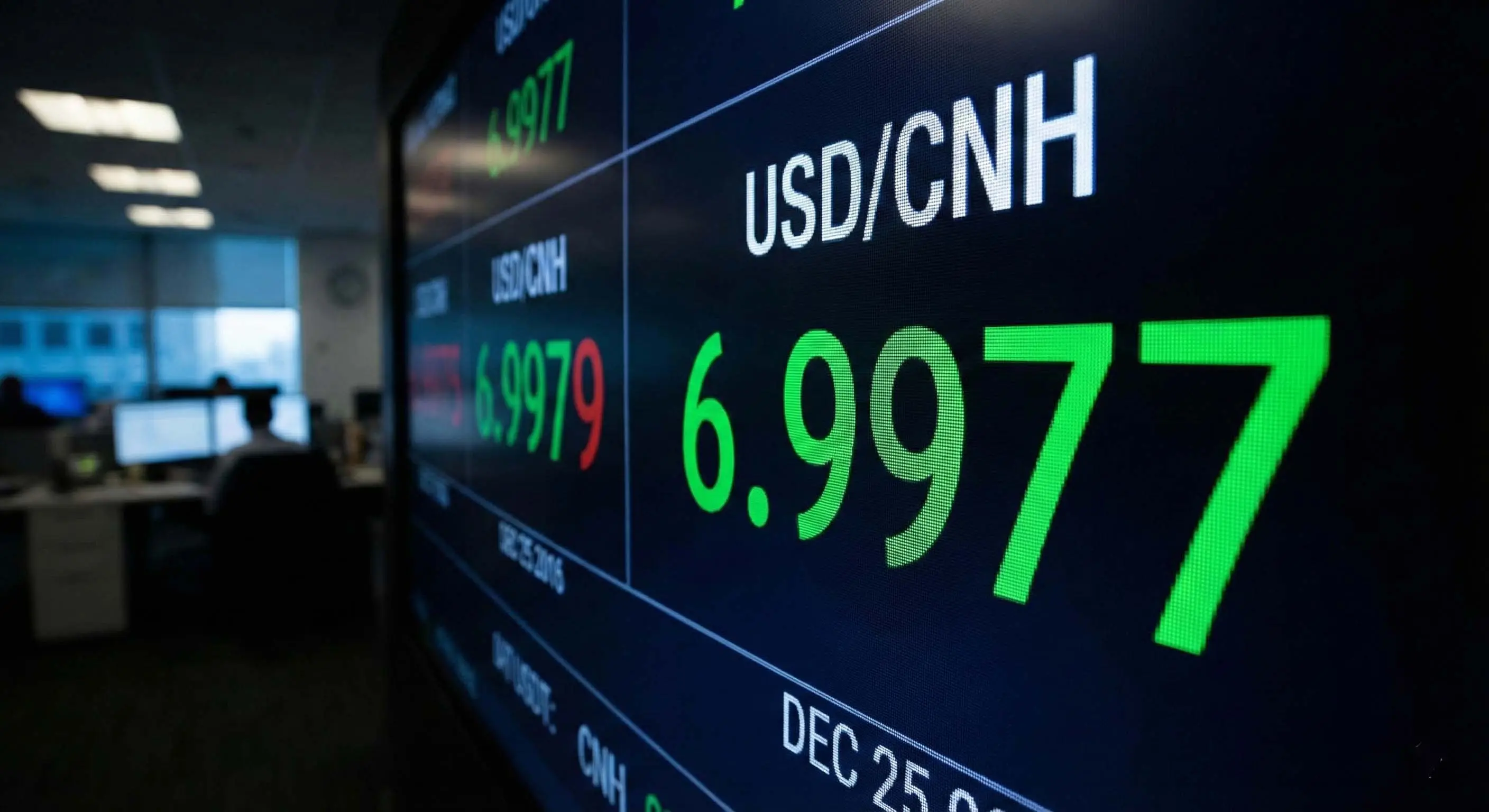
RMB Breaks 7.0: Seasonal Flows and Dollar Weakness Drive Surge
The offshore Renminbi (CNH) has surged past the critical 7.0 per Dollar barrier for the first time in 14 months, trading at 6.9977 as of Dec 25. The move marks a significant shift in sentiment, driven by year-end corporate settlement flows and a broadly softer US Dollar.

Spring Rally in Chinese Equities Signals Potential Lift for AUS and NZD
Amidst a gloomy global trade outlook, China's equity markets are flashing green, potentially offering support to the Chinese Yuan (CNY) and its liquid proxies, the Australian Dollar (AUD) and New Zealand Dollar (NZD).

Offshore Yuan Pierces 7.0 as Gold Corrects in Holiday Trade
Thin holiday liquidity amplified moves in global markets this week, with the Chinese Yuan staging a significant rally against the Dollar, while precious metals retreated from record valuations.
WikiFX Broker
Latest News
Bull Waves Regulation Uncovered: A Deep Look into Their FSA License and Safety
WikiFXOPEC+ Stands Pat: Output Steady Amidst Geopolitical Storm
WikiFXXTRADE Broker Analysis: Understanding XTRADE Regulation & Verified XTRADE Review
WikiFXOil Markets on Edge: OPEC+ Holds Firm Amid Venezuelan Turmoil
WikiFXGeopolitical Shock: Trump's Venezuela Raid Sparks Oil Volatility & Impeachment Threats
WikiFXOne Click, RM1 Million Gone: Penang Retiree’s Social Media Scam Nightmare
WikiFXFed Watch: Paulson See 'Bending' Jobs Market; Yellen Warns of Debt Spirals
WikiFXGlobal Crypto Launch Tax Network to 48 Nations
WikiFXSpanish Regulator Raises Concerns Over Unlicensed Trading Platforms and Messaging-Based Apps
WikiFXOneRoyal Review: A Complete Look at How This Broker Performs
WikiFXRate Calc

