Ringgit hits five-year high against US dollar in holiday trade

Abstract:The Malaysian ringgit extended its rally, reaching a five-year high against the US dollar, trading in a narrow range of RM4.04-RM4.05.
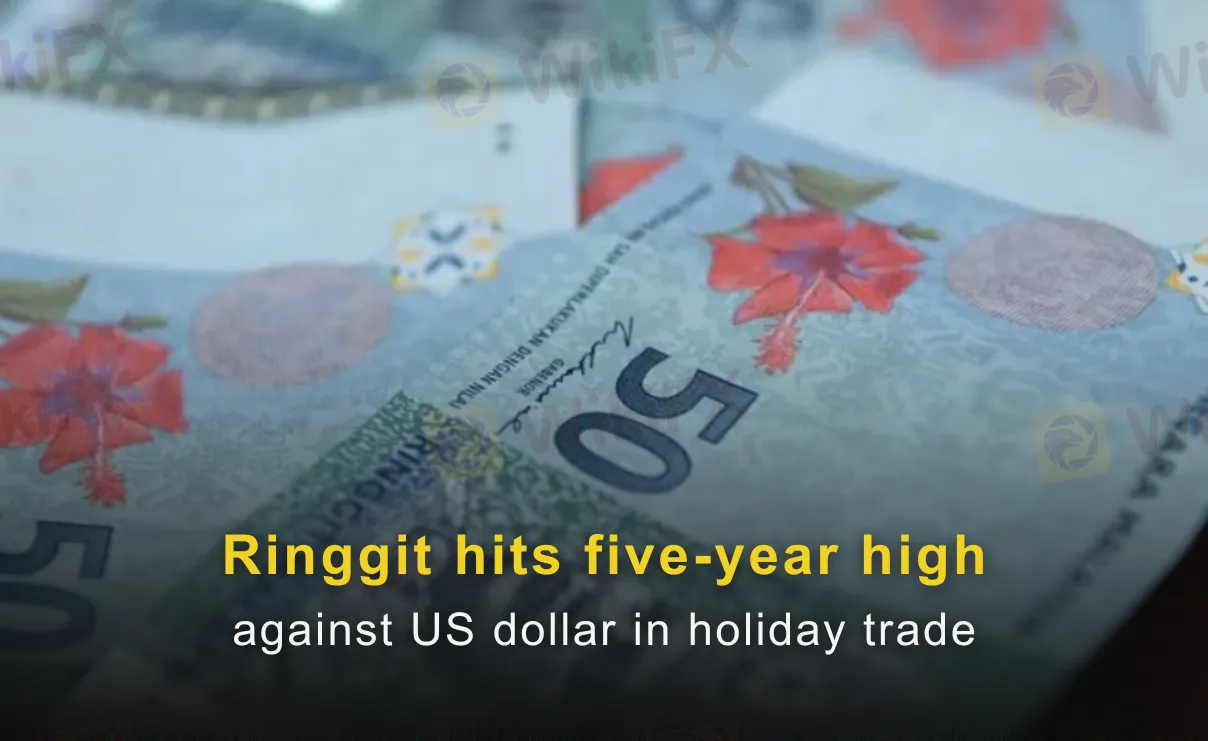
The ringgit continued its strong run on Friday, opening higher to touch another five-year high against the US dollar as market sentiment remained supportive of the local currency.
At 8am, the ringgit strengthened to 4.0410/0495 versus the greenback, improving from Wednesdays closing level of 4.0425/0515. The gain comes amid thin trading conditions during the holiday-shortened week, which has kept movements relatively subdued.
Bank Muamalat Malaysia Bhd chief economist Dr Mohd Afzanizam Abdul Rashid said currency markets are likely to stay quiet for now, with many investors already having priced in recent positive developments. Despite that, sentiment towards the ringgit remains constructive, with the US dollar-ringgit pair now trading at its strongest level in five years.
He noted that some profit-taking could emerge at these levels, especially after the recent rally. For the day, he expects the ringgit to move within a narrow range of between RM4.04 and RM4.05 against the US dollar.
The ringgit also opened stronger against most major currencies. It appreciated against the Japanese yen to 2.5874/5930 from 2.5940/5999 previously, while gains were also seen against the British pound at 5.4578/4693 compared with 5.4647/4768. The local currency firmed against the euro as well, trading at 4.7615/7715 from Wednesdays 4.7697/7804.
Against regional currencies, the ringgit was mostly higher. It rose versus the Singapore dollar to 3.1460/1531 from 3.1506/1578 and strengthened against the Thai baht to 12.9990/13.0352 from 13.0486/0705. The ringgit also edged up against the Philippine peso to 6.86/6.89 from 6.88/6.90 previously.
However, it was slightly weaker against the Indonesian rupiah, trading at 241.3/242.0 compared with 241.0/241.8 earlier.

Read more

Is TradingPRO Safe? FCA Warning, Indonesia Blocklist Evidence, and 7 Checks Before You Deposit
This Trading Pro broker review checks the FCA warning, Indonesia blocklist evidence, licence claims, and what South Asian users should verify before depositing.
MT4 White Label Cost in 2026: What Brokers Must Budget Beyond the Platform Fee
The visible fee in an MT4 white label proposal is rarely the real cost of operating it. For an existing broker, the decision is not simply whether an MT4 white label platform is “cheap” or “expensive.” The real question is whether the commercial model remains viable after integration, support, data, client migration, compliance, and exit costs are included. That is why an MT4 white label cost review should be built as a 24- to 36-month operating case. It should compare three credible choices: 1. Keep the present MT4 setup and improve its weakest controls. 2. Replace the MT4 white label provider but retain the client proposition. 3. Migrate selected clients or products to another platform while running MT4 in parallel. This guide explains how to build that case without relying on headline prices or generic vendor claims.

The Rise of Deepfake Investment Scams: ASIC Shares Key Warning Signs
Artificial Intelligence (AI) has grown remarkably recently. However, it has also amplified the scope for financial fraud. One such is the rapid use of deepfake technology involving AI-generated videos, images and audio clips imitating real people. Fraudsters are leveraging these technologies to impersonate financial advisers, celebrities, business leaders and government officials to lure victims into fake investment schemes. Understanding the emerging implications, the Australian Securities and Investments Commission (ASIC) has cautioned investors of investment avenues promoted through convincing AI-generated content. Seemingly authentic, deepfakes are designed to manipulate trust and make people transfer funds before authenticating the investment’s legitimacy.

Best White Label Trading Platform 2026
The decision to switch white label providers or migrate to a modern white label trading platform is no longer a luxury for growth-minded brokers—it's a strategic necessity for survival in 2026. The convergence of technological stagnation, regulatory evolution, and shifting client expectations has created a perfect storm.
WikiFX Broker
Latest News
Alpari Review 2026: Official Warnings and High Complaint Patterns
WikiFXM4Markets Broker Review: Regulation, Licenses and WikiScore Analysis
WikiFXOver RM102 Million Crypto Seized in Romance Scam Crackdown
WikiFX"High Inspirations" Mastermind Disappears as $25 Billion Investment Scheme Collapses
WikiFXRupee Hits Two-Month Low as Oil Surges Past $95
WikiFXWhy RBI Sold $6.1 Billion in Forex Markets in May
WikiFXCNMV Red-Flags 9 Unauthorised Investment Platforms
WikiFXOrder Execution: What Discretionary Latitude Means for Your Trades
WikiFXScammed Twice: Recovery Fraud Takes Advantages of Victims Again
WikiFXWhy Prices Rush Back to Fill Gaps: Liquidity Voids Explained
WikiFXRate Calc

