LOYAL PRIMUS Review: The "Profit Kill Switch" and Regulatory Red Flags
Abstract:LOYAL PRIMUS presents itself as a modern, accessible broker rooted in South Africa, but a growing volume of user feedback tells a different story. Our investigation uncovers a disturbing pattern where profitable trading accounts are abruptly disabled upon withdrawal requests, raising serious questions: Is LOYAL PRIMUS safe for your capital?
Hook: LOYAL PRIMUS presents itself as a modern, accessible broker rooted in South Africa, but a growing volume of user feedback tells a different story. Our investigation uncovers a disturbing pattern where profitable trading accounts are abruptly disabled upon withdrawal requests, raising serious questions: Is LOYAL PRIMUS safe for your capital?
Anonymity Disclaimer: All cases cited in this report are based on real complaint records submitted to WikiFX. To protect the privacy of the individuals involved, their identities have been anonymized.
The “Deactivation” Trap: A Pattern of Locked Profits
For any trader, the ultimate test of a broker's integrity is the withdrawal process. A broker can offer the best spreads in the world, but if the exit door is locked, the trading environment is irrelevant. Our analysis of recent data regarding LOYAL PRIMUS reveals a specific, alarming behavior pattern that goes beyond simple delays: the complete deactivation of client accounts immediately following profitable trades or withdrawal attempts.
The most striking evidence comes from a trader in Brazil. In late 2024, this user deposited $600 USD and successfully generated a modest profit of $126 USD. The trouble began the moment they decided to withdraw their capital to move to another provider. According to the report, within hours of the withdrawal request, the account was not just frozen—it was deactivated entirely, blocking access to the dashboard. The user reported that three separate trading accounts associated with their profile were simultaneously shut down, trapping the original $600 principal along with the profits.
This was not an isolated incident. A nearly identical scenario played out for an Indonesian trader. After depositing $307, this trader engaged in high-volume scalping on the XAU/USD (Gold) pair, successfully turning the deposit into a balance of over $1,180 through a series of winning trades. However, the joy of success was short-lived. Upon requesting a withdrawal of the total amount, the trader found their account disabled without clarity or valid explanation. This suggests a potential systemic issue where the broker's risk management protocols may aggressively target winning accounts rather than addressing legitimate compliance concerns.
Further corroboration comes from Malaysia, where another user bluntly reported that their account was frozen specifically because of profits. The recurring theme here is distinct: it is not just that withdrawals are slow—which is a common administrative issue—but that the request to withdraw triggers a punitive account shutdown.
Even when accounts remain active, support channels appear to offer little relief. An Indonesian user reported persistent withdrawal failures, noting that helpdesk responses were “standard answers” lacking any genuine intent to resolve the financial bottleneck.
Volatility Glitches or Intention?
Beyond the withdrawal hurdles, WikiFX has received reports concerning the technical execution environment provided by LOYAL PRIMUS. Technical stability is paramount, especially during high-impact economic news events.
A trader based in Singapore provided a detailed account of a significant loss incurred during the US CPI (Consumer Price Index) data release. The trader entered a position one minute before the news, at 8:29 PM. However, exactly as the news hit at 8:30 PM, the broker's chart reportedly lagged for two full minutes. By the time the connection stabilized, the account had blown, resulting in a loss of $200. While volatility often causes slippage, a total chart freeze is a severe infrastructure failure. The trader noted that the broker denied any technical issues on their end and refused a refund, attributing the loss to market conditions despite the client's claim of a smooth data connection elsewhere.
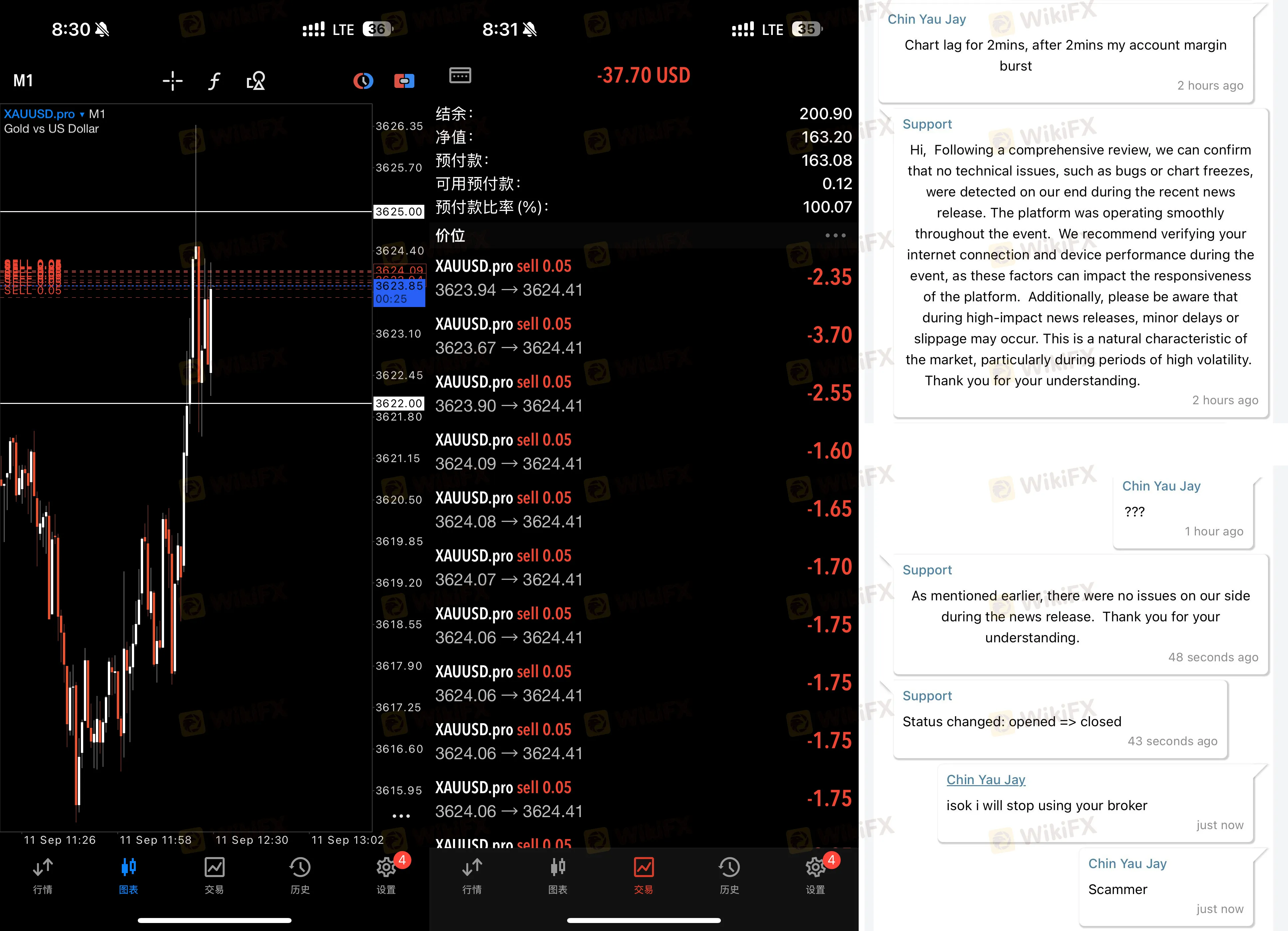
Furthermore, accusations of market manipulation have surfaced from the UK. A trader warned others to avoid the platform, citing massive spreads—up to 19 points—that they believe are designed to drain client funds. This user described LOYAL PRIMUS as a “market maker” that profits directly from client losses, a conflict of interest that becomes dangerous when spreads are artificially widened.
The Regulatory Mirage: Why “Exceeded” Matters
Understanding the regulatory status of LOYAL PRIMUS is crucial for assessing these risks. The broker claims establishment in 2021 and lists headquarters in South Africa. Our database confirms that they hold license numbers with top-tier regulators like the FSCA (South Africa) and ASIC (Australia). However, holding a number and being fully compliant for retail trading are two different things.
WikiFX's regulatory system currently flags both of these licenses as “Exceeded.” In the context of financial regulation, this typically means the entity may be holding a license that does not cover the specific forex or retail services they are offering to international clients, or they are operating a business entity that goes beyond the authorized scope of that license number.
Essentially, while the broker can point to a registration number to appear legitimate, the protections afforded by that regulator may not actually apply to you, specifically if you are an international client. This creates a “regulatory mirage” where the broker looks safe on paper, but acts with the impunity of an offshore entity. The lack of effective recourse is evident in the complaints: when accounts are disabled, traders have no ombudsman to turn to because the regulatory umbrella does not truly cover these operations.
Below is the detailed regulatory status available in our records:
| Regulator Name | License Type | Current Status |
|---|---|---|
| South Africa FSCA | Financial Service Corporate | Exceeded |
| Australia ASIC | Appointed Representative | Exceeded |
Conclusion
Our investigation into LOYAL PRIMUS paints a picture of a broker that scores a passing grade on surface-level metrics but fails significantly in real-world user experience. The correlation between profit withdrawal attempts and account deactivations is the most critical risk factor identified. Coupled with technical complaints regarding chart freezes during volatility and a regulatory status that is “exceeded” rather than fully valid for retail protection, the risk profile significantly outweighs the benefits of their modern interface or account types.
Traders asking “is LOYAL PRIMUS safe” should weigh these “kill switch” reports heavily. When a broker controls the off-switch to your dashboard, you are not trading; you are merely gambling on their permission to let you leave.
WikiFX Risk Warning
Forex and leveraged trading carry a high level of risk and may not be suitable for all investors. The data provided in this article is derived from official regulatory databases and user-submitted complaints. Regulatory status can change, and past performance is not indicative of future results. We strongly advise users to verify all information independently before depositing funds.

Read more

Deposited at New Frontier, Then Locked Out—Funds Never Came Back - The Real Story of a Trader
There are few feelings in trading more sickening than this one: you funded your account, you walked away confident your money was safe, and when you came back to check on it, the platform calmly informed you that your login details were wrong. Not your trades — your very identity, locked out. And on the other side of that login screen sits a balance you can no longer touch and a support team that has gone silent. That is the heart of a complaint filed against New Frontier on WikiFX. One trader reported depositing 40,500 pesos, returning to log in with the exact email and password they had registered, and being told the data was "incorrect" — which, in their words, meant their earnings had simply been taken. Customer service, they said, did not react. Let's look closely at this broker, what makes its profile so unsettling, and why verification here is not optional.
Headway Review 2026: Examining the Latest Withdrawal, Slippage and Spread Complaints
Did your profits disappear just as you tried to withdraw funds from your Headway account? Have you been manipulated in the name of a forex bonus challenge by receiving a negligible sum compared to what was promised? Did you face capital losses due to abnormal spreads and slippages? Your issues resonate with others who have complained about the broker online. In this Headway review article, we have investigated these complaints while providing our firm view on the broker’s regulatory oversight.

Pay a 17% Tax First, Then You Can Withdraw" — How Nixse Allegedly Held One Trader's €25,000 Hostage
Imagine logging into your trading account and seeing a balance of €25,860. You started with €12,450, you traded carefully, and now you want to pull out a modest €5,000 — money that, on paper, is sitting right there waiting for you. Then the message arrives: before you can withdraw a single euro, you must first pay a "stock market flat tax" of 17% on all your earnings. That is more than €4,400, demanded upfront, with no invoice, no official document, no legal basis whatsoever. You refuse. Your account is promptly frozen. That is not a hypothetical. According to a complaint filed on WikiFX, it is exactly what one French trader says happened to them with Nixse — and it is a textbook example of one of the oldest, ugliest tricks in the online trading world. Let's unpack what Nixse is, what users are reporting, and why the warning signs around this broker are flashing bright red.

TotalFX Dangles 1:1000 Leverage and a $0 Minimum Deposit - But Is Its Regulation Strong?
On the surface, TotalFX reads like a brand-new trader's wish list come to life. No minimum deposit, so you can start with almost nothing. Leverage cranked all the way up to a jaw-dropping 1:1000. Spreads advertised from 0.0 pips. Both MetaTrader 5 and cTrader available. Copy trading baked right in. Tick, tick, tick, tick. If you were building a checklist of "things that make a broker look beginner-friendly," TotalFX would seem to hit nearly every box. But how strong is its regulatory background? Let's find out!
WikiFX Broker
Latest News
The Hidden Risks of Margin Calls and How to Trade Trends Safely
 WikiFX
T4Trade Review 2026: Official Warnings and Withdrawal Risks
WikiFXLONG ASIA Review 2026: Withdrawal Complaints and Unverified Regulation
WikiFXTotalFX Dangles 1:1000 Leverage and a $0 Minimum Deposit - But Is Its Regulation Strong?
WikiFXPay a 17% Tax First, Then You Can Withdraw" — How Nixse Allegedly Held One Trader's €25,000 Hostage
WikiFXHow to Read Market Reversals Through Price Action and Indicators
WikiFXA Single TikTok Ad Cost Him RM100,000
WikiFXLONG ASIA Review: Broker Complaints, Regulation Gaps, and Withdrawal Alarms
WikiFXHow Proprietary Trading and Artificial Volume Move Prices
WikiFXCrude Jumps Amid Structural FX Shifts
WikiFXRate Calc

