MSG Withdrawal Complaints and Regulatory Warning
Abstract:MSG (Master Select Group) withdrawals denied. Broker is unlicensed and unregulated. NFA license claim unverified.
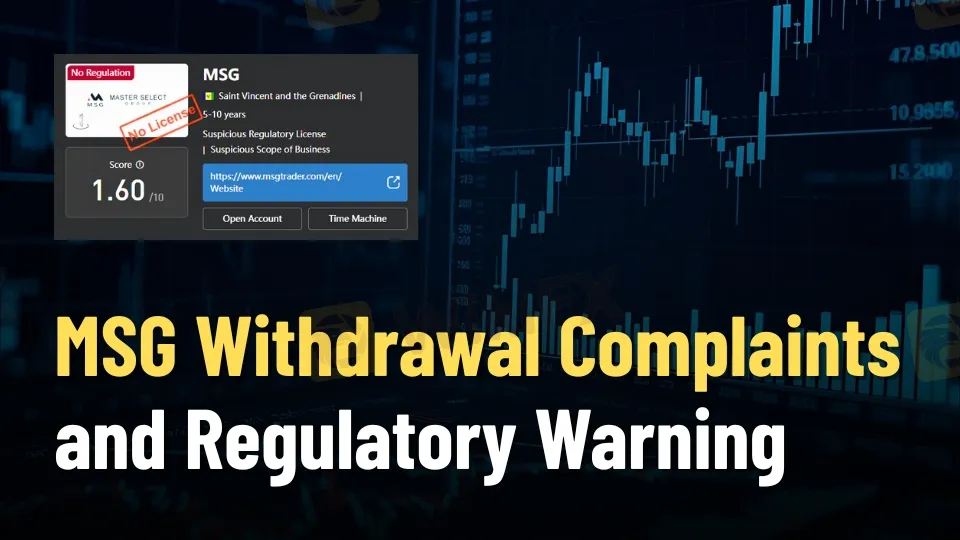
MSG (Master Select Group) has become the subject of mounting complaints from traders who report repeated withdrawal denials. Several investors claim that requests to withdraw balances—ranging from $3,000 to over $20,000—were rejected without explanation. Screenshots and transaction logs show accounts locked or balances reduced to zero after attempted withdrawals.
What is MSG Master Select Group?
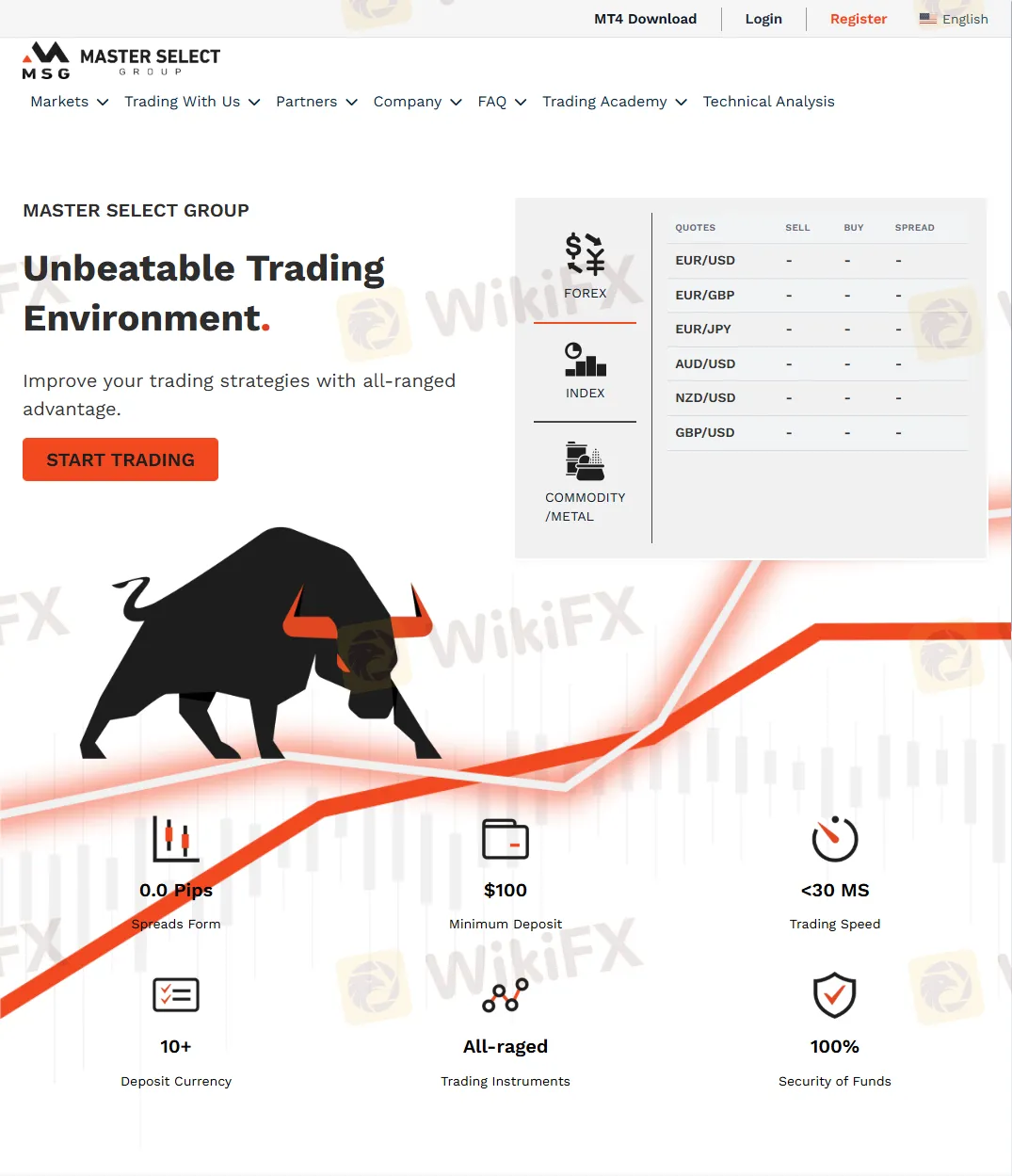
MSG Master Select Group, also referred to as MSG Broker, promotes multi-asset CFD and forex trading, highlighting access to forex, indices, commodities, US stock CFDs, metals, oil, and cryptocurrencies through MetaTrader platforms with “razor sharp pricing” and “low spreads” messaging across its site footprint. The brand lists operating history of 5–10 years, a Saint Vincent and the Grenadines registration, and contact via cs@msgtrader.com, while marketing global access and top-tier liquidity without providing verifiable, active top-tier licenses in core jurisdictions where it claims presence. Public dossier materials also point to multiple related domains and infrastructure, including msgtrader.com and msgforex.com, reinforcing the need for domain-level due diligence by prospective account holders.
Licensing Status, Claims, and Verifications
The firm publicly claims an NFA license with ID 0558525; however, a search via the NFA‘s BASIC system returns no firm-level match tied to MSG, rendering this claim unverified for U.S. retail-facing permissions or membership standing. In Vanuatu, regulatory records indicate “Current Status: Revoked” for a named entity under VFSC oversight, signaling the loss of authorization and heightened counterparty risk for clients relying on that license for protection. An Australian angle appears through a separate licensed entity, Kohle Capital Markets Pty Ltd (AFSL 489437), surfaced in proximity to MSG materials; this license does not establish authorization for MSG and is flagged as “Unverified” within the compiled record, so it should not be construed as regulatory cover for MSG’s operations.

Withdrawal Complaints and User Exposures
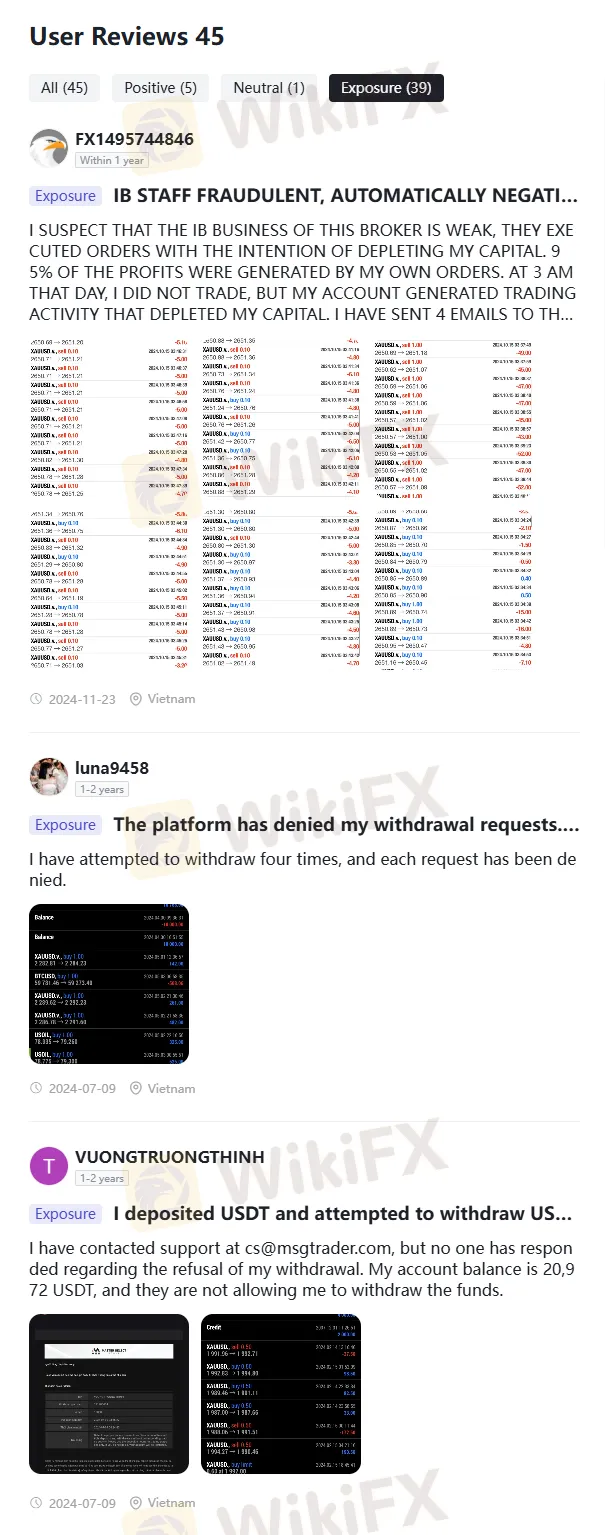
Multiple first-hand user reports cite denied withdrawal requests despite material balances, with one report describing four successive denial events when attempting to withdraw 3,000 USDT from an account showing roughly 20,972 USDT remaining. Another account documents the inability to withdraw after purported payment-gateway “maintenance” delays, followed by support deflections to an introducing broker and later unexplained account changes, culminating in a missing balance without a recorded withdrawal entry in the platforms ledger view. Additional exposure narratives allege IB misconduct, unsolicited trades outside user activity hours, negative balance events, and long periods without customer service replies, all of which align with high operational risk flags for retail clients and partners.
Platform Claims vs. Operational Realities
Marketing pages emphasize “unbeatable spreads,” “lightning trades,” and a “hassle-free” experience across forex, metals, oil, indices, crypto, and US stocks via MetaTrader 4, presenting a familiar performance-led proposition to active traders chasing low latency and tight pricing. Contrastingly, venue checks list an Australian office address that “does not exist,” and external listings cluster MSG under “No Regulation/Suspicious” status with very low trust scores, creating a clear disconnect between promotional copy and verifiable operational substance. For traders, this gap matters: without confirmed, in-force licenses, dispute resolution frameworks, and client-fund protections typical of top-tier regulators are absent, leaving users to rely entirely on the brokers internal policies and goodwill.
Risk Assessment for Prospective Clients
- Regulatory authentication: The NFA ID claim remains unverified; reliance on this number for compliance comfort is unsafe for U.S. users or anyone seeking recognized oversight.
- Jurisdictional cover: Revocation signals in Vanuatu and the absence of active, attributable Tier‑1 authorizations materially increase counterparty and asset-safekeeping risks.
- Withdrawals and recourse: Repeated, documented denial of withdrawals, delayed support, and unexplained ledger changes are consistent with severe operational governance issues that can result in permanent loss of funds.
- IB channel risks: Reports of IB‑linked misconduct, including alleged auto-trades and account handling anomalies, add another layer of exposure for clients onboarded via referral networks.
Bottom Line for Traders
MSG Master Select Group is presented as a multi-asset CFD venue with broad market access, but the weight of evidence—unverified NFA claim, revoked VFSC status, “no regulation” listings, and persistent withdrawal complaints—places it squarely in high-risk territory for retail traders and IBs. Until there is transparent proof of active, recognized regulation and a clean record of timely, audited withdrawals, capital at MSG should be considered at elevated risk of delay or loss despite the platforms tight-spread marketing.


Read more

OnFin Review 2026: Investigating $45K+ Fund Loss & Other Trading Allegations
OnFin, a Comoros-based multi-asset brokerage firm, impresses users with its wide range of products and trading platforms. However, user reviews largely reflect negative sentiments for the broker. Withdrawal issues have allegedly become the talking point among users on broker review platforms such as WikiFX. Among the complaints, one user even highlighted a fund scam totaling over $45,000. Additionally, the alleged failure of the broker in providing trade logs added to negative OnFin reviews. While examining the reviews, we have provided a regulatory overview of the broker.

FCA Warns reclaim-experts.com: 7 Checks Before You Pay
The UK regulator classified the website as a clone of an authorised firm on 28 August 2026. The FCA says the genuine Reclaim Experts Ltd has no connection with the clone.
GODO Regulation for India: RBI Alert, Licence, Login, and Withdrawal Risk
People searching GODO regulation or regulation GODO should separate overseas licensing from permission in India. The Reserve Bank of India Alert List, updated 19 November 2025, names “GoDo FX” and godofx.com. RBI says listed entities are neither authorised to deal in forex under FEMA nor authorised to operate an approved forex electronic trading platform. GODO's legal documents name GODO LTD and a Mauritius FSC licence, but that overseas status does not create RBI authorisation. No cited court ruling proves fraud. The main checks are jurisdiction, domains, leverage, and withdrawals.

Succedo Markets Review 2026: The First Withdrawal Worked—What Happened Next?
Most traders who have opened accounts with Succedo Markets, a Saint Lucia-based brokerage entity, have reported withdrawal request denials after a pleasant first experience. Traders globally, including those from India, have made these complaints. Meanwhile, some traders have reportedly taken legal recourse to recover their stuck funds. The critical nature of these complaints made us share this in-depth Succedo Markets review. This review does not only examine user allegations but also shed light on its regulatory framework.
WikiFX Broker
Latest News
Australian Dollar holds firm amid hawkish Fed and RBA expectations
 WikiFX
Forex Today: Attention shifts to US ISM, JOLTs and inflation in Europe
WikiFXGermany flash HICP growth remains slower than expected at 2.9% in August
WikiFXNew Zealand Dollar: RBNZ seen hiking in September – UOB
WikiFXJapanese Yen: BoJ normalization expectations and contained moves – BNY
WikiFXUSD/JPY Forecast: Retreats from one-month high but dip-buying eyed
WikiFXSilver Price Forecast: XAG/USD trades flat around $66.60 ahead of US data
WikiFXNew Zealand Dollar steady above 0.5900 as traders eye RBNZ, Fed
WikiFXLove Scam Cost RM260,000 Debt and Family Tragedy of 4 Deaths
WikiFXCanadian Dollar strengthens despite hawkish Fed rhetoric
WikiFXRate Calc
