What are Indian Traders saying about MINTCFD?
Abstract:MINTCFD is an India-based broker. It's important to note that independent watchdogs have issued scam alerts against the broker. They label MintCFD as risky and possibly fraudulent. In this Article, we will tell you the red flags of MINTCFD to protect your money
MINTCFD is an India-based broker. It's important to note that independent watchdogs have issued scam alerts against the broker. They label MintCFD as risky and possibly fraudulent. In this Article, we will tell you the red flags of MINTCFD to protect your money
Explaining Red Flags of MintCFD
1. Lack of transparent information- One of the most prominent issues is its lack of transparent information. Essential details such as the companys regulatory status, ownership structure, and legal disclosures are either missing or vaguely presented. This absence of clarity prevents users from fully understanding who they are dealing with and whether their funds are being handled securely, which is particularly troubling in an industry where transparency is vital for trust.
2. Low Trust Score- MintCFD has received from rating of just 1.33 out of 10 from WikiFX. This score reflects serious doubts about the broker's credibility and reliability. Such evaluations are typically based on multiple factors including user complaints, a lack of regulatory proof, website security issues, and overall customer dissatisfaction. A score this low should serve as a significant red flag for anyone considering using the platform for trading or investing.
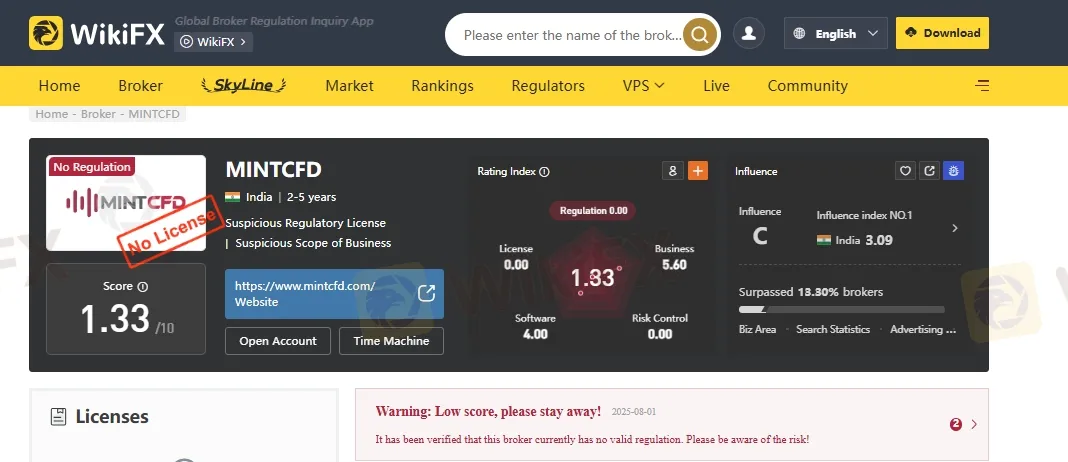
3. WikiFX Report- WikiFX found this broker is be a scam with no regulation and extremely low score. The platform also issued a warning against the broker, stating –
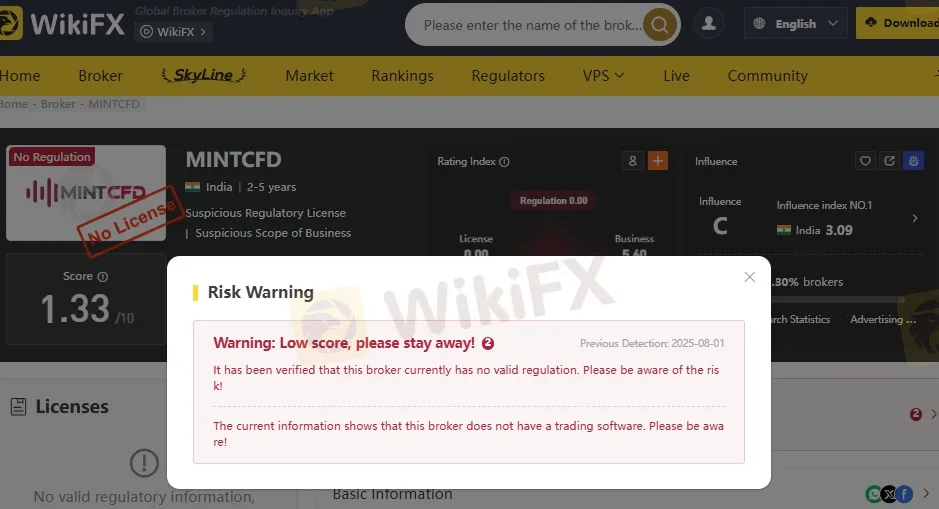
Warning: Low score, please stay away!
It has been verified that this broker currently has no valid regulation. Please be aware of the risk!
The current information shows that this broker does not have a trading software. Please be aware!
4. Newbie Broker - MintCFD is a new broker, with limited history or track record in the trading industry. Inexperienced brokers, especially those without regulatory backing, carry heightened risks as their business practices and customer service levels remain untested over time. This is a Major Red Flag you should not Ignore.
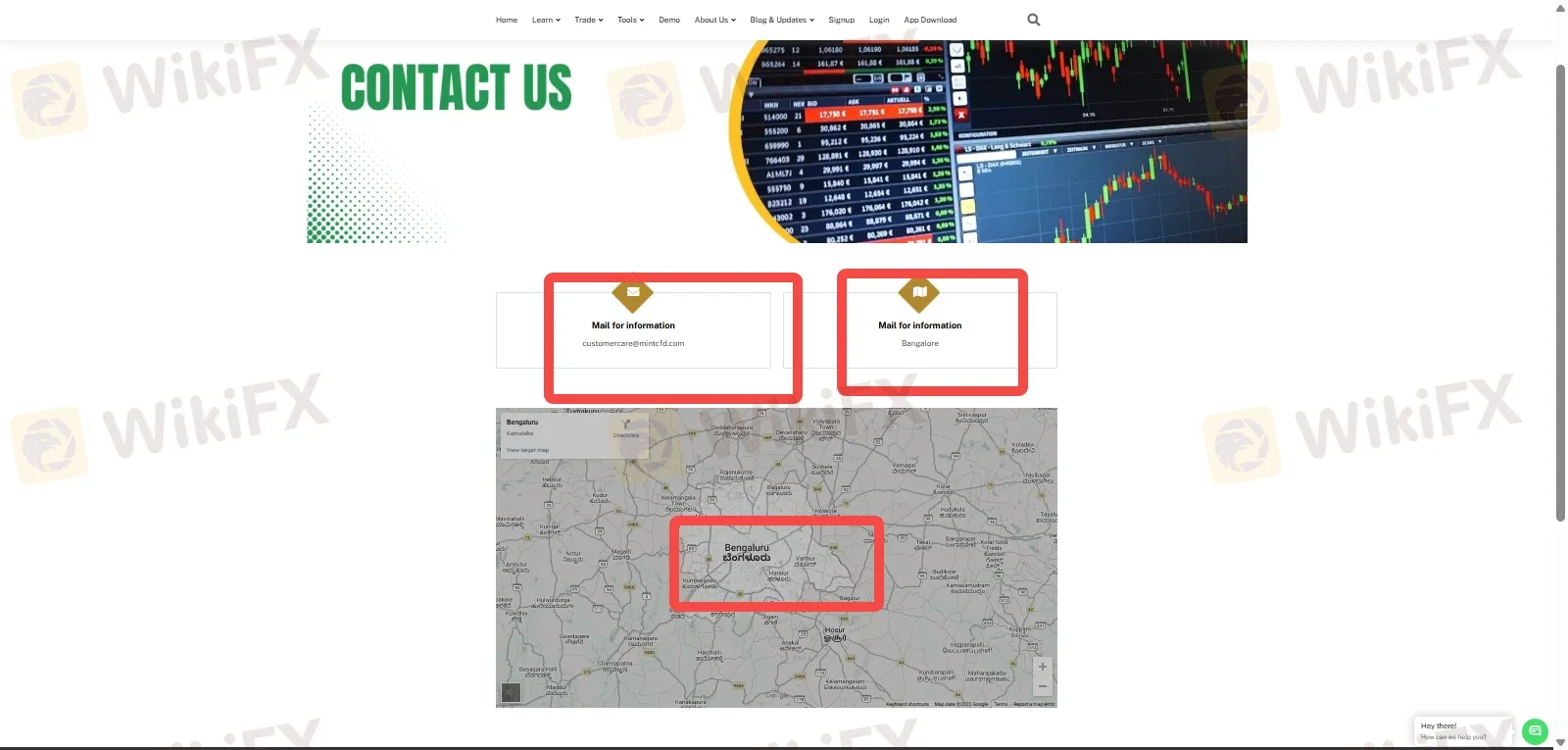
5. Incomplete Office Location- The broker‘s office location is not properly disclosed on its website. It says their Office is situated un Bangalore but no proper verifiable physical address available on its website. Two Email Ids are Available but not exact address. This raises concerns about the company's legitimacy and accountability. In MintCFD’s case, this lack of physical presence adds to the overall mistrust surrounding the platform.
Join WikiFX Community
Be attentive and stay updated with WikiFX. You can get all the information you need to know about the Forex market, fraud alerts, and the latest news related to Forex trading — all in one place. Join the WikiFX Community by scanning the QR code at the bottom.
Steps to Join
1. Scan the QR code below
2. Download the WikiFX Pro app
3. After installing, tap the Scan icon at the top right corner
4. Scan the code again to complete the process
5. You have joined!

Read more

Is TradingPRO Safe? FCA Warning, Indonesia Blocklist Evidence, and 7 Checks Before You Deposit
This Trading Pro broker review checks the FCA warning, Indonesia blocklist evidence, licence claims, and what South Asian users should verify before depositing.
MT4 White Label Cost in 2026: What Brokers Must Budget Beyond the Platform Fee
The visible fee in an MT4 white label proposal is rarely the real cost of operating it. For an existing broker, the decision is not simply whether an MT4 white label platform is “cheap” or “expensive.” The real question is whether the commercial model remains viable after integration, support, data, client migration, compliance, and exit costs are included. That is why an MT4 white label cost review should be built as a 24- to 36-month operating case. It should compare three credible choices: 1. Keep the present MT4 setup and improve its weakest controls. 2. Replace the MT4 white label provider but retain the client proposition. 3. Migrate selected clients or products to another platform while running MT4 in parallel. This guide explains how to build that case without relying on headline prices or generic vendor claims.

The Rise of Deepfake Investment Scams: ASIC Shares Key Warning Signs
Artificial Intelligence (AI) has grown remarkably recently. However, it has also amplified the scope for financial fraud. One such is the rapid use of deepfake technology involving AI-generated videos, images and audio clips imitating real people. Fraudsters are leveraging these technologies to impersonate financial advisers, celebrities, business leaders and government officials to lure victims into fake investment schemes. Understanding the emerging implications, the Australian Securities and Investments Commission (ASIC) has cautioned investors of investment avenues promoted through convincing AI-generated content. Seemingly authentic, deepfakes are designed to manipulate trust and make people transfer funds before authenticating the investment’s legitimacy.

Best White Label Trading Platform 2026
The decision to switch white label providers or migrate to a modern white label trading platform is no longer a luxury for growth-minded brokers—it's a strategic necessity for survival in 2026. The convergence of technological stagnation, regulatory evolution, and shifting client expectations has created a perfect storm.
WikiFX Broker
Latest News
Managing False Breakouts: How to Spot and Trade the Liquidity Sweep Trap
 WikiFX
RoboForex Review 2026: Regulatory Warnings and Withdrawal Red Flags
WikiFXLONG ASIA Review 2026: Unverified Regulation and Withdrawal Risks
WikiFXYen Drops Past 163 On Oil
WikiFXUS Charges Two Over Alleged $43M Laundering Network
WikiFXSix Arrested in ₹2.68Cr Dubai-Linked Scam on Ex-IAF Officer
WikiFXHow to Tell if a Market Reversal at Support is Real
WikiFXBeirman Capital Review 2026: Unregulated Status and Key Risk Signals
WikiFXWhy the rupee keeps sliding despite RBI's $675bn arsenal
WikiFXSix Arrested in ₹20 Million Dubai-Linked Investment Scam
WikiFXRate Calc

