Colmex Pro Settles with CySEC for €200,000 Over Compliance Issues
Abstract:Colmex Pro, a Cyprus-based investment firm, settles with CySEC for €200,000 over regulatory violations. The company committed to enhanced compliance measures.
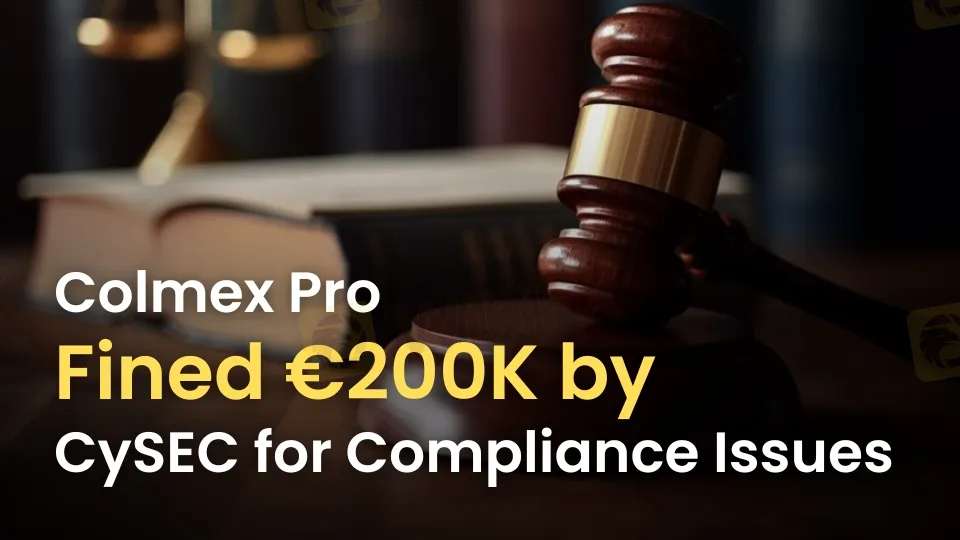
Colmex Pro, a Cyprus-based brokerage, has settled with the Cyprus Securities and Exchange Commission (CySEC) for €200,000 after a two-year investigation into possible regulatory lapses, the authority announced Tuesday.
Nicos Vassiliou, the firms CEO, told Finance Magnates the deal “does not constitute an admission of any wrongdoing” and ties to a “historical compliance review” of past activities.
Regulatory Scrutiny Details
CySECs review spanned January 2021 to February 2023, flagging potential issues in:
- CIF authorization standards
- Conflict of interest management
- Marketing of CFDs to retail clients
- Client information transparency
- Best execution practices
These findings relate only to Colmex Pros Cyprus branch. The firm also operates in Israel and South Africa under separate entities.
CEOs Compliance Commitment
Vassiliou stressed, “We‘ve implemented all required compliance enhancements and remain committed to the highest conduct standards. This settlement concludes a multi-year regulatory process.” He affirmed the firm’s focus on aligning with regulatory expectations.
The €200,000 has been fully paid to the Republic of Cyprus‘s Treasury, not CySEC’s budget. The case involved possible breaches of Cypruss 2017 Investment Services Law and EU Regulation 600/2014, following a thorough supervisory check.
Regulatory History Context
Vassiliou, who became CEO in late 2024, previously worked at CySEC from 2016 to 2020 as a Market Surveillance Officer. His experience likely helped navigate this resolution.
This marks Colmex Pros third CySEC settlement. In 2019, the firm paid €50,000 for compliance issues. A 2016 fine of €100,000 addressed weak client suitability assessments, unclear website information, and operational risks. The 2016 penalty included:
- €40,000 for inadequate client evaluation policies
- €30,000 for transparency failures
- €30,000 for risk management gaps
Vassiliou views these settlements as part of adapting to stricter standards, not persistent issues. He insists Colmex Pro now meets all regulatory requirements fully.
Founded in 2010 in Limassol, Colmex Pro offers trading services across various assets, regulated by CySEC. The firm‘s latest steps signal a renewed push for compliance and client trust in Cyprus’s financial sector.


Read more
Rupee Nears 95.15 as RBI Cushions Oil Pressure: What India FX Traders Should Watch Now
India's rupee is expected to open near 95.14-95.16 per US dollar after closing at 95.2075 on Friday, while Brent crude was quoted at $84.50 and RBI market presence supported the currency. This report separates a reported market intervention from a fixed exchange-rate target, explains why oil, US employment data and Federal Reserve expectations matter, and gives a practical risk checklist for forex trading India. It also explains why volatility is not a reason to trust unverified online forex trading platforms.

Monisha Chakraborty Appointed as RB Executive Director: What Does This Mean for India's FX Market?
The Reserve Bank of India has appointed Monisha Chakraborty as Executive Director with effect from 3 August 2026; she will oversee the Foreign Exchange Department and the Financial Markets Regulation Department. Chakraborty is a career central banker with over three decades of experience in Supervision, Foreign Exchange, and Government and Bank Accounts, and previously served as Banking Ombudsman. This report explains the significance of the new RBI Executive Director appointment for forex regulation India, the scope of the Foreign Exchange Department and the Financial Markets Regulation Department, and what authorised persons, banks, and forex market participants should monitor as the new ED takes charge.
RBI's $40.82 Billion Forex Surge: A Bigger Rupee Shield—or Just Borrowed Time?
RBI's concessional forex swap facility had mobilised $40.82 billion by 31 July 2026, with FCNR(B) deposits providing $36.725 billion of the total. This India-focused analysis separates confirmed inflows from the $80–85 billion SBI Research projection, compares the 2026 programme with the 2013 FCNR(B) window, and explains what the numbers can—and cannot—do for the Indian rupee. It also shows how banks, NRI depositors, importers, exporters and institutional investors may be affected, while highlighting the oil, dollar, maturity and hedging risks that still matter for USD/INR and forex trading in India.
Perry Warjiyo Resigns: Why the Rupiah Moved Above Rp18,000 per US Dollar
Perry Warjiyo resigned as Bank Indonesia governor, Destry Damayanti became acting governor, and the rupiah traded above Rp18,000. Here is what forex traders should monitor next.
WikiFX Broker
Latest News
Exness Review for Indian Traders 2026: The RBI Question Comes Before Leverage and Spreads
 WikiFX
EMAR MARKETS Review 2026: Severe Withdrawal Complaints and Risk Signals
WikiFXTrader's Way Review: Trades Vanished Overnight , And There's No Regulator to Call
WikiFXLockwood Review: AMF-Blacklisted Broker with Users Reporting Blocked Withdrawals
WikiFXBYBIT Review: What Traders Should Know Before Depositing
WikiFXPocket Broker Review: What Traders Should Know Before Depositing
WikiFXIC Markets Global Review for South Asian Traders: A Global License Isn't the Same as Local Permit
WikiFXTraze Review: What Traders Should Know Before Depositing
WikiFXMatch-Trade Gives AI Direct Access to Broker Trading APIs
WikiFXWhy Sovereign Debt Can Sink a Currency: The Credit Risk Channel
WikiFXRate Calc

