Win Wind Capital Limited Review - Is It a Securities Company with a Full License? - WikiFX
Abstract:Win Wind Capital boasts a licensed subsidiary that offers a wide array of financial services. It excels in providing convenient online trading, yet it also issues related to fee opacity. Learn more.
| Win Wind Capital Review Summary | |
| Founded | 2015-06-26 |
| Registered Country/Region | Hong Kong |
| Regulation | Regulated |
| Market Instruments | HK stocks trading, IPOs, and Derivative product trading |
| Customer Support | (852)3198-0622 |
| info@oshidorisec.com | |
Win Wind Capital Information
Win Wind Capital Limited is an influential enterprise in the financial field, which conducts diversified financial services through its subsidiaries. Its business scope is extensive, covering lending services, brokerage services for securities, bonds, funds, and derivative products, corporate finance consulting, as well as investment management services. Its subsidiary, Oshidori Securities Limited, has obtained a Type 1 regulated activity license issued by the Securities and Futures Commission of Hong Kong. It is capable of providing clients with professional services such as Hong Kong stock trading, initial public offering (IPO) subscription, margin financing, etc.
Pros and Cons
| Pros | Cons |
| Regulated | Higher risks in some businesses (Leverage) |
| Diversified financial services | Room for improvement in information transparency |
| Professional securities services |
Is Win Wind Capital Legit?
Oshidori Securities Limited, a subsidiary of Win Wind Capital, holds a Type 1 regulated activity license (License Number: ACZ283) issued by the Securities and Futures Commission of Hong Kong, and is legally permitted to conduct relevant businesses such as securities trading.


What Can I Trade on Win Wind Capital?
At Win Wind Capital, investors can participate in a variety of transactions, including Hong Kong stock trading (related products such as exchange-traded funds and real estate investment trusts), initial public offerings (IPOs), and derivative product trading.
Account Type
The company offers at least two types of accounts, including a cash account that is suitable for more conservative investors who wish to trade with their own funds, and a margin account with a leverage effect, which is suitable for investors with rich investment experience and strong risk tolerance.
Deposit and Withdrawal
Customers of Win Wind Capital can choose either HSBC (account number 122 415599 001) or OCBC Wing Hang Bank (account number 029728 - 001) to deposit funds into their securities accounts. Regarding withdrawals, after the settlement of Hong Kong stock sell orders, the funds can be immediately used to purchase other stocks, and the cash will be deposited into the customer's account on the settlement date (T+2).

Read more
EASY TRADING ONLINE Review 2026: Withdrawal & Account Block Complaints
Did your funds fail to reach your account despite being approved by EASY TRADING ONLINE, an Australia-based brokerage entity? Have you been subject to months of withdrawal delays despite being compliant with norms? Did your trading account suddenly become invalid upon a withdrawal request? All of these complaints have come up on broker review platforms such as WikiFX. This EASY TRADING ONLINE review studies multiple user complaints while also updating its existing regulatory status.

RYOEX review: Does the 20 May 2025 Legal Opinion Prove a Trading Licence?
RYOEX’s Saint Lucia licence-information link opens a legal opinion dated 20 May 2025. The document identifies 2023-00370 as a company number and describes the local legal framework; it is not a trading licence issued by a regulator. This RYOEX review separates that document from the website’s marketing language, checks the different statuses of two account complaints, and explains the separate authorisation question facing Indian residents.

SIMPLEFX Review 2026: Trading Chart Complaints Continue - What Traders Should Know
SIMPLEFX, a Saint Vincent and the Grenadines-based brokerage entity, receives complaints mostly about trading chart manipulations. Generally, while researching broker reviews, complaints usually centre on hassles concerning fund withdrawals. User complaints for this broker have come from many regions, including South Asia. This SIMPLEFX review examines these user allegations and shares its regulatory framework.
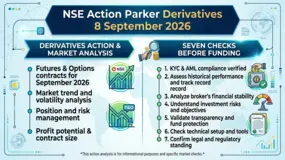
NSE Action Parker Derivatives 8 September 2026 and Seven Checks Before Funding
The NSE action Parker Derivatives 8 September 2026 is a current exchange disciplinary direction, not an expulsion notice. The National Stock Exchange page records a ₹1.5 lakh penalty and tells the member to strengthen supervision of existing Authorised Persons, stop onboarding new Authorised Persons until that work is completed, re-inspect the relevant branch or AP in the next quarter, and comply with prevailing anti-money-laundering rules. Indian clients should distinguish an Authorised Person from the broker itself. The published direction does not say that existing clients must close accounts or that trading membership has been cancelled. Before opening, funding or changing an account, verify the exact firm, website, member status, payment beneficiary and the scope of the latest direction.
WikiFX Broker
Latest News
Crude Oil rallies into 14-week highs as US and Iran spend the week attacking tankers
 WikiFX
WTI Oil nears $100 as Middle East tensions keep supply concerns elevated
WikiFXUSDJPY: 86% of Retail Traders Are Long
WikiFXNew Zealand Dollar edges higher to near 0.5850 ahead of US PPI inflation data
WikiFXFNmarkets Review India 2026: Mauritius Licence and RBI Checks
WikiFXCanadian Dollar firms as US Dollar loses momentum, Oil prices extend rally
WikiFXSilver Price Forecast: Rally puts head-and-shoulders pattern on ice
WikiFXGBP/USD Price Forecast: Strengthens above 1.3550, upside bias intact while holding above 100-day SMA
WikiFXChile: Policy pause reflects fragile growth – Societe Generale
WikiFXMexican Peso holds firm as inflation cools, fiscal plan lands
WikiFXRate Calc

