Ichimoku Cloud Analysis 05.06.2023 (EURUSD, USDJPY, NZDUSD)
Abstract:EURUSD has pushed off the signal lines of the indicator. The instrument is going below the Ichimoku Cloud, which suggests a downtrend. A test of the upper border of the Cloud at 1.0715 is expected, followed by a decline to 1.0465. An additional signal confirming the decline will be a rebound from the upper border of the descending channel.
Let's see the Ichimoku Cloud Analysis for the following pairs.
EURUSD, “Euro vs US Dollar”
EURUSD has pushed off the signal lines of the indicator. The instrument is going below the Ichimoku Cloud, which suggests a downtrend. A test of the upper border of the Cloud at 1.0715 is expected, followed by a decline to 1.0465. An additional signal confirming the decline will be a rebound from the upper border of the descending channel. The scenario can be cancelled by a breakout of the upper border of the Cloud, securing above 1.0775, which will mean further growth to 1.0875.

USDJPY, “US Dollar vs Japanese Yen”
USDJPY has secured above the upper border of the descending channel. The instrument is going above the Ichimoku Cloud, which suggests an uptrend. A test of the upper border of the Cloud at 139.65 is expected, followed by a rise to 143.55. An additional signal confirming the rise will be a rebound from the upper border of the bearish channel. The scenario can be cancelled by a breakout of the lower border of the Cloud, securing under 138.55, which will mean a further decline to 137.65.

NZDUSD, “New Zealand Dollar vs US Dollar”
NZDUSD is correcting inside a bullish channel. The instrument is going below the Ichimoku Cloud, which suggests a downtrend. A test of the lower border of the Cloud at 0.6065 is expected, followed by a decline to 0.5865. An additional signal confirming the decline will be a rebound from the upper border of the descending channel. The scenario can be cancelled by a breakout of the upper border of the Cloud, securing above 0.6175, which will mean further growth to 0.6265. Meanwhile, the decline could be confirmed by a breakout of the lower border of the bullish channel, securing under 0.6035.


Read more
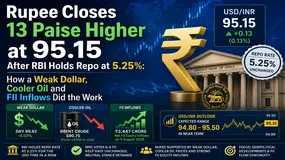
Rupee Ends 13 Paise Up at 95.15 After RBI Holds Repo at 5.25%: The Effect of a Weak USD, Cooler Oil
The Indian rupee settled at 95.15 against the US dollar on 5 August 2026, gaining 13 paise after the Reserve Bank of India's Monetary Policy Committee voted 6-0 to keep the repo rate unchanged at 5.25 percent for the third time in a row in FY27. The rupee had opened 46 paise higher, rallied to an intraday strongest of 94.89 ahead of the policy decision, and then drifted back as RBI Governor Sanjay Malhotra noted that the currency 'has not appreciated as intended despite the high flows from foreign shores.' A weak dollar index, a sharp pullback in Brent crude from above USD 100 in July, and net FII equity inflows of Rs 2,447 crore on Tuesday combined to support the rupee. USD-INR is expected to trade in a 94.80-95.50 band in the near term.

TickTrader White Label in 2026: Can You Add Liquidity Depth Without Adding Operational Blind Spots?
A TickTrader white label can look like the fastest route to a modern branded trading environment, but a fast launch is not the same as a controlled launch. This 2026 broker guide explains what the TickTrader platform is, where a Soft-FX broker solution can sit in a wider operating stack, and how to evaluate the difference between a white label, a server licence, and a connected CRM or Client Office setup. It also unpacks TickTrader cost beyond the monthly headline, including implementation, integration, support, data, governance, migration, and exit assumptions. Use the practical questions, workflow tests, comparison table, and launch checklist to assess a Soft-FX TickTrader provider without mistaking a feature demo for evidence that your brokerage can run the service safely at scale.

Fortex White Label in 2026: Can Your Liquidity Stack Scale Without Losing Control?
A Fortex white label can look like the fastest route to a modern branded trading environment, but a fast launch is not the same as a controlled launch. This 2026 broker guide explains what the Fortex platform is, where a Fortex broker solution can sit in a wider operating stack, and how to evaluate the difference between a white label, a server licence, and a connected CRM or Client Office setup. It also unpacks Fortex cost beyond the monthly headline, including implementation, integration, support, data, governance, migration, and exit assumptions. Use the practical questions, workflow tests, comparison table, and launch checklist to assess a Fortex provider without mistaking a feature demo for evidence that your brokerage can run the service safely at scale.

Best White Label Trading Platform 2026
The decision to switch white label providers or migrate to a modern white label trading platform is no longer a luxury for growth-minded brokers—it's a strategic necessity for survival in 2026. The convergence of technological stagnation, regulatory evolution, and shifting client expectations has created a perfect storm.
WikiFX Broker
Latest News
Apple Faces Lawsuit Over Fake Crypto App Exposing $1.8 Million Theft
 WikiFX
Trump Memecoin Faces SEC Scrutiny After Nearly One Million Investors Suffer Heavy Losses
WikiFX"They Want to See Your Face": Inside ATFX Cambodia's Rise
WikiFXSpread Cheating: The Invisible Trading Cost That Could Be Working Against You
WikiFXLevels Review: No Regulation and Mounting Withdrawal Complaints – What Traders Need to Know
WikiFXLQH MARKETS Review: Multiple Traders Report Withdrawals Blocked and Accounts Terminated
WikiFXBorn2trade Adds Copy Trading to 1:5000 Leverage Platform
WikiFXPILOTFX Review: What Traders Should Know Before Depositing
WikiFXLMAX Group Review 2026: Users Report Disturbing Withdrawal Issues - Is the Broker Still Reliable?
WikiFXTrade24Seven Review: What Traders Should Know Before Depositing
WikiFXRate Calc

