Inflation data to boost gold?
Abstract:It can be observed that, Gold prices remained steady on Monday after a significant drop of more than 2% in the last session. This can be attributed to the cautious approach of investors ahead of the upcoming US inflation data due this week.

It can be observed that, Gold prices remained steady on Monday after a significant drop of more than 2% in the last session. This can be attributed to the cautious approach of investors ahead of the upcoming US inflation data due this week.
The US CPI print will be important this week to see whether the Fed really has reached the end of its hiking cycle. The print that the Fed wants to see is the headline continues to fall and, perhaps, even more importantly, the core reading to fall too. A big miss here and watch out for USD weakness, falling US10Y yields, and a big shove higher for silver and gold.
Headline inflation moving in the right direction
• Looking at the chart below you can see that headline inflation has been stepping lower in the right direction. Yes, it is still above the Feds 2% target, but still moving in the right direction.

• Core proving stickier
The core reading excludes the volatile food and energy components. However, the core reading is proving stickier. This is a pattern repeated across many of the major countries.

What to look for
If the headline print comes in below 4.5% and the core below 4.9% then the market will take that as confirmation that the Fed is winning the inflation battle. This could mean a lower USD, lower US10 yields, EURUSD upside, and precious metal upside.
If the headline print comes above 6% and the core above 5.7% then markets will read that as the Fed needs more to fight inflation. This could result in USD upside, higher US10y yields, EURUSD downside, and precious metals downside (although it would not be unreasonable to expect dip buyers in gold and silver).

Lastly, watch out for other US banking fears to re-emerge. If it happens then it would be possible to see USD strength on risk-off flows which would invalidate the outlook above.


Read more

XAU/USD Hits $4,500: Washington Bought Bonds—and Gold Exploded
Gold surged above $4,500 after the US Treasury expanded its purchases of longer-dated government bonds, pushing yields and the dollar lower. But this was not debt forgiveness or Federal Reserve money printing—it was a liquidity operation that exposed a much bigger fear: America may be finding it increasingly difficult to live with market-driven interest rates.
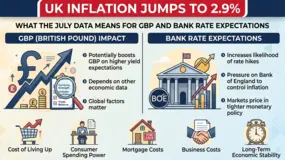
UK Inflation Jumps to 2.9%: What the July Data Means for GBP and Bank Rate Expectations
UK CPI rose to 2.9% in July 2026 from 2.6% in June. See what the data may mean for GBP, gilt yields and Bank Rate expectations without overreading one release.
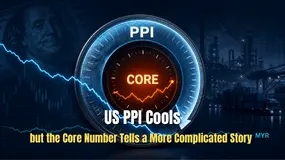
US PPI Cools, but the Core Number Tells a More Complicated Story
US wholesale inflation slowed sharply in July, encouraging investors to reduce their bets on another Federal Reserve rate hike. Dig beneath the headline, however, and persistent core price pressures suggest the inflation battle is not over.

Crypto, Euro, Yuan: Still No Dollar Killer
Despite frequent “de-dollarization” headlines, the U.S. dollar remains unrivaled due to unmatched market depth, global usability, and trusted legal/institutional frameworks. Crypto and other currencies (euro, yuan) lack the stability, convertibility, and infrastructure required to replace the USD, while the Fed’s credibility and the scale of U.S. financial markets continue to anchor demand. Bottom line: no alternative currently offers a complete, credible substitute for the dollar’s global role.
WikiFX Broker
Latest News
Forex trading psychology: why old prices stick in your mind
 WikiFX
What Your Trading Journal Really Reveals About Your Behaviour
WikiFXFBS Review: Broker Regulation Warnings and Withdrawal Complaints Traders Cannot Ignore
WikiFXWikiFX Wishes You a Blessed Maulidur Rasul
WikiFXEMIRAX MARKETS Review: Withdrawal Blocks, Suspended Login Access, and a High-Risk Broker Warning
WikiFXBangladesh Caps Cash Dollar at Tk126.50 to Calm Kerb Market
WikiFXFIX API Forex in 2026: The Broker Integration Questions That Matter After the Connection is Live
WikiFXRupee Holds Near 95.70 as RBI Support Meets Oil Risk
WikiFXSygnum Global FCA Warning: Check sygnumglobal.co Before You Send Money
WikiFXCapital Street FX Review: Is Your Deposit Safe?
WikiFXRate Calc

