CySEC Puts the Brakes on Trilt Ltd's Cypriot Operations
Abstract:CySEC revokes Trilt Ltd's CIF license, forcing the Cypriot division of the multi-regulated broker to renounce its authorization. The decision comes amid CySEC's renewed focus on compliance and regulatory standards.
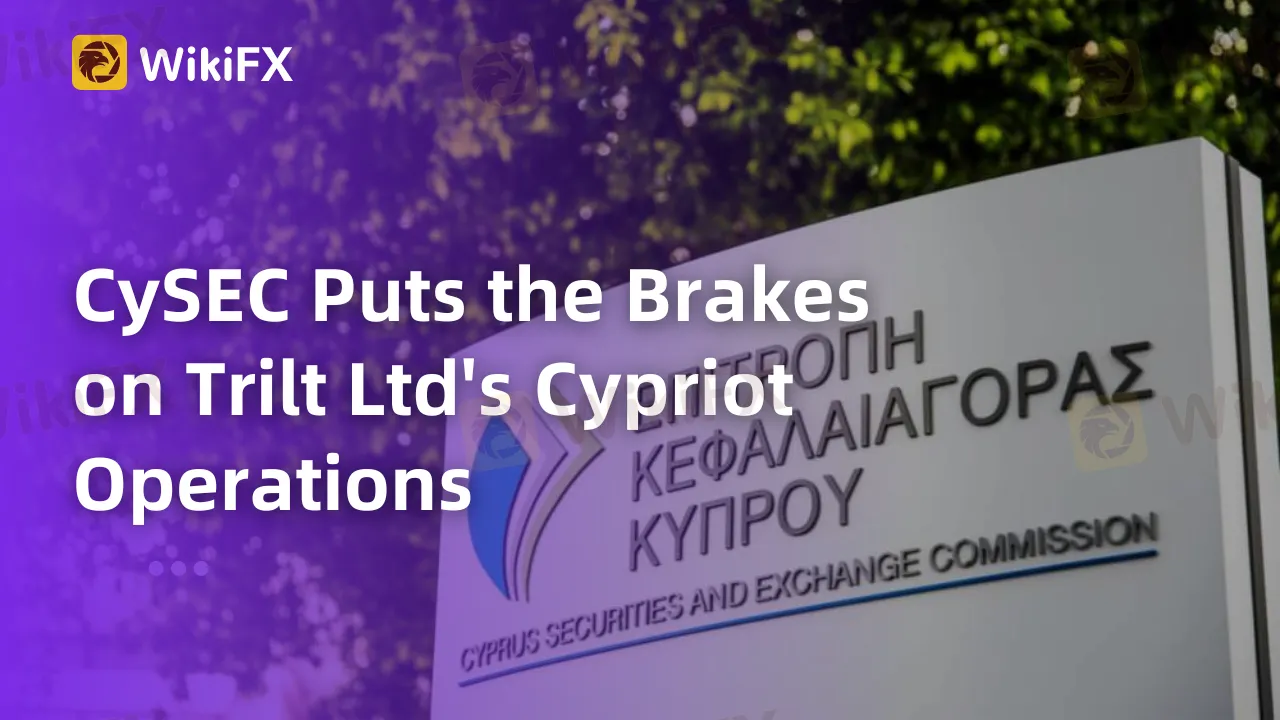
The Cyprus Securities and Exchange Commission (CySEC) has revoked the Cyprus Investment Firm (CIF) license of Trilt Ltd, the Cypriot division of a multi-regulated broker operating under the same brand name across Europe. This move comes amidst a regulatory crackdown as CySEC resumes its pursuit of compliance irregularities after a period of dormancy.
While the exact reasons behind Trilt Ltd's decision to part ways with its CIF authorization remain unspecified, CySEC's website reveals that the company is currently under examination for voluntary renunciation of its authorization. This trend is not uncommon among regulated brokers in recent years, with many choosing to voluntarily relinquish their licenses, even in the absence of regulatory issues.
Trilt Ltd's extensive global footprint encompasses offering Contracts for Difference (CFDs) in various markets such as forex, cryptocurrencies, indices, stocks, and commodities. Boasting authorization from CySEC, the broker is also registered with regulatory bodies in Spain (CNMV), Italy (CONSOB), Germany (Bafin), France (AMF), and Norway (FSA).

As the regulatory landscape evolves, onboarding international clients through Cypriot brokers necessitates a more comprehensive set of features and active regulatory approval, reinforcing operational stability in other jurisdictions. Cyprus Investment Firms (CIFs) must now evaluate their existing third-country passports and obtain official documents either to verify their possession of relevant authorities or to receive an exemption from the obligation to hold a license in that specific territory.
CySEC's recent reinvigoration in identifying compliance discrepancies has led to the revocation of Trilt Ltd's CIF license. The Cypriot regulator will continue to supervise the financial service company until it has fulfilled its obligations under the license. A separate decision, expected to be announced later, will confirm Trilt's status as no longer licensed and regulated by CySEC, effectively barring the broker from providing financial or ancillary services.
Following the confirmation, the regulator will allow three months for Trilt to address its responsibilities arising from the now-defunct investment services, during which the company will remain under CySEC's watchful eye. As per Cyprus's regulatory framework, Trilt must return all outstanding client balances, resolve any complaints, and submit confirmation from an external auditor stating that the company has no pending obligations. This statement must also include the details of each client.
The revocation of Trilt Ltd's CIF license highlights CySEC's renewed commitment to ensuring a compliant and secure financial market. As the regulator reasserts its authority, market participants can expect increased scrutiny and a stronger emphasis on adherence to regulatory standards. The case of Trilt Ltd serves as a cautionary tale for brokers to maintain transparency and cooperation with regulatory bodies or face potential setbacks in their global operations.
Download and install the WikiFX App on your smartphone to stay updated on the latest news.
Download the App here: https://social1.onelink.me/QgET/px2b7i8n


Read more
Think Forex Support and Resistance Always Work? High-Impact News Can Prove You Wrong!
Forex traders often have to come to terms with these two popular concepts - Support and Resistance. A support level refers to the point where buyers have historically come together to prevent the price from sliding further. On the other hand, the point of resistance is where sellers have historically limited upward movement. These two levels form the foundation of many trading strategies employed by traders to spot entry, exit and stop-loss points. However, many beginners begin to think that these price levels are unbreakable. Such assumptions can go horribly wrong during high-impact economic news releases such as inflation reports, employment data, monetary policy announcements by the central bank or any other major news events. These events can trigger price movements so much that even the strongest support and resistance levels can crack within seconds.
Centinary Review 2026: I Earned $496,000, but Was I Able to Receive It? Read This Report!
Centinary, a new age broker, has managed to receive quite a bit of user reviews recently. However, all these reviews accuse the broker of robbing users’ funds. From loss of yuan to dollar, traders have been complaining about the alleged hassles faced while withdrawing funds from the Centinary platform. In this Centinary review article, we will take you through the complaints users have made in 2026.
One Lot Size Mistake Can Cost You Thousands—Here's Where the 1% Rule Helps
Switched from one trading strategy to another but could not avert heavy losses? Wondering what went wrong despite your market analysis being spot on? It may not be a strategic issue then. It may just be that you chose the wrong lot size. Yes, a single oversized position can get your account exposed to far greater risks than you may imagine. You may be moved by the impressive profits with increasing lot sizes. But by doing so, you also invite a proportionate rise in losses. This is where you need to apply the essential 1% risk management principle. This rule helps you assess how much you can afford to lose if a trade does not go as planned.
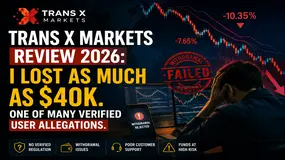
TRANS X MARKETS Review 2026: I Lost as Much as $40K. One of Many Verified User Allegations
This allegation representing fund loss worth $40,000 came from a verified Indian user on a trusted platform such as WikiFX. However, this is not the only allegation from users across India and other regions. Many verified users have complained about the loss of access to withdraw profits from the TRANS X MARKETS platform. At the same time, we came across complaints about the withdrawal issue from the free software provided by the brokerage firm. In this TRANS X MARKETS review, we have examined these allegations while also giving you the company’s regulatory background.
WikiFX Broker
Latest News
How Pig Butchering Scams Drain Beginner Trading Accounts
 WikiFX
Weltrade Review 2026: Is This Forex Broker Safe?
WikiFXOver US$2.9 Million Saved: Singapore's Crypto Scam Crackdown Sends a Warning to Malaysian Investors
WikiFXHow Reversal Candlesticks Trap Beginners at the Top and Bottom
WikiFXexfor Review 2026: I’m Unable to Receive My Profits. We Investigated This Common User Allegation.
WikiFXDollar Navigates Inflation Risks as Oil Prices Spike
WikiFXHTFX Review 2026: Blocked Withdrawals and Severe Risk Signals
WikiFXRM5.18 Million Lost: Investment Scams Are Targeting Kelantan
WikiFXOcta Review 2026: Severe Withdrawal Complaints and Account Blocking Risks
WikiFXFake Boss, Real Losses: Business Lost Nearly RM1 Million in WhatsApp Impersonation Scam
WikiFXRate Calc

