Libertex has added crypto coin Arbitrum now available for traders as they promised.
Abstract:The Arbitrum network is a layer-2 functionality, developed by the New York-based company Offchain Labs, which seeks to solve the congestion that the Ethereum network has been experiencing by improving how smart contracts are validated.

What is Arbitrum?
The Arbitrum network is a layer-2 functionality, developed by the New York-based company Offchain Labs, which seeks to solve the congestion that the Ethereum network has been experiencing by improving how smart contracts are validated.
The Arbitrum ecosystem's token, ARB, was launched on 23 March 2023. There are 10 billion ARB. The Arbitrum community will control 56% of them, while 44% of the total ARB will go to investors and Offchain Labs employees. ARB token holders can vote on proposals from the decentralised autonomous organisation (DAO) that manages the project. Part of the tokens will be given away by developers to active users of the Arbitrum platform.
Arbitrum's developers
The project's developer, New York-based Offchain Labs, was founded by Princeton University Professor Steven Goldfeder and two of his graduate students. Steven Goldfeder was Deputy Director for Technology at the White House during Barak Obama's presidency. The company was valued at $1.2 billion in 2021 when it managed to attract $120 million in investment from Lightspeed Ventures and several eminent cryptocurrency venture funds.
What makes Arbitrum unique?
Several Proof-of-Stake (PoS) networks have been developed to solve the problem of Ethereum's scalability. These include Polkadot, Cardano (ADA), and EOS (EOS).
Arbitrum operates as a separate layer of the network, to relieve the ETH mainnet from excessive transactions by facilitating the validation of smart contracts through the introduction of optimistic Arbitrum rollups. This simplifies the verification of smart contracts using Arbitrum's optimistic composite data. Another defining feature of the Arbitrum network is its compatibility with EVM (Earned Value Management): developers don't need to study a new coding language to be able to create their own DApps on the Arbitrum backbone network.
Opportunities for traders
Arbitrum started trading on 23 March 2023. On the first day of trading, the token's volatility was 11.2%.
How to buy and sell the Arbitrum token
You can buy and sell the Arbitrum token on specialised cryptocurrency exchanges. Alternatively, you can trade CFDs on the Arbitrum token through a broker or trading platform, such as MetaTrader or Libertex, where you can use a multiplier and also trade if the value of the asset declines.


Read more
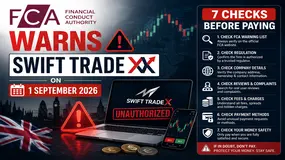
FCA Warns Swift TradeX on 1 September 2026: 7 Checks Before Paying
FCA warns Swift TradeX in a notice first published and updated on 1 September 2026. The UK Financial Conduct Authority says the firm may be providing or promoting financial services without permission, is not authorised, and may be targeting people in the UK. The notice names the website swifttradexai.com, a Worcester address and a UK telephone number, but also cautions that unauthorised businesses may use incorrect or borrowed contact details. The confirmed issue is authorisation status—not a court finding about every transaction. Anyone considering a payment should stop, verify the firm independently, and avoid using contact information supplied by the platform itself.
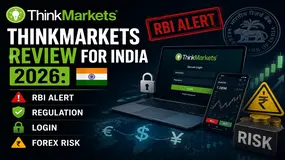
ThinkMarkets Review for India 2026: RBI Alert, Regulation, Login, and Forex Risk
ThinkMarkets review for India: check the RBI Alert List, overseas entities, regulation, login security, forex rules, costs, withdrawals, and leverage risk.
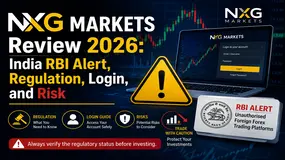
NXG MARKETS Review 2026: India RBI Alert, Regulation, Login, and Risk
People searching NXG MARKETS regulation or regulation NXG MARKETS need to separate an overseas licence from permission in India. The Reserve Bank of India Alert List, updated 19 November 2025, names NXG Markets and nxgmarkets.com. RBI says listed entities are neither authorised to deal in forex under FEMA nor authorised to run an approved forex electronic trading platform. The broker's own site also says it does not serve residents or citizens of India. This NXG MARKETS review found an overseas Mwali licence record, but no RBI authorisation. No cited court ruling proves fraud. For an Indian user, the local warning and service restriction should control the decision.
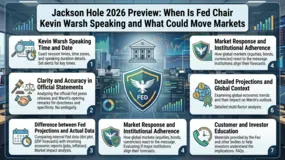
Jackson Hole 2026 Preview: When Is Fed Chair Kevin Warsh Speaking and What Could Move Markets
Fed Chair Kevin Warsh is listed to deliver Jackson Hole keynote remarks on 28 August 2026. See the schedule, market scenarios and USD-gold watchlist.
WikiFX Broker
Latest News
Fed September Hike: What Malaysian Traders Should Watch
 WikiFX
United States Dollar Index hold gains above 99.50 as Treasury yields hit multi-year highs
WikiFXEUR/JPY Price Forecast: Trades near 181.50 after rebounding from descending channel bottom
WikiFX02.09.26 Daily Forecast
WikiFXWebull Reenters Canada With Coinbase Crypto Infrastructure
WikiFXSilver Price Forecast: XAG eyes 100-day SMA after Waller rally
WikiFXBrent: Geopolitical risk keeps cracks elevated – ING
WikiFXCIMB Tests RM1.38 Billion Tokenised Sukuk Settlement
WikiFXAustralian Dollar steady above 0.7150 vs USD on trade data, China PMI
WikiFXXin Synergy Escalates Probe Into Former Directors Over Moneylending Operations
WikiFXRate Calc

