The price of USDCAD could continue to trade lower in line with the current USD weakness.
Abstract:Intraday bias in USD/CAD remains neutral for consolidation above 1.3405 temporary low. Upside of recovery should be limited by 1.3563 resistance to bring another fall.

USDCAD Analysis
Intraday bias in USD/CAD remains neutral for consolidation above 1.3405 temporary low. Upside of recovery should be limited by 1.3563 resistance to bring another fall. Break of 1.3405 will resume the decline from 1.3860, as the third leg of the corrective pattern from 1.3976, to 1.3224/61 support zone. Strong support should be seen around there to bring rebound.
OPEC cut oil output in a shock move, which creates more demand for the commodity. If the market demand for Oil decreases, OPEC will cut production, meaning theres less Oil and higher prices. The higher prices of Oil have caused uncertainty in the market, as this could lead to global inflation rising again. Central Banks will not want to see this and may have to use the tools at their disposal to combat rising inflation rates.
USDCAD is trading within a larger time frame range between the highs of 1.3850 and the lows of 1.3250. Price has recently broken down through supporting lows at 1.3500 and retested it on the other side as resistance. If the price fails to trade above this level, the bearish momentum could continue. Sellers may look to be targeting the range lows of 1.3250. The daily time frame shows price closing back within the previous days range, this could be a bearish sign for price, as it shows a lack of buying intent.
USDCAD

The price on the chart has traded through multiple technical levels and some observations included:
• Price is trading within a range at 1.3850 and 1.3250.
• Price has recently found resistance at 1.3500.
• The daily candle shows a lack of intent from buyers.
• Sellers could look to target the recent swing lows


Read more

Exness Review for Indian Traders 2026: The RBI Question Comes Before Leverage and Spreads
Exness review for Indian traders in 2026. This guide explains what the RBI Alert List says, what it does not say, why a global license is not Indian authorization, and how to verify permitted forex routes before funding an account.

How to Start a Forex Broker in 2026: Build the Operating Model Before You Buy the Platform
A forex brokerage launch can look like the fastest route to a modern branded trading environment, but a fast launch is not the same as a controlled launch. This 2026 broker guide explains what the broker platform is, where a technology provider broker solution can sit in a wider operating stack, and how to evaluate the difference between a white label, a server license, and a connected CRM or Client Office setup. It also unpacks broker startup costs beyond the monthly headline, including implementation, integration, support, data, governance, migration, and exit assumptions. Use the practical questions, workflow tests, comparison table, and launch checklist to assess a technology provider without mistaking a feature demo for evidence that your brokerage can run the service safely at scale.

Rupee Nears 95.15 as RBI Cushions Oil Pressure: What India FX Traders Should Watch Now
India's rupee is expected to open near 95.14-95.16 per US dollar after closing at 95.2075 on Friday, while Brent crude was quoted at $84.50 and RBI market presence supported the currency. This report separates a reported market intervention from a fixed exchange-rate target, explains why oil, US employment data and Federal Reserve expectations matter, and gives a practical risk checklist for forex trading India. It also explains why volatility is not a reason to trust unverified online forex trading platforms.
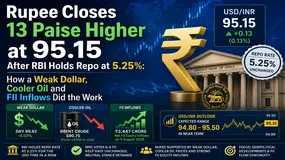
Rupee Ends 13 Paise Up at 95.15 After RBI Holds Repo at 5.25%: The Effect of a Weak USD, Cooler Oil
The Indian rupee settled at 95.15 against the US dollar on 5 August 2026, gaining 13 paise after the Reserve Bank of India's Monetary Policy Committee voted 6-0 to keep the repo rate unchanged at 5.25 percent for the third time in a row in FY27. The rupee had opened 46 paise higher, rallied to an intraday strongest of 94.89 ahead of the policy decision, and then drifted back as RBI Governor Sanjay Malhotra noted that the currency 'has not appreciated as intended despite the high flows from foreign shores.' A weak dollar index, a sharp pullback in Brent crude from above USD 100 in July, and net FII equity inflows of Rs 2,447 crore on Tuesday combined to support the rupee. USD-INR is expected to trade in a 94.80-95.50 band in the near term.
WikiFX Broker
Latest News
iFX Brokers Review: Is Your Deposit Safe?
 WikiFX
ONE ROYAL Faces SCM Malaysia Warning , What Traders Should Verify Before Funding an Account
WikiFXASIC Crackdown Hits 5-Year High: 150 Rogue Operators Banned
WikiFXMoneycorp Review: Is This Broker’s License Really Telling the Truth?
WikiFXBYBIT Review: Unregulated Broker Warning After Withdrawal Complaints and Forex Profit Disputes
WikiFXSECP Refers Blink Capital to FIA Over Rs446.6m Alleged Fraud
WikiFXHow to Start a Forex Broker in 2026: Build the Operating Model Before You Buy the Platform
WikiFXEMAR MARKETS Review 2026: Severe Withdrawal Complaints and Risk Signals
WikiFXTrader's Way Review: Trades Vanished Overnight , And There's No Regulator to Call
WikiFXLockwood Review: AMF-Blacklisted Broker with Users Reporting Blocked Withdrawals
WikiFXRate Calc

