Mixed signals
Abstract:Markets are sending conflicting signals about how big a threat the global trade rift presents.

Markets are sending conflicting signals about how big a threat the global trade rift presents. Markets sent mixed signals on 23rdMarch. Dow stocks seesawed back and forth in a rather directionless trading day while Nasdaq gained. The yield-sensitive technology stocks traded higher as investors believed the Fed can‘t keep hiking rates and risk further panic and bank runs. Bonds didn’t gain much supporting the dollar. As a result, EURUSD created a bearish shooting star candle (indicates momentum loss). This didnt slow down the gold bulls though as they see the potential end of tightening as a reason to prepare for higher inflation. During times of high inflation gold has traditionally acted as a hedge against rising prices.
The BOE hiked by 25 bp as expected so there was no significant market reaction in Cable. The central bank did indicate earlier that it might pause the hikes, but a sudden pickup in inflation in February forced the BOE to increase the borrowing costs at least once more. Andrew Bailey the BOE governor said, “We believe that inflation will begin to fall quite rapidly before the summer, but as yesterdays release for February showed, we need to see that happening”.

Lower high in NAS
NAS trades near a recent daily swing high. If the market starts breaking supports it could lead to a formation of bearish double-top formation. Yesterday‘s high created a lower swing high in the 4h chart and so the risk of the market breaking below 12 543 has increased. If the level breaks a move down to 12 400 looks likely. A decisive break above yesterday’s high would probably open a way to 13 200 or so.
Gold trades near recent highs
Gold trades near recent highs and has started to react lower. This is likely due to the strength of the USD. The nearest support is at 1966. If its violated the 1934 level probably gets tested. On the other hand, above 2010 gold could trade to 2030.
Bearish shooting star in the daily EURUSD chart
EURUSD turned bearish after a strong rally. The market has retraced back to 1.0760 but I dont think the market can turn bullish here (the probabilities of a new uptrend starting from here are low) as the market has just turned bearish. If the 1.0760 is broken decisively, EURUSD probably trades down to 1.0724.

USDZAR trades near to a support area
The U.S. dollar (USD) / South African rand (ZAR) exchange rate (ticker symbol: USDZAR) has become one of the most popular exotic currency pairs among global forex traders. USDZAR trades higher from a daily support area. If the market can rally decisively above the 18.20 level, a move to 18.60 could be in the cards. Below 18.00 a move to 17.70 level looks likely.


Read more
TickTrader White Label in 2026: Can You Add Liquidity Depth Without Adding Operational Blind Spots?
A TickTrader white label can look like the fastest route to a modern branded trading environment, but a fast launch is not the same as a controlled launch. This 2026 broker guide explains what the TickTrader platform is, where a Soft-FX broker solution can sit in a wider operating stack, and how to evaluate the difference between a white label, a server licence, and a connected CRM or Client Office setup. It also unpacks TickTrader cost beyond the monthly headline, including implementation, integration, support, data, governance, migration, and exit assumptions. Use the practical questions, workflow tests, comparison table, and launch checklist to assess a Soft-FX TickTrader provider without mistaking a feature demo for evidence that your brokerage can run the service safely at scale.
Fortex White Label in 2026: Can Your Liquidity Stack Scale Without Losing Control?
A Fortex white label can look like the fastest route to a modern branded trading environment, but a fast launch is not the same as a controlled launch. This 2026 broker guide explains what the Fortex platform is, where a Fortex broker solution can sit in a wider operating stack, and how to evaluate the difference between a white label, a server licence, and a connected CRM or Client Office setup. It also unpacks Fortex cost beyond the monthly headline, including implementation, integration, support, data, governance, migration, and exit assumptions. Use the practical questions, workflow tests, comparison table, and launch checklist to assess a Fortex provider without mistaking a feature demo for evidence that your brokerage can run the service safely at scale.

Best White Label Trading Platform 2026
The decision to switch white label providers or migrate to a modern white label trading platform is no longer a luxury for growth-minded brokers—it's a strategic necessity for survival in 2026. The convergence of technological stagnation, regulatory evolution, and shifting client expectations has created a perfect storm.
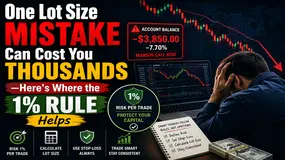
One Lot Size Mistake Can Cost You Thousands—Here's Where the 1% Rule Helps
Switched from one trading strategy to another but could not avert heavy losses? Wondering what went wrong despite your market analysis being spot on? It may not be a strategic issue then. It may just be that you chose the wrong lot size. Yes, a single oversized position can get your account exposed to far greater risks than you may imagine. You may be moved by the impressive profits with increasing lot sizes. But by doing so, you also invite a proportionate rise in losses. This is where you need to apply the essential 1% risk management principle. This rule helps you assess how much you can afford to lose if a trade does not go as planned.
WikiFX Broker
Latest News
LQH MARKETS Review: Multiple Traders Report Withdrawals Blocked and Accounts Terminated
 WikiFX
Spread Cheating: The Invisible Trading Cost That Could Be Working Against You
WikiFX"They Want to See Your Face": Inside ATFX Cambodia's Rise
WikiFX57 Booked in Pune Forex Scam Probe: The Fake Trading App Checklist Every Indian Investor Needs
WikiFXFxPro Review: Is This 1.80-Rated Broker Safe for Your Funds?
WikiFXRazor Markets Review: What Traders Should Know Before Depositing
WikiFXAGILE GLOBAL LIMITED Review: What Traders Should Know Before Depositing
WikiFXMASTER MIND CAPITALS Review: Withdrawal Complaints Pile Up Against This Unregulated Broker
WikiFXMangaluru Woman, 61, Loses Rs 16.2 Lakh in Facebook Scheme
WikiFXATFX Trading Volumes Drop 29% After Record Q1
WikiFXRate Calc

