Apple wins appeal to keep $308 million U.S. patent verdict at bay
Abstract:A U.S. appeals court on Friday affirmed a decision to throw out a $308.5 million jury verdict against Apple Inc (NASDAQ:AAPL) for allegedly infringing a patent related to digital rights management.

A U.S. appeals court on Friday affirmed a decision to throw out a $308.5 million jury verdict against Apple Inc (NASDAQ:AAPL) for allegedly infringing a patent related to digital rights management.
The U.S. Court of Appeals for the Federal Circuit in Washington, D.C., upheld an East Texas federal judge's ruling that Personalized Media Communications LLC's patent was invalid because the company engaged in misconduct before the U.S. Patent and Trademark Office.
PMC denied to comment on the decision. Representatives for Apple did not immediately respond to a request for comment.
PMC, a patent licensing company, first sued Apple for infringing several patents in 2015. An East Texas jury said in August 2021 that the FairPlay software used in Apple's iTunes and App Store to decrypt movies, music and apps infringed one of the patents and awarded the company $308.5 million in damages.
District Judge Rodney Gilstrap overturned the verdict four months later. He said PMC's
patent was unenforceable because thecompany had used a “deliberate strategy of delay” in applying for the patent, representing a “conscious and egregious misuse of the statutory patent system.” Gilstrap said PMC had used an improper “submarine” strategy that some applicants employed before 1995 to delay patents from becoming public until a market developed for their invention.
The Federal Circuit affirmed Gilstrap in a 2-1 ruling, finding that PMC's “inequitable scheme to extend its patent rights” had prejudiced Apple.


Read more
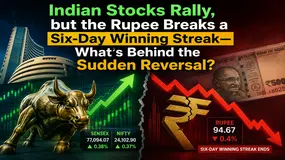
Indian Stocks Rally, but the Rupee Breaks a Six-Day Winning Streak—What's Behind the Sudden Reversal
Indian stock indices today, i.e., June 22, 2026, recorded growth, with the BSE Sensex rising 297.11 points to 77,094.07, recording a 0.38% jump. On the other hand, the NSE Nifty hit approximately 24100, largely aided by broad-based purchases across sectors, except for consumer durables and fast-moving consumer goods (FMCG). The Nifty grew by 89.80 points (0.37%+) to 24,102.90.
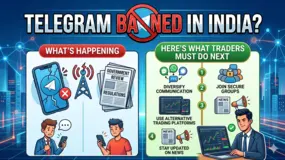
Telegram Banned in India? Here's What Traders Must Do Next
Yes, it’s true! The Government of India decided to ban Telegram in the country on June 16, 2026, surprising many who rely on this platform for daily trading alerts & advisories. The ban has taken effect under Section 69A of the IT Act as part of the government’s plan to stop fraud during the NEET-UG re-examination. According to reports, fraudulent rackets were selling fake question papers for amounts ranging from INR 5,000 to 50,000. But the ban, which will be effective until June 22, 2026, affects far more than students. It transcended from a messaging blockout to a sudden disengagement from the app that shaped many traders’ daily routine over time. Out of the 15 crore plus unique registered investors in India, a large chunk sought trading tips, market news, along with buy and sell signals on Telegram. It must have taken investors by surprise. But is the ban detrimental to traders, or is there something more than meets the eye?
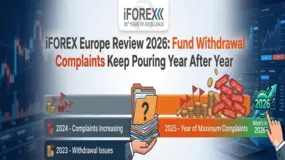
iFOREX Europe Review 2026: Fund Withdrawal Complaints Keep Pouring Year After Year
As we look to sum up iFOREX Europe and check user comments, they all read virtually the same issue, year after year - fund withdrawal issues. While some users never received withdrawal access from the broker, others received it for some time before the trading enterprise suspended their trading account, leaving their funds allegedly trapped on the platform. In this iFOREX EUROPE review, we take a close look at reported fund scam allegations against the brokerage first. Additionally, we will elaborate on the broker’s product & services and its regulatory framework.

Rupee Climbs to a Six-week High Today - Is the Bad Time for the Currency OVER?
The rupee, which has been falling against major global currencies, including the US dollar, is finally back on the path to recovery. As per the initial trade, the rupee touched a six-week high of 94.43 against the USD on June 17, 2026, tracking a plunge in crude oil prices following the interim peace deal agreed upon between the United States of America and Iran. Brent crude oil price slipped to around $78 per barrel, which has not been the case for three straight months following the war. The surging crude oil prices further caused pressure on the rupee, which was already falling apart.
WikiFX Broker
Latest News
Review 2026: Deriv Regulation, Complaints, and Withdrawal Risk Signals
 WikiFX
Stop Trading in the Middle of Ranging Forex Markets
WikiFXRoboMarkets Review: Regulation Questions Around a Broker Facing Fresh Trading Complaints
WikiFXSTONE WALL CAPITAL Review 2026: Is This Forex Broker Safe?
WikiFXDSI Exposes Alleged Forex Empire Behind Billion Baht Scam, Money Laundering and Political Connection
WikiFXIUX Review:Before Investing a Single Penny, Read These Jaw-Dropping Deposit & Withdrawal Experiences
WikiFXFXTF Review 2026: Japan FSA Regulation, Platform Access, and Exposure Cases
WikiFXReview 2026: FBS Regulation, Complaints, and Withdrawal Risk Signals
WikiFXFXTF Review 2026: Regulation, Withdrawals, and Scam Allegations
WikiFXIG Review 2026: Is This Forex Broker Safe?
WikiFXRate Calc

