Oil Price Decline ahead of the Raising COVID-19 Case
Abstract:Oil prices fell for a third straight day on Thursday as rising Covid-19 cases in China, the world’s largest crude importer, continue to raise concerns about fuel demand.

Oil prices fell for a third straight day on Thursday as rising Covid-19 cases in China, the worlds largest crude importer, continue to raise concerns about fuel demand.
New pandemic scale and doubt because of the official data pushed some countries to make the new journey or vacation rules. It is especially for the visitors from ChinA.
Brent oil for February delivery declined by 42 cent or 0.5 percent to become $82.84 per barrel. Meanwhile, the American crude oil dropped by 50 cent or 0.6% to become $78.46 per barrel.
Oil markets were also hit by expectations of another United States interest rate hike in the America. That was as the Federal Reserve tried to limit price increases in a tight labor market.
Oil Refining Continues Its Operation
The US crude inventories fell less than expected or about 1.3 million barrels, in the week ended Dec. 23. It was according to market sources citing American Petroleum Institute figures.
The US has become the latest country to require all travellers from China to show a negative Covid-19 test result before flying to the country.
Italy will begin to test all passengers arriving from China for the coronavirus after about half of the passengers on two flights to Milan were found to have the virus, Bloomberg reported. Also weighing on prices, pipeline operator TC Energy said it was working to restart a section of the Keystone pipeline that was forced to close after a leak earlier this month.
Oil refining continues to ramp up operations. However, part of that recovery is expected to continue into January. Meanwhile, The dollar stabilized on Thursday after long-term U.S. Treasury yields rose.
That came as early optimism over China's reopening failed to provide positive sentiment. Following the lifting of China's quarantine rules for incoming travelers from Jan. 8, several countries made a decision.
Health System in China is Still fragile
Those countries are like the United States, Japan and India. Based on certain news it was said that they would make COVID tests mandatory for travelers from China.
The speed at which the country canceled COVID rules has overwhelmed its fragile health system and sparked concerns about the spread of the virus. That is normal since the pandemic cases there are raising.
The Japanese yen was last nearly 0.5% higher at 133.83 per dollar. The situation is still occured though it remained pinned near the one-week low of 134.50 reached in the previous session.
Sterling rose by 0.19% to $1.2040, but this currency was also not far from the three-week low of $1.1993 reached last week. The euro rose by 0.15% to $1.0628 based on the data released.
USD is Still Firm Enough
Uncertainty over the global economic outlook, along with growing concerns about a recession in America, sent two-year Treasury yields, which typically move in line with interest rate expectations, slip overnight.
It last stood at 4.3512% based on a report. Meanwhile, the benchmark 10-year US Treasury yield last held at 3.8656%, after rising to a more than one-month high of 3.8920% overnight.
Against major currencies, the United States dollar index is still firmly in the range of 104.28. Before, The dollar was flat on Tuesday after China said it would roll back COVID-19 quarantine rules for incoming travelers.
The analysts stated that it was definitely a big step in reopening its borders, even as COVID cases surge. That country will stop requiring arriving travelers to quarantine from Jan. 8 as said by National Health Commission.
Beijing also Lowered Its COVID-19 Regulations
At the same time, Beijing lowered regulations for handling COVID cases to a Milder Category B than the top-level Category A. The offshore yuan fell by 0.13% to $6.9653 per dollar.
Somewhere, the euro rose by 0.13% against the dollar to $1.0649. China's gradual dismantling of an economically damaging zero-COVID policy could give the euro an additional boost.
That was the one which has surged higher. Traders should thanks to the European Central Bank taking a much harder inflation line than investors expected.
The Aussie was up by 0.18% versus the greenback at $0.674 in mostly thin trading over the year-end holiday season. Meanwhile, the New Zealand dollar gave up from earlier gains.


Read more

Spreadex Review: Wider Spread & Unexplained Account Closure Allegations for This 2-Decade-Old Broker
Did you incur trading losses on the Spreadex platform due to wider spreads? Have you experienced delays in trade processing by the United Kingdom-based forex broker? Has your Spreadex trading account been closed without any explanation? You are not alone! Many traders have expressed concerns on online broker review platforms. In this Spreadex review 2026, we have covered user allegations and provided a regulatory framework the broker operates under.

cTrader White Label Platform: A Practical Guide for Broker Evaluation and Multi-Asset Expansion in 2
A broker can launch a white-label platform quickly and still fail the first serious operating test. The failure often begins quietly: an assets expansion has been approved, the client app is branded, and a new account journey looks complete. Then a client asks why a trade-related status, funding hand-off, or account restriction looks different across channels. Support cannot see the same reference trail as operations. The product owns the screen, but no one owns the explanation. The issue is not a missing feature. It is an untested operating model. That is why a cTrader white label platform should be evaluated as a route to a multi-asset service - not as a shortcut to a more attractive terminal. The central question is whether the broker can add instruments, client channels, integrations, and service capacity without making its controls harder to operate or explain.
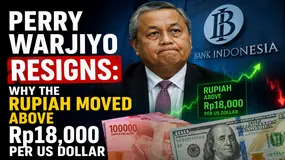
Perry Warjiyo Resigns: Why the Rupiah Moved Above Rp18,000 per US Dollar
Perry Warjiyo resigned as Bank Indonesia governor, Destry Damayanti became acting governor, and the rupiah traded above Rp18,000. Here is what forex traders should monitor next.

Is TradingPRO Safe? FCA Warning, Indonesia Blocklist Evidence, and 7 Checks Before You Deposit
This Trading Pro broker review checks the FCA warning, Indonesia blocklist evidence, licence claims, and what South Asian users should verify before depositing.
WikiFX Broker
Latest News
OtetMarkets Review: Traders Report Frozen Funds and Withdrawal Blocks , Score Sits at 2.00
 WikiFX
Is Octa Safe for Malaysian Traders? Deep Dive into Octa's Regulatory Status
WikiFXPocket Broker Review: Is Your Deposit Safe?
WikiFXReview 2026: Dollars Markets Regulation, Withdrawal Complaints, and Platform Risks
WikiFXCapital Guard Liquidated: $17.4m Raised, Most Funds Gone
WikiFXSingapore Dollar Holds Tight Range as FOMC Looms
WikiFXHow a 'Legitimate' Investment Became a RM67.5 Million Ponzi Scheme That Scammed 206 Investors
WikiFXRupee Hits Two-Week High as RBI Defends 97 Mark
WikiFXForexMart Review: Profit Canceled, Principal Withheld, and a Broker Warning Traders Cannot Ignore
WikiFXTitan Capital Markets Review 2026: Complaints, Withdrawals, and Severe Risk Signals
WikiFXRate Calc

