Week Ahead Preview 19th of December
Abstract:As More central bank meetings are expected in the coming week across Japan and Indonesia following a busy week in which the Fed and ECB signalled further rate hikes in the coming months.

As More central bank meetings are expected in the coming week across Japan and Indonesia following a busy week in which the Fed and ECB signalled further rate hikes in the coming months. The US core PCE figures and final Q3 GDP readings will also be anticipation in addition to personal income and consumption figures. Also as a result of the Christmas holidays, market Markets will have a light economic calendar in the week ahead. This will give investors the time to digest the last weeks central banks meetings updates and to think about their portfolios in 2023 to overcome the difficulty of finding where to invest.
The FOMC hiked rates by 50bp last week taking the cash rate to a 15-year high at 4.5% and 17 out of the 19 members expected that the US interest rates would be above 5% by the end of 2023. The Fed Chair welcomed the fall in inflation levels in October and November nonetheless, Powell highlighted that the central banks monetary policy is not at sufficiently restrictive policy yet and for that reason, he expected that the ongoing hikes would be appropriate.
More rate hikes are coming was the main takeaway from the latest Federal Open Market Committee (FOMC) meeting, followed by a similar hawkish tone at the ECB and a matching 50 basis point hike by the Bank of England. However, while the central bankers went to great lengths to manage expectations of the likely need for more rate hikes in 2023, the reality is that all three banks have slowed the pace of tightening.
The Bank of England hiked the rate by 50 bp last week taking the UK interest rate to 3.5%. The new policy statement contained some dovish signals as the committee expected the rate to peak at 4% hinting at another 50 bp hike in February followed by a rate hike pause the MPC nonetheless, warned that it could act if required.
Most US major indices closed in the red on Friday as investors did not like the Feds hawkish message. The US dollar recovered its losses and the Gold closed below the $1800/oz threshold. The oil price bounced back on better demand as China seemed to abandon the Covid Zero policy and the Biden administration plans to refill the US strategic reserves.
Economic data highlights
Monday 19th of December
• USD- NAHB Housing Market Index (DEC)
Tuesday 20th of December
• RBA Meeting Minutes
• BoJ Interest Rate Decision
• CAD- Retail Sales (OCT)
• USD- Building Permits (NOV)
• EUR- Consumer Confidence Flash (DEC)
Wednesday 21st of December
• EUR- GfK Consumer Confidence (Germany-JAN)
• CAD- Inflation Rate (NOV)
• USD- CB Consumer Confidence (DEC)
• USD- Crude Oil Inventories
Thursday 22nd of December
• GBP- GDP Growth Rate Final
• USD- GDP Growth Rate (Q3)
• USD- Core PCE Prices (Q3)
Friday 23rd of December
• JPY- Inflation Rate (NOV)
• CAD- GDP Growth Rate
• USD- PCE Price Index (NOV)
• USD- Durable Goods Orders MoM (NOV)
• Michigan Consumer Sentiment Final (DEC)


Read more

Think Forex Support and Resistance Always Work? High-Impact News Can Prove You Wrong!
Forex traders often have to come to terms with these two popular concepts - Support and Resistance. A support level refers to the point where buyers have historically come together to prevent the price from sliding further. On the other hand, the point of resistance is where sellers have historically limited upward movement. These two levels form the foundation of many trading strategies employed by traders to spot entry, exit and stop-loss points. However, many beginners begin to think that these price levels are unbreakable. Such assumptions can go horribly wrong during high-impact economic news releases such as inflation reports, employment data, monetary policy announcements by the central bank or any other major news events. These events can trigger price movements so much that even the strongest support and resistance levels can crack within seconds.
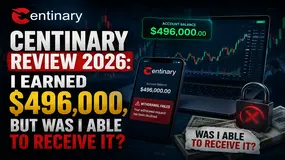
Centinary Review 2026: I Earned $496,000, but Was I Able to Receive It? Read This Report!
Centinary, a new age broker, has managed to receive quite a bit of user reviews recently. However, all these reviews accuse the broker of robbing users’ funds. From loss of yuan to dollar, traders have been complaining about the alleged hassles faced while withdrawing funds from the Centinary platform. In this Centinary review article, we will take you through the complaints users have made in 2026.

One Lot Size Mistake Can Cost You Thousands—Here's Where the 1% Rule Helps
Switched from one trading strategy to another but could not avert heavy losses? Wondering what went wrong despite your market analysis being spot on? It may not be a strategic issue then. It may just be that you chose the wrong lot size. Yes, a single oversized position can get your account exposed to far greater risks than you may imagine. You may be moved by the impressive profits with increasing lot sizes. But by doing so, you also invite a proportionate rise in losses. This is where you need to apply the essential 1% risk management principle. This rule helps you assess how much you can afford to lose if a trade does not go as planned.

TRANS X MARKETS Review 2026: I Lost as Much as $40K. One of Many Verified User Allegations
This allegation representing fund loss worth $40,000 came from a verified Indian user on a trusted platform such as WikiFX. However, this is not the only allegation from users across India and other regions. Many verified users have complained about the loss of access to withdraw profits from the TRANS X MARKETS platform. At the same time, we came across complaints about the withdrawal issue from the free software provided by the brokerage firm. In this TRANS X MARKETS review, we have examined these allegations while also giving you the company’s regulatory background.
WikiFX Broker
Latest News
RM5.18 Million Lost: Investment Scams Are Targeting Kelantan
 WikiFX
Trapping Symmetrical Triangle Breakouts With OCO Pending Orders
WikiFXReview 2026: AximTrade Regulation, Withdrawals, and Platform Risks
WikiFXFake Boss, Real Losses: Business Lost Nearly RM1 Million in WhatsApp Impersonation Scam
WikiFXWhy Brokers Auto-Close Losing Trades: Variation Margin and Risk Control
WikiFXVantage Capital Markets Review: Login Failures, Withdrawal Alarms, and a Broker Under Pressure
WikiFXOcta Review 2026: Severe Withdrawal Complaints and Account Blocking Risks
WikiFXWikiEXPO Hong Kong 2026 Set to Open, Bringing Together Global Fintech Leaders to Explore the Future
WikiFXHow the 3-Bullet Card Stops Forex Overtrading
WikiFXTRADE.COM Review 2026: Regulatory Status and Severe Withdrawal Complaints
WikiFXRate Calc

