Wall St slips as job openings dampen Fed pivot hopes
Abstract:Wall Street’s main indexes slipped on Tuesday after data pointed to strength in the labor market, dampening hopes that the Federal Reserve will signal an easing of its aggressive interest rate hikes.
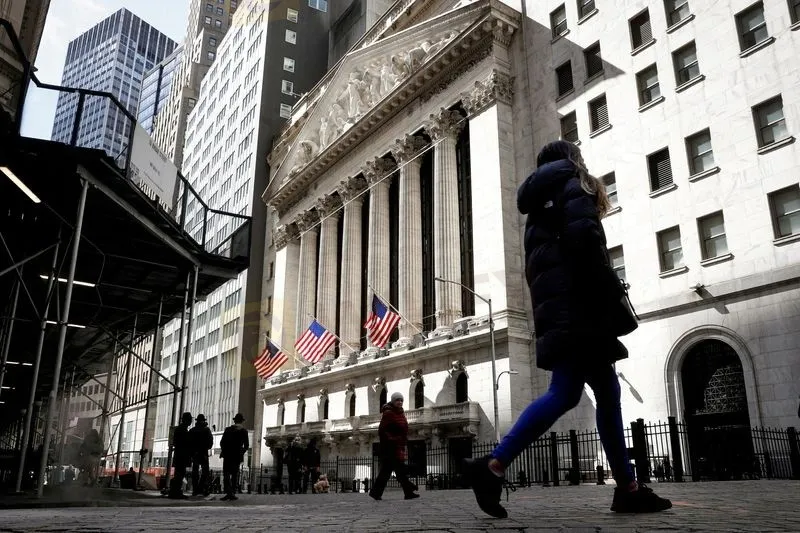
Wall Streets main indexes slipped on Tuesday after data pointed to strength in the labor market, dampening hopes that the Federal Reserve will signal an easing of its aggressive interest rate hikes.
Data showed U.S. job openings unexpectedly rose in September, suggesting that demand for labor remains strong despite the Feds aggressive interest rate increases.
“Hopes for a Fed dovish pivot are misplaced if the previous job openings are any guide,” said Ronald Temple, head of U.S. equity at Lazard (NYSE:LAZ) Asset Management.
“Despite other signs of economic deceleration, the job openings data taken together with nonfarm payroll growth indicate the Fed is far from the point where it can declare victory over inflation and lift its foot off the economic brake.”
All three main indexes notched solid gains in October, supported by better-than-expected earnings as well as hopes that the Fed will soon shift to a less hawkish approach as economic growth slows.
Investors are bracing for a hefty 75 basis point interest rate hike at the end of the Feds two-day policy meeting on Wednesday, but will be keenly watching for signs that there could be a smaller 50 basis point interest rate hike in December.
Another report showed U.S. manufacturing activity grew at its slowest pace in nearly 2-1/2 years in October while a measure of prices paid by businesses for inputs slid for a seventh straight month.
Megcap growth companies including Amazon.com (NASDAQ:AMZN), Alphabet (NASDAQ:GOOGL) and Microsoft (NASDAQ:MSFT), which have seen pressure in recent weeks after dismal earnings, fell between 1% and 3% in morning trade.
Among S&P 500 sectors, information technology led declines, while energy continued to be a strong outperformer.
At 10:39 a.m. ET, the Dow Jones Industrial Average was down 71.34 points, or 0.22%, at 32,661.61, the S&P 500 was down 3.05 points, or 0.08%, at 3,868.93, and the Nasdaq Composite was down 14.22 points, or 0.13%, at 10,973.93.
Among single stocks, Uber Technologies (NYSE:UBER) climbed 15.7% after giving an upbeat fourth-quarter profit view that also lifted shares of its rivals Lyft Inc (NASDAQ:LYFT) and DoorDash.
Pfizer (NYSE:PFE) rose 3.1% after the drugmaker raised full-year sales estimates for its COVID-19 vaccine, while Eli Lilly (NYSE:LLY) slipped 1.1% on trimming its profit forecast.
U.S.-listed shares of Chinese firms such as JD (NASDAQ:JD).Com and Alibaba (NYSE:BABA) Group Holding jumped about 5% each following rumors based on an unverified note circulating on social media that China was planning a reopening from strict COVID-19 curbs in March.
Abiomed (NASDAQ:ABMD) surged 50.4% after Johnson & Johnson (NYSE:JNJ) said it would acquire the heart pump maker in a deal valued at $16.6 billion.
Advancing issues outnumbered decliners by a 2.75-to-1 ratio on the NYSE and 2.24-to-1 ratio on the Nasdaq.
The S&P index recorded 20 new 52-week highs and four new lows, while the Nasdaq recorded 69 new highs and 41 new lows.

Read more

HIJA MARKETS Review 2026: I Was Told to Pay $3,000 to Receive My Profits, But I Found It Suspicious
HIJA MARKETS, a Saint Lucia-based brokerage entity, is dealing with multiple trading complaints from users worldwide. Among the complaints, what captured our imagination was the $3,000 fee demand for the unfreezing of profits on the broker’s platform. Such a payment demand immediately raises legitimacy concerns regarding the brokerage firm. Complaints do not stop here; in fact, they suggest a pattern of disappearing funds and endless withdrawal denials. Many traders have accused the broker of carrying out illicit trading activities online. In this HIJA MARKETS review 2026, we have examined every user allegation against the brokerage firm. To give you more means to assess its legitimacy, we have given a thorough look into its regulatory framework.

Dubai Brokers Expanded Rapidly, But Staff Trading Controls Lag Behind
Dubai’s regulator says brokerage firms in the DIFC are expanding faster than their internal controls, highlighting gaps in staff trading oversight, record-keeping, and compliance culture as the sector grows rapidly.

Top Brokers Lose Share of Web Visibility as Competition Tightens
The top 10 retail brokers accounted for 69% of global web visibility in May 2026, with shifts at the top of the ranking as OANDA maintained first place but saw its lead over competitors narrow.
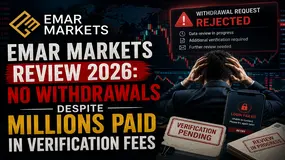
EMAR MARKETS Review 2026: No Withdrawals Despite Millions Paid in Verification Fees
EMAR Markets, a South Africa-based forex broker, allegedly never misses the opportunity to disappoint its traders, according to their reviews. The user allegations present a disturbing picture, with users repeatedly complaining about pending EMAR MARKETS withdrawal processing in the pretext of a data review process that reportedly seems to have no end. They even accused the broker of withholding funds even after they paid the verification fee worth 2,000 to 5,000 yuan as requested. Some users complained about the not-so-meaningful updates and complete communication halt that further made the overall trading scenario precarious. In this EMAR MARKETS review, we have examined serious user allegations to provide an overview of the overall situation. To further help you assess its legitimacy, we have provided a regulatory framework of this company.
WikiFX Broker
Latest News
Review 2026: TRADING 212 Regulation, Clone Warning, and Withdrawal Complaint
 WikiFX
Review 2026: BOLD PRIME Complaints, Regulation Warnings, and Withdrawal Risk
WikiFXReview 2026: EMIRAX MARKETS Regulation, Withdrawal Complaints, and Trading Risks
WikiFXPolymarket Under Fire as Wall Street Watchdog Launches Investigation
WikiFXEMAR MARKETS Review 2026: No Withdrawals Despite Millions Paid in Verification Fees
WikiFXUS-Iran Tension Rattles Indian Stock Markets Today; Still Some Gained in a Gloomy Scenario
WikiFXFinal Hours for OneCoin Victims: Billions Lost as DOJ Compensation Deadline Looms
WikiFXThe Hidden Drivers of Forex: How Bank Rates and Revaluations Move the Market
WikiFXHe Promised 15% Returns. Now Over 300 Investors Lost $60 Million.
WikiFXReview 2026: Webull FSA Regulation, Mobile App Access, and Complaint Signals
WikiFXRate Calc

