Dubai Brokers Expanded Rapidly, But Staff Trading Controls Lag Behind

Abstract:Dubai’s regulator says brokerage firms in the DIFC are expanding faster than their internal controls, highlighting gaps in staff trading oversight, record-keeping, and compliance culture as the sector grows rapidly.
Brokerage firms operating within Dubais financial hub have expanded at a pace that is now outstripping the internal systems meant to control employee trading activity, according to a new supervisory review from the Dubai Financial Services Authority.
The findings were published in the regulators first “Conduct Supervisory Pulse,” which assessed how firms manage personal account dealing and related conflicts of interest. It forms part of a broader supervisory program set to continue through 2026.
Rapid Growth Pressures Internal Oversight
The review shows a sector that has scaled quickly in recent years. The number of authorized brokerage firms in the Dubai International Financial Centre rose from 49 in 2022 to 72 by March 2026, a jump of nearly 70%.
At the same time, staffing levels across the industry have nearly doubled, while profitability has surged sharply. According to the regulator, combined net profit among brokerage firms increased from $80 million in 2023 to $301 million in 2025.
The regulator noted that this expansion has required faster licensing processes and heavier supervisory workloads, particularly after application volumes rose significantly in 2025.
Weaknesses Found in Trading Controls
Despite growth in size and revenue, the review identified significant gaps in how firms manage employee trading activity.
A survey conducted by the Dubai Financial Services Authority found that 18% of firms did not have documented policies governing personal account dealing. In addition, 32% of firms had no formal register tracking employee trades, whether manual or electronic.
More than half of the respondents said that approval or reporting requirements applied only to certain types of transactions, indicating inconsistent internal standards across the sector.
The regulator also identified discrepancies during its supervisory checks, where reported employee trading activity did not always align with independent verification. In one case, a firm reported no violations despite evidence showing breaches had occurred.
According to the authority, weak or incomplete control systems often reflect broader issues in governance and compliance culture.
Dubais Growing Role as a Brokerage Hub
The findings come at a time when Dubai continues to attract global brokerage firms seeking regulatory access to regional markets.
Over recent years, international brokers such as Pepperstone, XM, Plus500, XTB, and RoboMarkets have established or expanded operations in the jurisdiction.
Regulators have attributed part of this growth to Dubais position between major global trading time zones and its access to high-value retail and institutional clients.
Supervisory Focus Is Expanding
The personal trading review is part of a broader initiative examining market conduct across brokerage firms. Future phases will focus on areas such as best execution practices and communications record-keeping.
The regulator said firms with inadequate systems may face supervisory action if weaknesses are not addressed. It also pointed to common issues such as over-reliance on employee self-reporting, limited post-trade monitoring, and inconsistent documentation.
Regulatory Expectations Moving Forward
As the brokerage sector continues to expand, the Dubai regulator indicated that firms are expected to scale their compliance frameworks in line with their business growth.
The review suggests that supervision will increasingly focus not only on licensing standards, but also on how effectively firms manage internal risks linked to employee activity and trading behavior.
About WikiFX
WikiFX is a global forex broker information and verification platform that provides regulatory data, broker background insights, and risk monitoring tools. It aims to improve transparency in the financial trading industry and help users assess brokers before engaging in trading activities.

Read more
Tattvam Review 2026: Investigating Complaints Concerning Trade Executions
Did you encounter trade-related concerns with Tattvam, a Mauritius-based brokerage entity? Several users have reportedly accused the broker of cancelling profitable trades, allegedly citing scalping as the reason. At the same time, traders have reportedly expressed concerns over the lack of understanding among the broker officials about critical trading aspects such as copy trading. In this Tattvam review, we have carefully examined user-reported allegations. Additionally, we have given a regulatory overview of the broker.
suxxessfx Review 2026: Funds Worth $5K-$42K Reportedly Lost. Check Our Investigation!
suxxessfx, a Seychelles-based brokerage entity, grabbed massive ire from traders on broker review platforms such as WikiFX, a globally recognized forex broker regulation inquiry app. Exposure reports have revealed fund losses worth over $5K-$42K on the broker’s trading platform. This suxxessfx review examines serious user allegations and its regulatory status. Read on!
Pakistan Remittances Hit $3.63 Billion: Why USD/PKR Traders Should Look Past One Strong Number
Pakistan remittances reached $3.631 billion in July 2026, up 13% year on year and 4.5% from June, according to the latest State Bank of Pakistan data release. The SBP remittances update is a useful external-sector input, but it is not a currency forecast. This guide explains what the inflow can mean for the Pakistan forex market and USD PKR, and what it cannot prove about the next Pakistan rupee move.
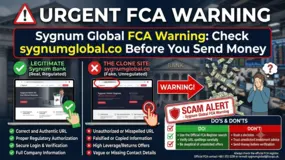
Sygnum Global FCA Warning: Check sygnumglobal.co Before You Send Money
The FCA warned that Sygnum Global and sygnumglobal.co are unauthorised. Check the phone numbers, consumer protections and payment steps before dealing.
WikiFX Broker
Latest News
FXDD Malta Licence Ends: What Traders Need to Know
WikiFXForest City Scam Raids Raise Fresh Warning for Malaysian Property Owners
WikiFXBOLD PRIME Review 2026: Regulation Warnings, Withdrawal Complaints, and Account Access Risks
WikiFXEC Markets Marketing Director Nick Xydas Steps Down
WikiFXOEXN Broker Review: Regulated but is it Safe for Traders?
WikiFXJapanese Yen dips further despite hotter inflation, upbeat employment data
WikiFXEuro gains on hawkish ECB policy outlook
WikiFXAtriance to Introduce EVEST in UAE Under CMA Category 5 Licence
WikiFXAUS GLOBAL Broker Review: Regulated but is it Safe for Traders?
WikiFX20 Chinese Arrested Over Love Scam in Penang
WikiFXRate Calc

