Oil up more than 1% as weaker dollar offsets China concerns
Abstract:Oil prices rose on Tuesday, recouping losses from the previous session, as a weaker U.S. dollar offset widening COVID-19 curbs in China that have stoked fears of slowing fuel demand in the world’s second-largest oil consumer.
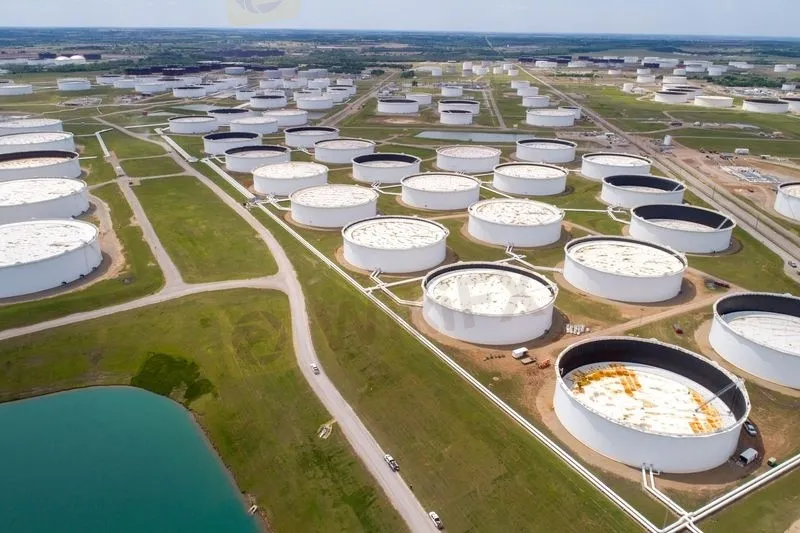
Oil prices rose on Tuesday, recouping losses from the previous session, as a weaker U.S. dollar offset widening COVID-19 curbs in China that have stoked fears of slowing fuel demand in the worlds second-largest oil consumer.
Brent crude for January delivery rose $1.56, or 1.68%, to $94.37 a barrel at 1429 GMT. The December contract expired on Monday at $94.83 a barrel, down 1%.
U.S. West Texas Intermediate (WTI) crude rose $1.63, or 1.88%, to $88.16 after falling 1.6% in the previous session.
Oil prices rose as the U.S. dollar sank on Tuesday from a one-week high against a basket of major rivals as traders weighed the odds of a less aggressive U.S. Federal Reserve at Wednesdays monetary policy meeting.
A weaker greenback makes dollar-denominated oil cheaper for buyers holding other currencies, boosting demand for the commodity.
The Brent and WTI benchmarks both registered monthly gains in October, their first since May, after the Organization of the Petroleum Exporting Countries (OPEC) and allies including Russia, a group known as OPEC+, cut their targeted output by 2 million barrels per day (bpd).
The OPEC+ cuts and record U.S. oil export data also support oil price fundamentals, said CMC Markets analyst Tina Teng.
Tamas Varga of oil broker PVM, meanwhile, said that dwindling oil supply, a possible halt to release of oil from the Strategic Petroleum Reserve (SPR) and reinvigotated oil demand growth could also send crude back above $100 a barrel.
An oil investment lag is sowing seeds for a future energy crisis, OPEC secretary General Haitham Al Ghais said on Tuesday.
OPEC raised its forecasts for world oil demand in the medium and longer term on Monday, saying that $12.1 trillion of investment is needed to meet this demand.
These bullish factors have offset demand concerns raised by COVID-19 curbs that lowered Chinas factory activity in October and cut into its imports from Japan and South Korea.
In a further cap to price gains, U.S. crude oil stocks are likely to rise in the week to Oct. 28, a preliminary Reuters poll showed.
The poll was conducted ahead of reports from the American Petroleum Institute due at 4:30 p.m. EDT (2030 GMT) on Tuesday and the Energy Information Administration due at 10:30 a.m. (1430 GMT) on Wednesday.

Read more

HIJA MARKETS Review 2026: I Was Told to Pay $3,000 to Receive My Profits, But I Found It Suspicious
HIJA MARKETS, a Saint Lucia-based brokerage entity, is dealing with multiple trading complaints from users worldwide. Among the complaints, what captured our imagination was the $3,000 fee demand for the unfreezing of profits on the broker’s platform. Such a payment demand immediately raises legitimacy concerns regarding the brokerage firm. Complaints do not stop here; in fact, they suggest a pattern of disappearing funds and endless withdrawal denials. Many traders have accused the broker of carrying out illicit trading activities online. In this HIJA MARKETS review 2026, we have examined every user allegation against the brokerage firm. To give you more means to assess its legitimacy, we have given a thorough look into its regulatory framework.

Dubai Brokers Expanded Rapidly, But Staff Trading Controls Lag Behind
Dubai’s regulator says brokerage firms in the DIFC are expanding faster than their internal controls, highlighting gaps in staff trading oversight, record-keeping, and compliance culture as the sector grows rapidly.
Top Brokers Lose Share of Web Visibility as Competition Tightens
The top 10 retail brokers accounted for 69% of global web visibility in May 2026, with shifts at the top of the ranking as OANDA maintained first place but saw its lead over competitors narrow.
EMAR MARKETS Review 2026: No Withdrawals Despite Millions Paid in Verification Fees
EMAR Markets, a South Africa-based forex broker, allegedly never misses the opportunity to disappoint its traders, according to their reviews. The user allegations present a disturbing picture, with users repeatedly complaining about pending EMAR MARKETS withdrawal processing in the pretext of a data review process that reportedly seems to have no end. They even accused the broker of withholding funds even after they paid the verification fee worth 2,000 to 5,000 yuan as requested. Some users complained about the not-so-meaningful updates and complete communication halt that further made the overall trading scenario precarious. In this EMAR MARKETS review, we have examined serious user allegations to provide an overview of the overall situation. To further help you assess its legitimacy, we have provided a regulatory framework of this company.
WikiFX Broker
Latest News
Review 2026: TRADING 212 Regulation, Clone Warning, and Withdrawal Complaint
 WikiFX
Review 2026: BOLD PRIME Complaints, Regulation Warnings, and Withdrawal Risk
WikiFXReview 2026: EMIRAX MARKETS Regulation, Withdrawal Complaints, and Trading Risks
WikiFXPolymarket Under Fire as Wall Street Watchdog Launches Investigation
WikiFXEMAR MARKETS Review 2026: No Withdrawals Despite Millions Paid in Verification Fees
WikiFXUS-Iran Tension Rattles Indian Stock Markets Today; Still Some Gained in a Gloomy Scenario
WikiFXFinal Hours for OneCoin Victims: Billions Lost as DOJ Compensation Deadline Looms
WikiFXThe Hidden Drivers of Forex: How Bank Rates and Revaluations Move the Market
WikiFXHe Promised 15% Returns. Now Over 300 Investors Lost $60 Million.
WikiFXReview 2026: Webull FSA Regulation, Mobile App Access, and Complaint Signals
WikiFXRate Calc

